1. Introduction
Irrigation in Bihar is fundamental to agricultural stability and food security in one of India’s most densely populated states. Bihar supports intensive cultivation on limited land, making assured water supply critical for sustaining crop yields. Although the state is rich in rivers and groundwater, rainfall is highly seasonal and uneven, creating water stress outside the monsoon months.
Bihar receives around 108 cm annual rainfall, ~85% during monsoon. Agriculture supports over 80% of the population. Irrigation is crucial for Rabi and summer crops
Historically, Bihar has a long tradition of irrigation management. References to rainfall assessment, canals, and water taxation are found in Arthashastra, written in ancient Pataliputra. Today, modern irrigation combined with traditional systems remains essential to manage floods, droughts, and rising food demand.
Master Geography & Economy. Ace BPSC Mains.
BPSC Mains GS Paper-2: Geog & Economy Course
Master Indian Geography, Bihar Geography, Indian Economy, Bihar Economy, Agriculture and Industry with structured, exam-oriented
PDF notes designed specifically for BPSC Mains.
✓ 6 Comprehensive Lessons • ✓ 80+ Exam-Oriented Topics • ✓ Bihar-Specific Coverage • ✓ Mains Answer Writing Focus
2. Need of Irrigation in Bihar
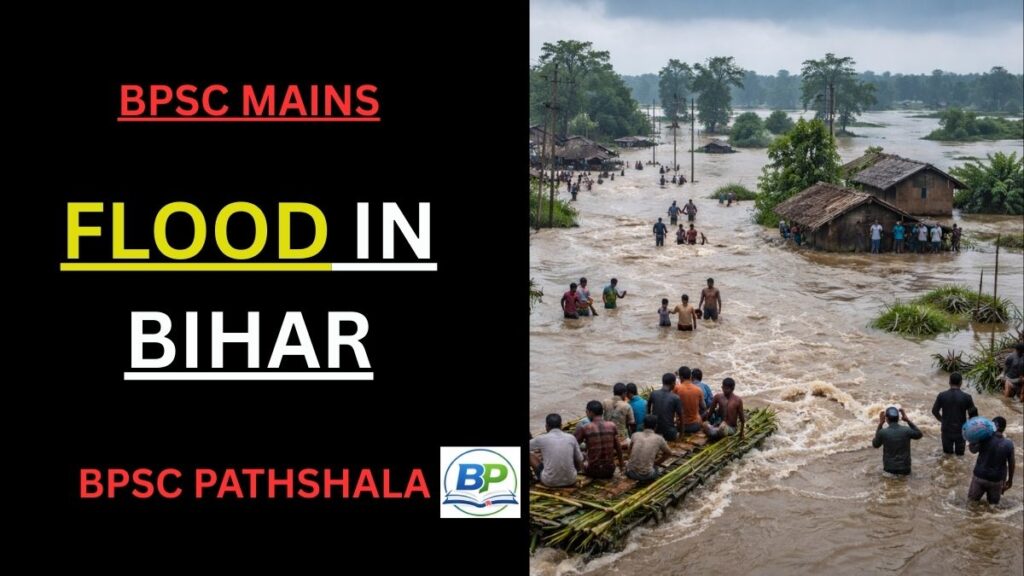
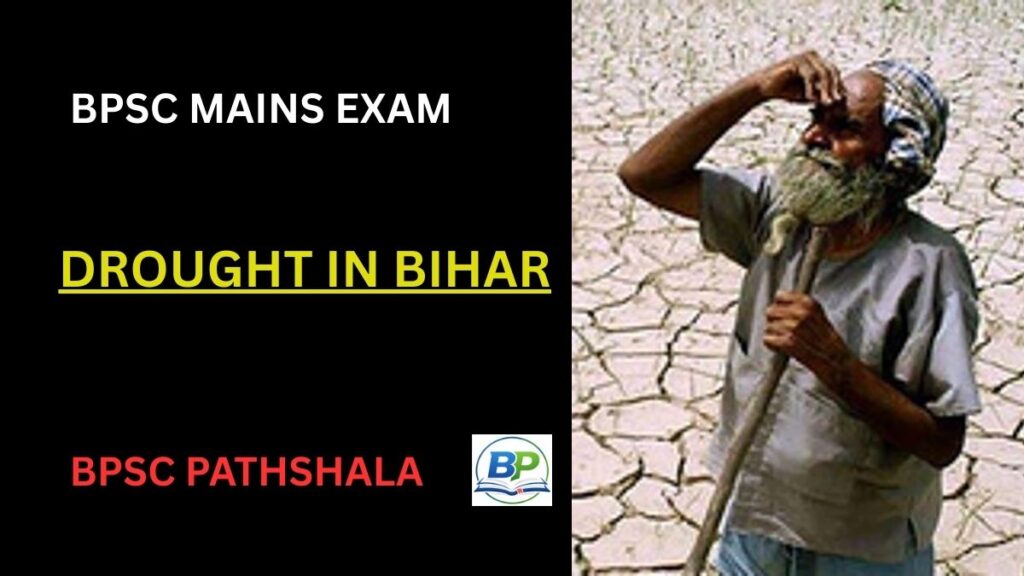
The need for irrigation in Bihar arises from climatic variability, cropping intensity, and economic dependence on agriculture. Monsoon rainfall is erratic—deficient in some years and excessive in others—causing both drought and flood risks. Major crops like rice, wheat, maize, vegetables, and pulses require controlled and timely irrigation.
Regionally, North Bihar suffers from floods while South and South-West Bihar face drought every 2–3 years, making irrigation a risk-management tool. Economically, irrigation stabilizes yields, increases cropping intensity, and reduces distress migration. Irrigated agriculture raises yields by 30–50% compared to rain-fed farming.
3. Means of Irrigation in Bihar
Bihar uses a mixed irrigation system, combining modern and traditional sources.
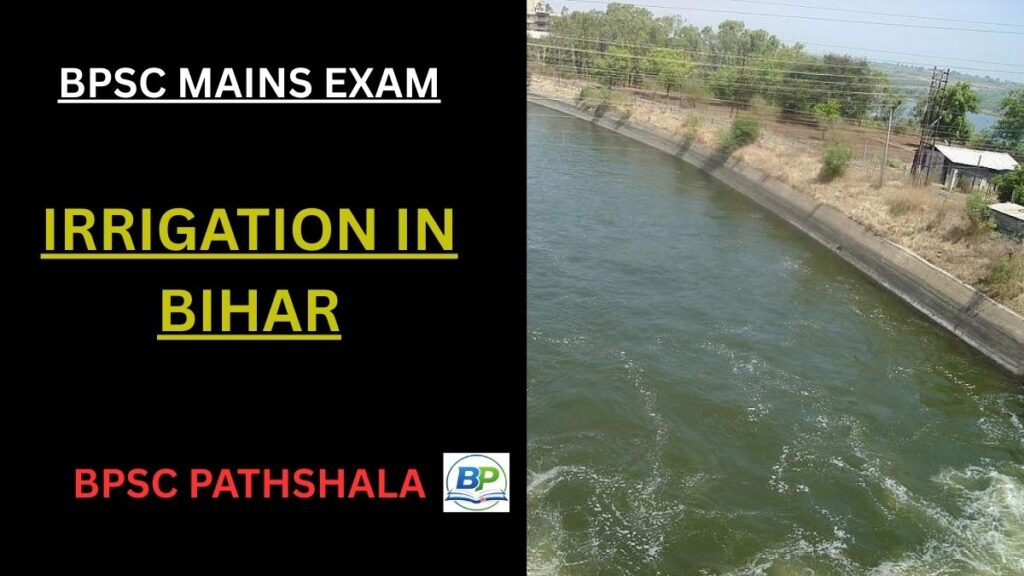
Canals irrigate about 28% of the irrigated area, including major systems like Kosi, Gandak, Son, Kamla, and Triveni. Perennial canals dominate North Bihar, while seasonal canals depend on monsoon flow.
Tubewells are the largest source, irrigating around 53–54% of irrigated land. Districts such as Patna, Kishanganj, and Araria rely heavily on tubewells, while Rohtas depends more on canals.
Wells and ponds provide supplementary irrigation, especially in North Bihar plains. Ahar–Pyne systems, revived under government schemes, harvest floodwater and remain effective in South Bihar.
4. Potential Challenges in Irrigation
Despite wide usage, irrigation in Bihar faces serious challenges. Less than 50% of net sown area has reliable irrigation throughout the year. Heavy dependence on tubewells has caused groundwater depletion, especially in South Bihar.
Canal systems suffer from siltation, leakage, and poor maintenance, reducing efficiency. Areas like Tal and Diara remain inadequately served. Rising diesel prices and irregular electricity supply increase irrigation costs, while climate change intensifies rainfall variability.
Over 60% of irrigated land depends on groundwater. Only 8 districts in South Bihar have strong canal networks. Groundwater levels are declining in several districts.
5. Government Support to Boost Irrigation
Bihar Government Initiatives:
The state promotes irrigation through Niji Nalkup Yojana (private tubewells), canal rehabilitation, revival of Ahar–Pyne systems, and subsidised agricultural electricity connections. Solar-powered irrigation pumps are being encouraged to reduce diesel dependence and costs. Solar pumps reduce irrigation cost by 40–60%
Government of India Initiatives:
Central schemes like Pradhan Mantri Krishi Sinchai Yojana (PMKSY), which PMKSY focuses on “Har Khet Ko Pani”. Accelerated Irrigation Benefit Programme (AIBP), and RIDF support major and minor irrigation projects, command-area development, and micro-irrigation.
Prepare Smarter. Study Better. Ace BPSC Mains.
BPSC Mains GS Paper 1 & 2 Complete Course
Access comprehensive BPSC Mains Notes for GS Paper 1 & 2, covering 378+ topics across 24 PDF lessons, with dedicated Bihar coverage, practice questions and downloadable study material.
✓ GS Paper 1 & 2 • ✓ 378+ Topics • ✓ 24 PDF Lessons • ✓ Bihar-Specific Coverage • ✓ Downloadable Notes
6. Conclusion
Irrigation in Bihar is the backbone of agricultural growth, rural livelihoods, and food security. While the state benefits from rivers and groundwater, uneven rainfall, groundwater stress, and infrastructure gaps limit irrigation potential. Strengthening canals, regulating groundwater use, promoting solar irrigation, and reviving traditional systems can ensure sustainable water management.
A balanced, region-specific irrigation strategy is essential to transform Bihar’s natural water availability into long-term agricultural prosperity and climate resilience.
BPSC Mains Practice Questions (Based on Irrigation in Bihar)
- Discuss the importance of irrigation in Bihar. Explain how climatic conditions, cropping pattern, and population pressure increase the need for irrigation in the state.
- Describe the major means of irrigation in Bihar. Critically analyse the problems associated with canal and groundwater-based irrigation.
- Despite abundant water resources, irrigation coverage in Bihar remains uneven. Examine the causes and suggest measures to improve irrigation efficiency.
Also Read….
- Agriculture in Bihar
- Urbanization in Bihar
- Migration from Bihar: Causes, Economic Impact, and Policy Responses
- Tourism in Bihar
- Flood in Bihar: Causes, Impacts, and Sustainable Solutions
- Drought in Bihar: Causes, Impacts, and Sustainable Solutions
- River System of Bihar
- Inland Waterways in Bihar: Potential, Challenges, and the Way Forward