Natural Resources in Bihar
1. Introduction
The structure of natural resources in Bihar reflects the state’s geographical position in the middle Gangetic plain and its transition between the Himalayan foothills and the Peninsular plateau. Although Bihar does not possess vast mineral reserves like some other Indian states, it is richly endowed with fertile land, abundant river systems, forest patches and emerging renewable energy potential.
Nearly the entire northern and central part of the state is covered with alluvial soil deposited by the Ganga and its tributaries, making agriculture the backbone of the economy. According to the Bihar Economic Survey 2025–26, agriculture and allied sectors contributed 23.1 percent to the state’s GSVA in 2023–24, reflecting the importance of land and water resources.
Water resources are substantial due to major rivers such as the Ganga, Son, Gandak and Kosi Bihar Natural and Energy Resour…, while mineral resources like limestone, mica, bauxite and pyrites are concentrated in the southern districts Bihar Natural and Energy Resour…. Installed power capacity has reached 11,764 MW, indicating growing energy infrastructure. Thus, natural resources in Bihar form the foundation of its agricultural economy, industrial potential and energy security.
Complete Your BPSC Geog & Economy Preparation
If you want structured preparation of Geography & Economy for BPSC Mains, check our BPSC Geog & Economy Course with clear concepts and exam-focused notes.
| Instant access | Downloadable PDFs | Structured BPSC mains preparation |
2. Land and Soil Resources in Bihar
Land and soil form the most important component of natural resources in Bihar, as the state’s economy remains deeply linked with agriculture. Geographically, about 90 percent of Bihar’s area is part of the Gangetic alluvial plain. Continuous deposition by rivers such as the Ganga, Gandak, Kosi and Son has created deep and fertile soil layers across the northern and central regions.
The dominant soil type is alluvial soil, which is further divided into new alluvium (Khadar) and old alluvium (Bhangar). New alluvium is found mainly in floodplains and diara regions, where annual silt deposition enhances fertility. Old alluvium occurs in relatively elevated areas of southern plains and contains calcareous nodules in some patches. These soils are generally rich in potash and lime but often deficient in nitrogen and phosphorus.
The high fertility of these soils supports intensive cultivation of crops such as rice, wheat, maize, pulses and sugarcane. The importance of soil resources is reflected in the economic structure, where agriculture and allied sectors contribute nearly one-fourth of the state’s Gross State Value Added. High cropping intensity in several districts further indicates intensive use of land resources.
However, land resources face challenges such as flood-induced sand deposition in north Bihar, soil erosion along riverbanks and declining organic content due to continuous cultivation. In southern plateau districts, soils are relatively thinner and less fertile compared to the alluvial plains.
Thus, land and soil resources remain the backbone of natural resources in Bihar, sustaining agriculture, rural employment and food security.
3. Water Resources in Bihar
Water is one of the most significant components of natural resources in Bihar, as the state lies in the middle of the Ganga basin and is traversed by several perennial rivers. The Ganga flows from west to east across the state, dividing it into northern and southern plains. Major tributaries such as the Gandak, Kosi, Bagmati, Mahananda and Son originate in the Himalayas or plateau regions and bring substantial discharge, especially during the monsoon.
The abundance of river systems provides strong irrigation potential. A large part of the net sown area is supported by canal irrigation, tube wells and river lift irrigation. Groundwater availability is also relatively high in the alluvial plains due to porous soil structure. This water base plays a crucial role in sustaining agricultural output and rural livelihoods.
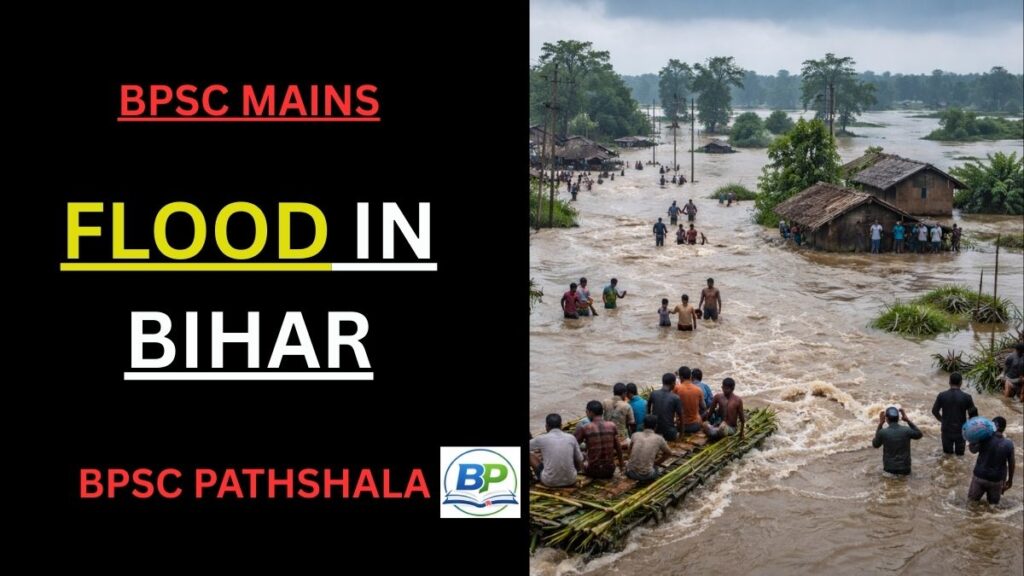
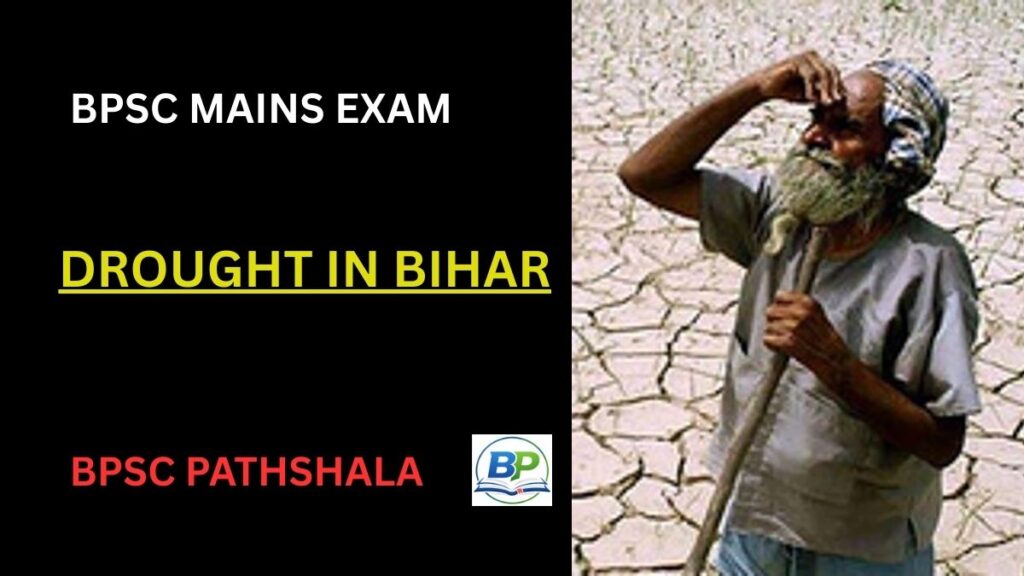
However, the distribution of water is uneven. While north Bihar faces recurrent floods due to heavy inflow from Nepal-fed rivers, parts of south Bihar experience periodic drought because of relatively lower rainfall and dependence on monsoon patterns. Nearly two-thirds of the geographical area is considered flood-prone, making flood management a major developmental concern.
Hydropower potential in Bihar is limited compared to Himalayan states, but small-scale hydro and river-based projects have scope for expansion. Fisheries also form an important economic activity supported by rivers, ponds and oxbow lakes.
Thus, water resources in Bihar are abundant but unevenly distributed, offering both opportunities for irrigation and challenges in terms of flood control and water management.
4. Forest Resources in Bihar
Forest resources form an important but relatively limited part of natural resources in Bihar. According to the latest forest cover data, the state’s forest and tree cover is about 7.73 percent of its geographical area, which is below the national average. Most forest patches are found in southern and north-western districts such as West Champaran, Kaimur, Rohtas, Jamui, Banka and parts of Munger.
The forests of Bihar are largely of the tropical deciduous type. Common tree species include sal, teak and bamboo, along with other hardwood varieties. These forests provide timber, fuelwood and a range of non-timber forest products such as lac, honey, medicinal plants and fodder. Bamboo resources, in particular, support cottage and small-scale industries like handicrafts, mat weaving and rural furniture making.
Forest areas also play an ecological role in conserving biodiversity, regulating soil and local climate, and supporting wildlife habitats. Prominent protected areas include Valmiki National Park in West Champaran, Bhimbandh Wildlife Sanctuary in Munger and Kanwar Lake Bird Sanctuary in Begusarai — each contributing to biodiversity conservation and eco-tourism.
However, forest resources in Bihar face pressure from agricultural expansion, population growth and dependence on fuelwood. To counter this, afforestation campaigns, social forestry programmes and community-based forest management initiatives have been promoted to increase green cover, enhance carbon sequestration and restore degraded landscapes.
Thus, while forest cover in Bihar is modest, forest resources contribute to ecological balance, rural livelihoods and biodiversity conservation within the broader framework of natural resources in Bihar.
5. Mineral Resources in Bihar
Mineral resources constitute a comparatively smaller share of natural resources in Bihar, especially after the creation of Jharkhand in 2000, when most of the rich coal and metallic mineral belts were separated from the state. As a result, Bihar today possesses limited but locally significant mineral deposits, mainly concentrated in the southern plateau districts.
The important minerals found in Bihar include limestone, mica, pyrites, quartz, dolomite and small deposits of bauxite and copper ore. Limestone deposits are mainly located in districts such as Rohtas and Kaimur and support cement production. Pyrites deposits, historically found in Rohtas, were used for fertilizer production. Mica and quartz occur in parts of Nawada, Gaya and Jamui.
The Sono–Jamui belt has reported traces of gold deposits, attracting exploration interest. Uranium occurrences have also been identified in districts like Gaya and Nawada, although large-scale extraction is not yet operational. In addition, hydrocarbon exploration in the Purnea basin (covering parts of Katihar and Purnea) indicates potential for oil and natural gas, but commercial production has not commenced on a significant scale.
Compared to mineral-rich states, the contribution of mining to Bihar’s economy remains modest. However, mineral-based industries such as cement, stone crushing and small-scale mining units provide local employment in plateau districts.
Thus, mineral resources in Bihar are limited in quantity but regionally important, forming a supplementary component of the broader natural resources in Bihar.
6. Energy Resources in Bihar
Energy resources are a crucial part of natural resources in Bihar, as they determine the pace of industrialisation, urbanisation and overall economic growth. Although Bihar is not rich in fossil fuel reserves like coal or petroleum, the state has gradually strengthened its energy infrastructure through a mix of conventional and renewable sources.
(A) Conventional Energy Sources
Bihar has limited coal reserves within its present boundaries. Most major coalfields remained in Jharkhand after bifurcation. Therefore, the state depends heavily on thermal power generated from imported coal or power purchased from other states.
Hydropower potential within Bihar is moderate. While major Himalayan hydro projects are located outside the state, rivers such as the Gandak and Kosi offer scope for small and medium hydro projects. The flat topography, however, limits large-scale hydroelectric development.
In terms of petroleum and natural gas, exploration in the Purnea basin suggests hydrocarbon prospects, but commercial extraction has not yet reached large scale. The Barauni refinery processes crude oil brought from other regions, making it an important energy-processing centre rather than a resource-producing hub.
Energy infrastructure has expanded significantly in recent years. The installed power capacity in the state has crossed 11,000 MW, and per capita electricity consumption has increased steadily. This indicates improvement in energy access and distribution.
(B) Non-Conventional Energy Sources
Given its limited fossil fuel base, Bihar has increasingly focused on renewable energy. Solar energy holds strong potential due to ample sunlight throughout the year. Solar power plants and rooftop installations are being promoted under state and central schemes.
Biomass is another significant renewable resource. Agricultural residues, cattle dung and organic waste support biogas production in rural areas. Bagasse from sugar mills is used for cogeneration of electricity during crushing seasons.
Wind energy potential is limited due to low wind speeds, but small hybrid systems may be viable in select areas. Waste-to-energy and biofuel initiatives are also emerging as alternative options.
Thus, energy resources in Bihar are characterised by limited conventional reserves but growing renewable capacity. Expansion of solar, biomass and improved power infrastructure is central to strengthening the energy dimension of natural resources in Bihar.
7. Biodiversity and Wildlife Resources
Biodiversity forms an important ecological component of natural resources in Bihar, despite the state having relatively low forest cover compared to the national average. The varied landscape — ranging from Himalayan foothills in the north-west to alluvial plains and plateau regions in the south — supports diverse flora and fauna.
The most significant protected area is Valmiki National Park in West Champaran, which is the only national park in Bihar. It forms part of the Terai ecosystem and serves as a habitat for species such as tiger, leopard, sloth bear and several deer varieties. The park is also integrated with the larger transboundary conservation landscape adjoining Nepal.
Other important wildlife areas include Bhimbandh Wildlife Sanctuary in Munger, known for its forested hills and hot springs, and Kanwar Lake Bird Sanctuary in Begusarai, which is one of Asia’s largest freshwater oxbow lakes and an important site for migratory birds.
River systems and wetlands support rich aquatic biodiversity, contributing to fisheries and bird habitats. However, biodiversity faces threats from deforestation, encroachment, pollution and changing land use patterns.
Thus, biodiversity and wildlife resources enhance ecological stability and eco-tourism potential, forming a valuable environmental dimension of natural resources in Bihar.
8. Economic Significance of Natural Resources in Bihar
The economic structure of the state is deeply rooted in the availability and utilisation of natural resources in Bihar. Land, water, minerals and energy resources together shape the productive base of agriculture, industry and services.
Agriculture remains the primary sector supported by fertile alluvial soil and extensive river systems. Agriculture and allied activities contribute around one-fourth of the state’s Gross State Value Added, indicating the central role of land and irrigation resources in income generation and employment. High cropping intensity and horticulture expansion further demonstrate the economic value of soil and water resources.
Water resources support not only irrigation but also fisheries and inland water-based livelihoods. Rivers and wetlands provide opportunities for fish production, which supplements rural income and nutrition.
Mineral resources, though limited in scale, support cement, stone-crushing and small mining-based industries in southern districts. These activities generate regional employment and contribute to construction and infrastructure development.
Energy infrastructure expansion, with installed capacity exceeding 11,000 MW, has improved electricity availability for households, agriculture and industry. Reliable energy supply enhances productivity and attracts investment, strengthening the industrial sector.
Forest and biodiversity resources contribute through timber, non-timber forest products, eco-tourism and environmental services such as soil conservation and carbon sequestration.
Thus, natural resources in Bihar form the foundation of agricultural productivity, regional industries, rural employment and energy security, making them central to the state’s economic development.
9. Challenges in Utilisation of Natural Resources in Bihar
Despite their importance, the effective utilisation of natural resources in Bihar faces multiple structural and environmental challenges.
One of the most serious issues is flood vulnerability. A large portion of north Bihar is flood-prone due to heavy discharge from Himalayan rivers. Frequent floods damage crops, erode fertile soil and disrupt infrastructure. At the same time, parts of south Bihar face periodic drought, leading to uneven water availability.
Soil degradation is another concern. Continuous cultivation, excessive chemical fertiliser use and sand deposition during floods reduce soil quality in some regions. In diara areas, river course changes often lead to loss of productive land.
Forest cover remains below the national average, limiting ecological buffering capacity. Encroachment, fuelwood dependence and land conversion put additional pressure on forest resources and biodiversity.
Mineral resources are limited in quantity, restricting large-scale mining and heavy industrial expansion. As a result, the state depends significantly on other states for coal and major minerals.
Energy demand is rising with urbanisation and industrial growth. Although installed capacity has expanded, per capita consumption remains below the national average, indicating scope for further improvement in generation and distribution efficiency.
Environmental concerns such as groundwater depletion, pollution of rivers and wetland shrinkage also threaten long-term sustainability.
Thus, while natural resources in Bihar provide a strong base for development, their sustainable management remains a major policy challenge.
10. Way Forward
Sustainable management of natural resources in Bihar requires a balanced approach that combines conservation with productive utilisation.
First, integrated water resource management is essential. Strengthening flood control infrastructure in north Bihar and expanding irrigation networks in drought-prone south Bihar can ensure more equitable water distribution. Promotion of micro-irrigation, rainwater harvesting and groundwater recharge will enhance long-term water security.
Second, soil health improvement must be prioritised. Encouraging organic farming, crop rotation and balanced fertiliser use can restore soil fertility. Scientific land management in flood-affected and diara regions will reduce land degradation.
Third, forest expansion and biodiversity conservation should be strengthened through afforestation, social forestry and community participation. Increasing forest cover will improve ecological balance and support climate resilience.
Fourth, although mineral resources are limited, value addition and responsible mining practices in limestone and minor mineral sectors can generate local employment without causing environmental damage.
Fifth, the state should accelerate investment in renewable energy, particularly solar and biomass, to reduce dependence on external fossil fuels. Expansion of decentralized solar systems in rural areas can enhance energy access.
Finally, institutional coordination, technological adoption and awareness programmes are necessary to ensure that natural resources are used efficiently and sustainably.
If managed prudently, natural resources in Bihar can support inclusive growth, environmental stability and long-term economic transformation.
11. Conclusion
The distribution and utilisation of natural resources in Bihar clearly reflect the state’s geographical setting in the fertile Gangetic basin. While the state does not possess abundant coal or metallic minerals, it is richly endowed with productive alluvial soil, extensive river systems, moderate forest resources and growing renewable energy potential. Agriculture remains the principal beneficiary of land and water resources, while mineral and energy resources provide supplementary industrial support.
However, challenges such as floods, soil degradation, limited mineral base and rising energy demand highlight the need for sustainable management. With balanced conservation, technological adoption and infrastructure development, natural resources in Bihar can become a strong foundation for long-term economic stability and inclusive growth.
BPSC Mains Practice Questions: Natural resources in Bihar
- Discuss the major natural resources in Bihar. Analyse their role in shaping the state’s economic structure.
- Examine the distribution of mineral and energy resources in Bihar. Why is the state dependent on external sources for major minerals?
- Evaluate the challenges in sustainable utilisation of natural resources in Bihar. Suggest suitable policy measures.
Also Read….
- Agriculture in Bihar
- Urbanization in Bihar
- Migration from Bihar: Causes, Economic Impact, and Policy Responses
- Tourism in Bihar
- Flood in Bihar: Causes, Impacts, and Sustainable Solutions
- Drought in Bihar: Causes, Impacts, and Sustainable Solutions
- River System of Bihar
- Inland Waterways in Bihar: Potential, Challenges, and the Way Forward
- Irrigation in Bihar: Need, Sources, Challenges, and Government Support
- Demographic Dividend in Bihar: Turning Population into Prosperity
- Economic backwardness of Bihar
- Climate of Bihar
- Soil of Bihar
- Physiographic Division of Bihar
- industries in Bihar
Complete Your BPSC Geog & Economy Preparation
If you want structured preparation of Geography & Economy for BPSC Mains, check our BPSC Geog & Economy Course with clear concepts and exam-focused notes.
| Instant access | Downloadable PDFs | Structured BPSC mains preparation |