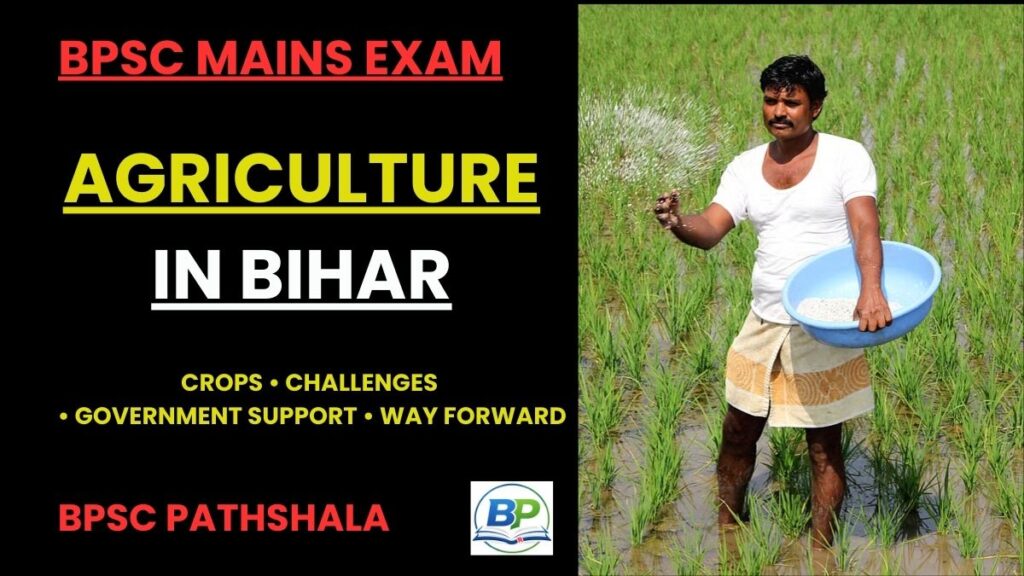
1. Introduction: Rising Importance of Horticulture in Bihar
Horticulture in Bihar has emerged as a critical growth driver within the agricultural sector. According to the Bihar Economic Survey 2025–26, the state has witnessed steady expansion in both area and production of horticultural crops, indicating a structural shift from cereal-dominated farming toward high-value agriculture.
Total horticulture production in the state has reached around 230 lakh tonnes in 2023–24, reflecting consistent growth over recent years. Vegetables form the largest component, followed by fruits and spices. This growth is significant because agriculture and allied activities contribute nearly one-fourth of the state’s Gross State Value Added, and horticulture is becoming an increasingly important contributor within this segment.
The expansion of horticulture in Bihar is not accidental. It is supported by fertile alluvial soils, abundant groundwater resources, favourable agro-climatic conditions and targeted government interventions. More importantly, horticulture offers higher returns per hectare compared to traditional cereals, making it particularly suitable for Bihar, where average landholding size is small.
Thus, horticulture in Bihar is gradually transforming from a supplementary agricultural activity into a strategic pillar for income enhancement, crop diversification and rural employment generation.
Master Geography & Economy. Ace BPSC Mains.
BPSC Mains GS Paper-2: Geog & Economy Course
Master Indian Geography, Bihar Geography, Indian Economy, Bihar Economy, Agriculture and Industry with structured, exam-oriented
PDF notes designed specifically for BPSC Mains.
✓ 6 Comprehensive Lessons • ✓ 80+ Exam-Oriented Topics • ✓ Bihar-Specific Coverage • ✓ Mains Answer Writing Focus
2. Area, Production and Growth Trends
The growth trajectory of horticulture in Bihar reflects a gradual but clear diversification within the agricultural sector. As highlighted in Economic Survey 2025–26, the total horticulture production in the state has reached around 230 lakh tonnes in 2023–24, showing consistent expansion over recent years.
Composition of Production
Vegetables constitute the largest share of horticulture output in Bihar. Due to fertile alluvial soil, irrigation support and favourable climatic conditions, vegetable cultivation has expanded across most districts. Fruits form the second-largest component, followed by spices and plantation crops. The dominance of vegetables is economically significant because they provide:
- Short crop cycles
- Multiple harvests in a year
- Higher income per unit area
Area Expansion Trends
The Survey indicates a steady increase in the area under horticulture crops. Farmers are gradually allocating more land to fruits and vegetables due to better market returns compared to traditional cereal crops like paddy and wheat. This shift reflects a structural transformation:
- From subsistence agriculture
- To market-oriented, high-value farming
Productivity Trends
Productivity levels of vegetables in Bihar are comparatively strong within eastern India. Availability of irrigation and adoption of improved varieties have supported yield improvements. Horticulture’s growth is particularly important in the context of:
- Small average landholdings
- Rising urban demand for fruits and vegetables
- Expanding food processing potential
Thus, the increasing area, rising production and improving productivity trends demonstrate that horticulture in Bihar is becoming a central pillar of agricultural diversification and income enhancement.
3. Major Horticultural Crops of Bihar
The expansion of horticulture in Bihar is reflected in the diversity of crops cultivated across different agro-climatic regions. Bihar economic survey 2025-26 highlights fruits, vegetables, spices and makhana as the core components of the state’s horticultural economy.
Fruits
Fruit cultivation forms a major segment of horticulture in Bihar. Mango, litchi, banana and guava are the principal fruit crops.
- Litchi: Muzaffarpur is nationally known for high-quality litchi production. Bihar is one of the leading producers of litchi in India.
- Mango: Grown widely in Bhagalpur, Darbhanga and adjoining districts.
- Banana: Concentrated in Vaishali and Katihar, supported by fertile alluvial soil and irrigation.
- Guava and other fruits: Cultivated across central districts.
Fruit crops are important because they provide higher value per hectare and support processing industries like pulp and juice manufacturing.
Vegetables
Vegetables form the largest share of horticulture output in Bihar. Major crops include:
- Potato
- Onion
- Brinjal
- Tomato
- Cauliflower
- Cabbage
Vegetable cultivation benefits from short crop duration and multiple cropping cycles. This makes it highly suitable for small farmers. The steady expansion of vegetable production has been a key factor behind the rise in total horticulture output.
Spices
Spices such as chilli, turmeric and garlic are cultivated in various districts. Though their area is smaller compared to vegetables, they offer good market value and export potential.
Makhana (Special Focus Crop)
Makhana holds unique importance in horticulture in Bihar. The state accounts for nearly 80–90 percent of India’s makhana production, primarily in the Mithilanchal region. Makhana cultivation is linked with wetlands and ponds, making it both an agricultural and aquatic activity. Its significance lies in:
- High market value
- Export potential
- Employment generation in processing
- Suitability for waterlogged areas
Government support for makhana processing clusters and branding has enhanced its commercial importance.
Thus, the diversity of fruit, vegetable, spice and makhana cultivation demonstrates that horticulture in Bihar is not confined to a single crop but represents a multi-dimensional agricultural transformation.
Prepare Smarter. Study Better. Ace BPSC Mains.
BPSC Mains GS Paper 1 & 2 Complete Course
Access comprehensive BPSC Mains Notes for GS Paper 1 & 2, covering 378+ topics across 24 PDF lessons, with dedicated Bihar coverage, practice questions and downloadable study material.
✓ GS Paper 1 & 2 • ✓ 378+ Topics • ✓ 24 PDF Lessons • ✓ Bihar-Specific Coverage • ✓ Downloadable Notes
4. District-Wise Horticultural Specialisation
One of the most striking features of horticulture in Bihar is its strong district-level specialisation. Chapter 3, Section 3.3 (pages 75–88) highlights how different regions have developed crop-specific strengths based on soil, climate and water availability.
Muzaffarpur – Litchi Hub
Muzaffarpur district has earned national recognition for high-quality litchi production. The favourable agro-climatic conditions and well-developed orchard systems make it a major contributor to fruit output. Litchi cultivation here supports export-oriented marketing and processing units.
Mithilanchal Region – Makhana Belt
Districts such as Darbhanga, Madhubani, Supaul and Purnea form the core makhana-producing region. The presence of wetlands and ponds provides ideal ecological conditions. This regional concentration has encouraged development of makhana processing and branding initiatives.
Vaishali and Katihar – Banana Production
These districts are known for extensive banana cultivation due to fertile alluvial soil and irrigation support. Banana farming generates continuous income and supports local trading networks.
Bhagalpur and Darbhanga – Mango Cultivation
Mango orchards are widely found in these districts. The fruit sector here contributes significantly to seasonal employment and agro-based processing activities.
Statewide Vegetable Clusters
Vegetable cultivation is widespread across north and central Bihar. Districts such as Nalanda, Patna, Samastipur and Saran have developed vegetable clusters due to irrigation availability and proximity to urban markets.
This spatial specialisation creates natural clusters that can be leveraged for:
- Crop-based industrial development
- Cold storage and value chain planning
- Export promotion
- Branding and Geographical Indication tagging
Thus, horticulture in Bihar is not uniformly distributed but regionally specialised, providing opportunities for cluster-based development and targeted policy intervention.
Key Indicators of Horticulture in Bihar (2023–24)
| Indicator | Status/Trend |
|---|---|
| Total Horticulture Production | ~230 lakh tonnes |
| Major Component | Vegetables (largest share) |
| Major Fruits | Mango, Litchi, Banana, Guava |
| Major Vegetable Crops | Potato, Onion, Tomato, Brinjal, Cauliflower |
| Major Spice Crops | Chilli, Turmeric, Garlic |
| Makhana Production Share | 80–90% of India’s production |
| Key Litchi District | Muzaffarpur |
| Key Banana Districts | Vaishali, Katihar |
| Key Makhana Region | Mithilanchal (Darbhanga, Madhubani, Supaul) |
| Cold Storage Strength | Among leading states in eastern India |
| Policy Focus Areas | Orchard development, protected cultivation, cold chain expansion |
5. Government Schemes and Institutional Support
The expansion of horticulture in Bihar is not only the result of favourable natural conditions but also sustained policy intervention. Bihar Economic Survey 2025-26 highlights several targeted schemes aimed at increasing area, productivity and value addition in horticultural crops.
Area Expansion and Orchard Development
The state government provides financial assistance for plantation of fruit crops such as mango, litchi, banana and guava. Farmers receive subsidies for establishing new orchards, rejuvenating old plantations and adopting high-yielding varieties. This has encouraged diversification from traditional cereals to high-value fruit crops.
Chief Minister Horticulture Mission
Under this mission, support is extended for nursery development, quality seed distribution and promotion of improved cultivation techniques. The focus is on increasing productivity and ensuring availability of certified planting material.
Protected Cultivation and Micro-Irrigation
To enhance productivity and reduce climate risk, the government promotes polyhouse farming, shade-net cultivation and drip irrigation systems. These measures improve water-use efficiency and allow off-season production of vegetables and flowers, thereby increasing farmer income.
Input and Technology Support
Training programmes, demonstration plots and extension services help farmers adopt scientific cultivation practices. The introduction of improved varieties and modern farming techniques has contributed to rising productivity levels.
Institutional Strengthening
Efforts are also being made to strengthen Farmer Producer Organisations (FPOs) and cooperative structures. This institutional support improves market access, collective bargaining power and supply chain efficiency.
These policy measures demonstrate that horticulture in Bihar is being promoted as a strategic sector for agricultural diversification, income enhancement and rural employment generation.
6. Post-Harvest Infrastructure and Cold Storage Capacity
A major constraint in the development of horticulture in Bihar has traditionally been post-harvest loss. Fruits and vegetables are highly perishable, and without adequate storage and transport facilities, farmers often face distress sales. Chapter 3, Section 3.3 (pages 75–88) highlights the state’s efforts to strengthen post-harvest infrastructure.
Cold Storage Expansion
Bihar has developed a significant number of cold storage units, particularly in potato- and vegetable-producing districts. The state ranks among the leading states in eastern India in terms of cold storage capacity. This infrastructure is critical for stabilising prices and reducing spoilage.
Cold storage facilities are concentrated in districts such as Nalanda, Patna, Muzaffarpur and Vaishali, where vegetable production is high. Expansion of cold chain infrastructure helps farmers store produce and sell when market prices are favourable.
Reduction of Post-Harvest Loss
Improved storage facilities, grading centres and packaging support have helped reduce post-harvest losses. However, the coverage is still uneven across districts, especially in fruit-producing belts where integrated cold chains are needed.
Infrastructure Gaps
Despite progress, challenges remain in:
- Last-mile connectivity
- Refrigerated transport
- Processing-level storage
- Scientific ripening chambers
Strengthening the entire cold chain from farm to market is essential to maximise returns from horticulture in Bihar. Thus, post-harvest infrastructure plays a decisive role in transforming horticulture from mere production growth to income growth.
7. Value Chain, Processing and Export Potential
The long-term sustainability of horticulture in Bihar depends not only on production growth but also on strengthening the value chain from farm to market. Bihar economic survey 2025-26 emphasizes the need for value addition, processing and better market integration to maximise farmer income.
Agro-Processing Linkages
Fruits such as litchi and mango offer strong potential for pulp, juice and processed food industries. Similarly, vegetables can support dehydration, pickling and packaging units. Integrating horticulture with the food processing sector reduces wastage and enhances value realisation.
Makhana processing has already developed as a localised value chain activity in north Bihar. Cleaning, roasting and packaging of makhana generate rural employment beyond primary cultivation. This demonstrates how crop-specific processing can enhance income and reduce raw produce dependency.
Export Potential
Certain crops such as litchi and makhana have export demand. Branding initiatives and quality certification are essential to access international markets. With proper grading, packaging and cold chain support, Bihar can expand its share in national and global horticulture trade.
Market Linkages and FPOs
Strengthening Farmer Producer Organisations improves collective marketing and bargaining power. Digital platforms and modern mandis can enhance price transparency and reduce middlemen dependence.
Need for Integrated Value Chain Development
To fully realise the benefits of horticulture in Bihar, the state must focus on:
- Processing clusters near production zones
- Quality control and certification
- Storage and logistics integration
- Promotion of GI-tagged products
Thus, value chain development is the key to transforming horticulture from a production-based sector into a high-income, market-oriented agricultural system.
8. Economic Significance of Horticulture in Bihar
The expansion of horticulture in Bihar has important economic implications for the state’s agrarian structure. While cereals still occupy a large share of cultivated land, horticulture contributes disproportionately to income generation due to its high value per hectare.
Higher Returns per Unit Area
Compared to traditional crops like paddy and wheat, fruits and vegetables provide significantly higher returns on smaller plots of land. This is particularly relevant in Bihar, where average landholdings are small and fragmented. Horticulture enables farmers to earn more income without expanding land area.
Employment Generation
Horticulture is labour-intensive. Activities such as nursery development, planting, harvesting, grading, packaging and processing create employment opportunities throughout the year. This supports rural livelihoods and reduces seasonal underemployment.
Crop Diversification and Risk Reduction
Diversification into fruits, vegetables and spices reduces dependence on monsoon-sensitive cereal crops. Multiple cropping cycles and shorter crop durations provide income stability and reduce risk exposure.
Support to Allied Sectors
Horticulture stimulates growth in:
- Cold storage and logistics
- Food processing industries
- Transport services
- Packaging and marketing networks
The total horticulture production of around 230 lakh tonnes indicates the sector’s growing weight within agriculture. As agriculture and allied activities contribute nearly one-fourth of the state’s Gross State Value Added, horticulture’s expanding share enhances overall agricultural growth.
Thus, horticulture in Bihar is not merely a sub-sector of agriculture but a strategic driver of rural income, employment and value addition.
9. Challenges and Structural Constraints
Despite the steady rise of horticulture in Bihar, several structural challenges limit its full potential. While production has expanded, income realisation and value addition remain uneven across districts.
Fragmented Landholdings
Bihar has one of the smallest average landholding sizes in India. Fragmentation makes mechanisation difficult and limits large-scale commercial horticulture. Small farmers often lack the capital required for orchard development or protected cultivation.
Post-Harvest Loss and Infrastructure Gaps
Although cold storage capacity has increased, it is concentrated in selected districts and mainly oriented toward potato storage. Fruit-specific cold chains, ripening chambers and refrigerated transport remain inadequate. This leads to post-harvest losses and distress sales, especially for perishable fruits like litchi and mango.
Market Access and Price Volatility
Farmers frequently face price fluctuations due to lack of organised marketing channels. Weak linkages with processing industries and export markets reduce bargaining power. Middlemen dominance often lowers farm-gate prices.
Limited Processing Capacity
Despite strong production of fruits and makhana, processing infrastructure is still developing. Absence of large-scale processing units limits value addition within the state.
Climate Vulnerability
Horticultural crops are sensitive to unseasonal rainfall, temperature variations and flood events. Climate change increases production risks, particularly for fruit orchards.
Thus, while horticulture in Bihar has shown impressive growth in production, structural reforms in infrastructure, market integration and climate resilience are necessary to ensure sustainable and equitable development.
10. Way Forward
To fully realise the potential of horticulture in Bihar, policy focus must shift from production expansion alone to integrated value chain development and climate-resilient growth.
Strengthening Cold Chain and Logistics
The state should develop integrated cold chain networks connecting production clusters with markets. Expansion of fruit-specific cold storage, ripening chambers and refrigerated transport will reduce post-harvest losses and stabilise prices.
Cluster-Based Development
District-level crop specialisation such as litchi in Muzaffarpur and makhana in Mithilanchal should be developed into formal agro-processing clusters. Establishing processing parks near production zones can increase value addition and employment.
Promotion of Processing and Branding
Encouraging fruit pulp units, dehydration plants and makhana processing industries will retain more value within the state. Branding, Geographical Indication promotion and export certification can enhance market access.
Strengthening Farmer Producer Organisations
FPOs should be expanded to improve collective marketing, input procurement and bargaining power. Digital marketing platforms can improve price transparency.
Climate-Resilient Practices
Promotion of drip irrigation, protected cultivation and improved varieties will reduce climate risk. Scientific orchard management and crop insurance coverage can enhance resilience.
Access to Credit and Technology
Providing affordable credit and technical training to small farmers will enable adoption of modern horticulture practices.
If these measures are implemented effectively, horticulture in Bihar can transition from a production-oriented activity to a high-value, market-driven agricultural transformation that supports income growth, employment and rural development.
Conclusion
The expansion of horticulture in Bihar represents a structural shift within the state’s agricultural economy. With total production reaching around 230 lakh tonnes in 2023–24, horticulture has moved beyond being a supplementary activity to becoming a major driver of diversification and income enhancement. Vegetables dominate output, while fruits such as litchi, mango and banana provide strong regional specialisation. Makhana gives Bihar a unique national advantage.
However, production growth must now be matched with improvements in cold chain infrastructure, processing capacity and market integration. If supported by cluster-based development, value addition and climate-resilient practices, horticulture in Bihar can significantly enhance rural income, generate employment and strengthen agro-based industries.
BPSC Mains Practice Questions: Horticulture in Bihar
- Discuss the growth and structural transformation of horticulture in Bihar. How does it contribute to agricultural diversification and farmer income?
- Examine the district-wise specialisation of horticulture in Bihar. Analyse the role of government interventions in promoting high-value crops.
- Identify the major challenges in the development of horticulture in Bihar. Suggest measures to strengthen value chain and export potential.
Also Read….
- Agriculture in Bihar
- Urbanization in Bihar
- Migration from Bihar: Causes, Economic Impact, and Policy Responses
- Tourism in Bihar
- Flood in Bihar: Causes, Impacts, and Sustainable Solutions
- Drought in Bihar: Causes, Impacts, and Sustainable Solutions
- River System of Bihar
- Inland Waterways in Bihar: Potential, Challenges, and the Way Forward
- Irrigation in Bihar: Need, Sources, Challenges, and Government Support
- Demographic Dividend in Bihar: Turning Population into Prosperity
- Economic backwardness of Bihar
- Climate of Bihar
- Soil of Bihar
- Physiographic Division of Bihar
- industries in Bihar
- Natural Resources in Bihar
- Mineral Resources of Bihar