1. What is Urban Heat Island?
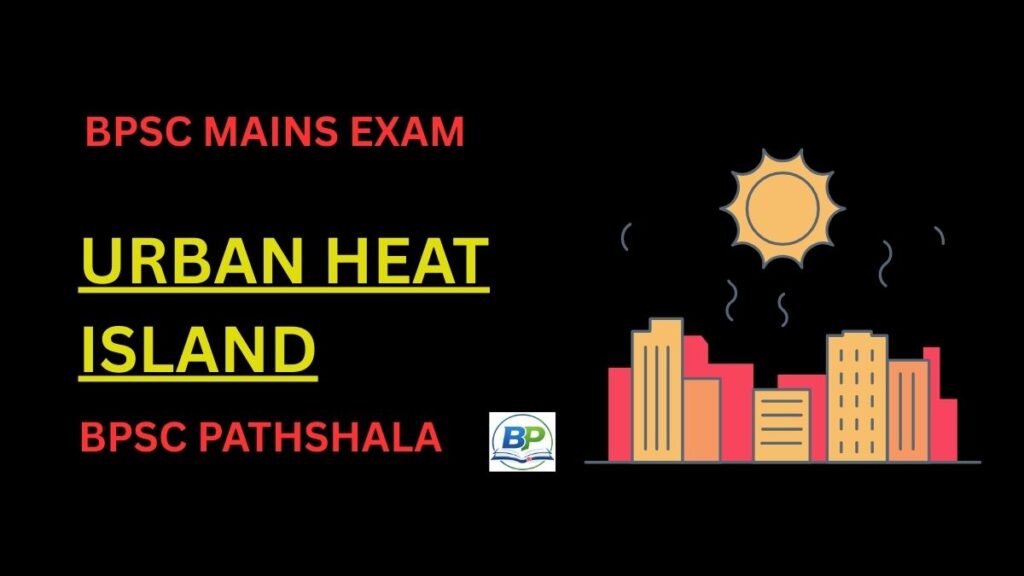
An urban heat island (UHI) is a local climate phenomenon in which certain areas within a city experience higher temperatures than the surrounding rural or suburban regions. This temperature difference occurs mainly because urban surfaces such as buildings, roads and pavements absorb and retain more heat than natural landscapes like forests, farms or water bodies.
Cities are dominated by materials such as concrete, asphalt, bricks and glass. These materials absorb large amounts of solar radiation during the day and release heat slowly at night, causing urban areas to remain warmer for longer periods. As a result, the temperature in city centres can be about 3–5°C higher than nearby rural areas.
The urban heat island effect is further intensified by dense construction, limited green spaces and heavy human activities such as transportation and industrial operations. With rapid urbanization in India, this phenomenon is becoming more noticeable in major metropolitan cities.
Thus, the urban heat island effect reflects how urban infrastructure and reduced vegetation can significantly alter local temperature patterns.
Master Geography & Economy. Ace BPSC Mains.
BPSC Mains GS Paper-2: Geog & Economy Course
Master Indian Geography, Bihar Geography, Indian Economy, Bihar Economy, Agriculture and Industry with structured, exam-oriented
PDF notes designed specifically for BPSC Mains.
✓ 6 Comprehensive Lessons • ✓ 80+ Exam-Oriented Topics • ✓ Bihar-Specific Coverage • ✓ Mains Answer Writing Focus
2. Why Cities Are Hotter Than Rural Areas
Cities tend to be warmer than nearby rural regions due to differences in land use, building materials and vegetation. In urban areas, natural landscapes are replaced by roads, buildings and pavements that absorb and retain heat. This intensifies the urban heat island effect. Several factors explain this temperature difference:
- Less green vegetation
Rural areas have more forests, farms and open land. Plants regulate temperature through transpiration, a process in which water evaporates from leaves and cools the surrounding air. - More concrete and asphalt surfaces
Urban areas contain materials such as concrete, bricks and asphalt that absorb and store heat during the day and release it slowly at night. - Reduced airflow
High-rise buildings and narrow streets restrict air circulation, preventing natural cooling. - Dark-colored materials
Urban construction materials are often dark, which absorb more solar radiation and increase surface temperature.
Because of these factors, non-green urban localities experience higher temperatures than greener neighborhoods. Increasing urban greenery is therefore essential to reduce the urban heat island effect.
Prepare Smarter. Study Better. Ace BPSC Mains.
BPSC Mains GS Paper 1 & 2 Complete Course
Access comprehensive BPSC Mains Notes for GS Paper 1 & 2, covering 378+ topics across 24 PDF lessons, with dedicated Bihar coverage, practice questions and downloadable study material.
✓ GS Paper 1 & 2 • ✓ 378+ Topics • ✓ 24 PDF Lessons • ✓ Bihar-Specific Coverage • ✓ Downloadable Notes
3. Major Causes of Urban Heat Island
The urban heat island effect is mainly caused by rapid urbanization and changes in land surfaces. As cities expand, natural landscapes are replaced by artificial structures that absorb and retain more heat.
- Increase in construction activities
Rapid growth of buildings, roads, parking areas and pavements requires materials like concrete and asphalt. These materials trap large amounts of heat and raise surface temperatures. - Dark urban surfaces
Many urban structures have dark surfaces, which reduce albedo (the ability of a surface to reflect sunlight). As a result, more solar radiation is absorbed, increasing heat levels. - Air conditioning and energy use
Buildings with high heat absorption require extensive use of air conditioning. Air conditioners release heat into the surrounding air, which further increases local temperatures. - Urban canyon effect
Tall buildings and narrow streets block wind flow and reduce ventilation. This traps warm air within city streets, preventing natural cooling. - Transport and fossil fuel use
Vehicles and transportation systems burn fossil fuels, releasing heat and greenhouse gases that contribute to rising urban temperatures. - Lack of trees and green spaces
Urban areas often lack adequate vegetation. Trees provide shade and support evapotranspiration, which naturally cools the environment.
These factors together intensify the urban heat island effect, especially in densely populated metropolitan areas.
4. Measures to Reduce Urban Heat Island
Reducing the urban heat island effect requires better urban planning, increased vegetation and improved building design. Several practical measures can help lower urban temperatures and improve the quality of life in cities.
- Increase green cover
Expanding urban forests, parks and roadside plantations can significantly reduce heat. Trees provide shade and cool the air through evapotranspiration. - Promote passive cooling in buildings
Passive cooling techniques such as natural ventilation, shaded windows and traditional building designs can reduce indoor heat without excessive energy use. Many traditional Indian houses used such climate-responsive architecture. - Use reflective construction materials
Roofs and terraces painted in white or light colors reflect sunlight and reduce heat absorption. This helps lower surface temperature in buildings. - Green roofs and terrace gardens
Terrace plantations and rooftop gardens help reduce heat load in buildings while improving air quality. - Sustainable urban planning
Cities should promote open spaces, wider streets and better air circulation to prevent heat accumulation.
These strategies can significantly reduce the urban heat island effect and help cities become more climate-resilient in the future. Detailed scientific explanation of the urban heat island phenomenon and its global examples can be found on the NASA Earth Observatory – Urban Heat Island Effect platform, which explains how urban infrastructure influences local temperature patterns.
BPSC Mains Practice Questions – Urban Heat Island
- What is an Urban Heat Island? Explain the major causes responsible for the formation of urban heat islands in cities.
- Discuss the impact of urban heat island on urban climate and public health. Suggest suitable measures to reduce the urban heat island effect in Indian cities.
Also Read…
- Characteristic of Indian Monsoon
- Effect of Monsoon on Indian Economy
- Blue Economy: Growth with Sustainability in the 21st Century
- Inland Waterway in India: National Waterways, Economic Importance, Challenges and Future Prospects
- Transportation & Industrial Development in India: Role, Impact, Challenges and Future Trends
- Transportation & agricultural development
- River dispute among Indian States
- Multipurpose River Valley Projects in India
- Rain Shadow area
- Sustainable development