Drought in Bihar: Causes, Impacts, and Sustainable Solutions
1. Introduction
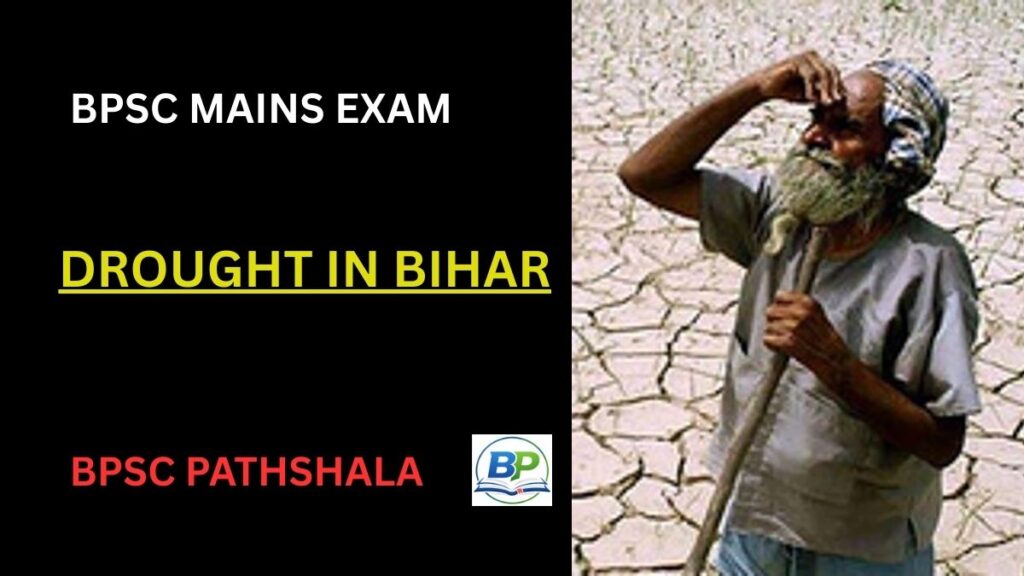
Drought in Bihar is a recurring but less discussed disaster compared to floods. While Bihar is often associated with devastating floods, large parts of the state—especially South and South-West Bihar—face drought-like conditions every 2–3 years. According to the Bihar State Disaster Management Authority (BSDMA), even flood-prone North Bihar has started witnessing drought situations due to erratic rainfall patterns.
Drought in Bihar is mainly driven by monsoon dependency, weak irrigation infrastructure, declining water bodies, and ecological degradation. The problem severely affects agriculture, employment, and migration patterns in the state. Unlike floods, drought develops slowly but causes long-term damage to livelihoods and the rural economy, making it a silent but persistent crisis.
2. Flood vs Drought in Bihar
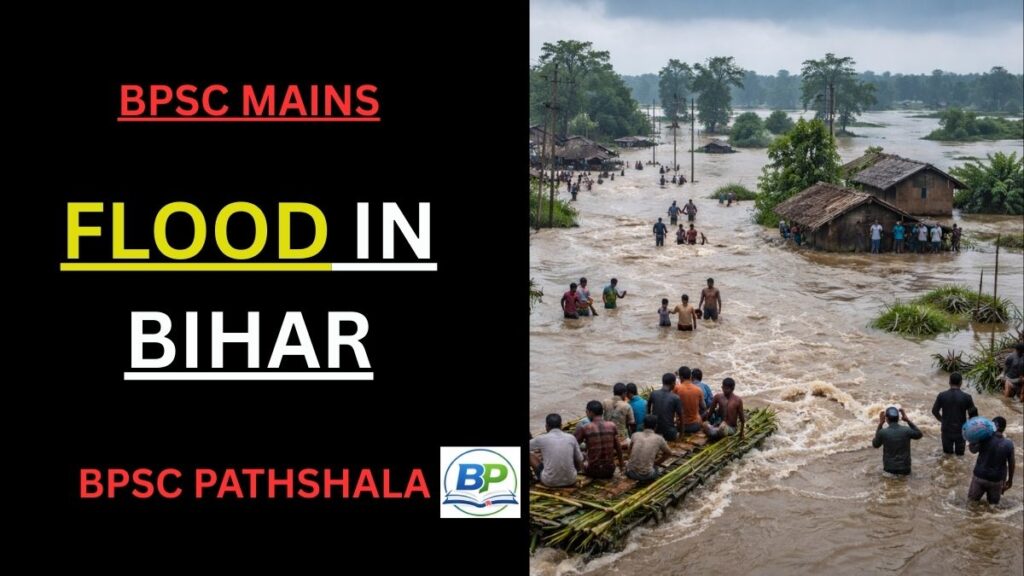
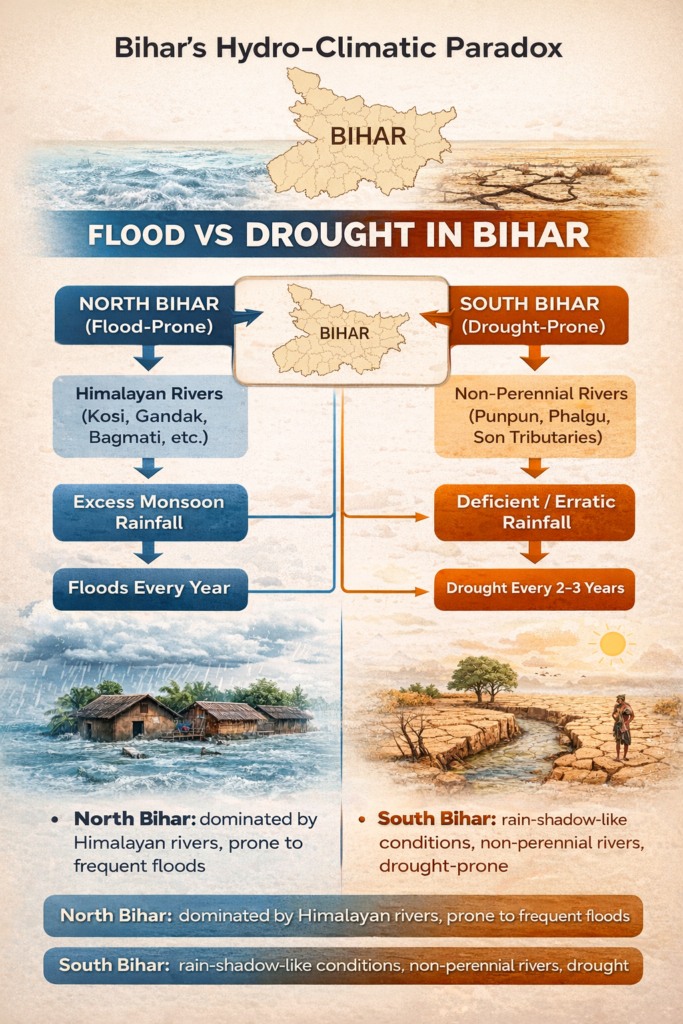
Bihar presents a unique paradox where floods and drought coexist.
- North Bihar: Dominated by Himalayan rivers, prone to frequent floods
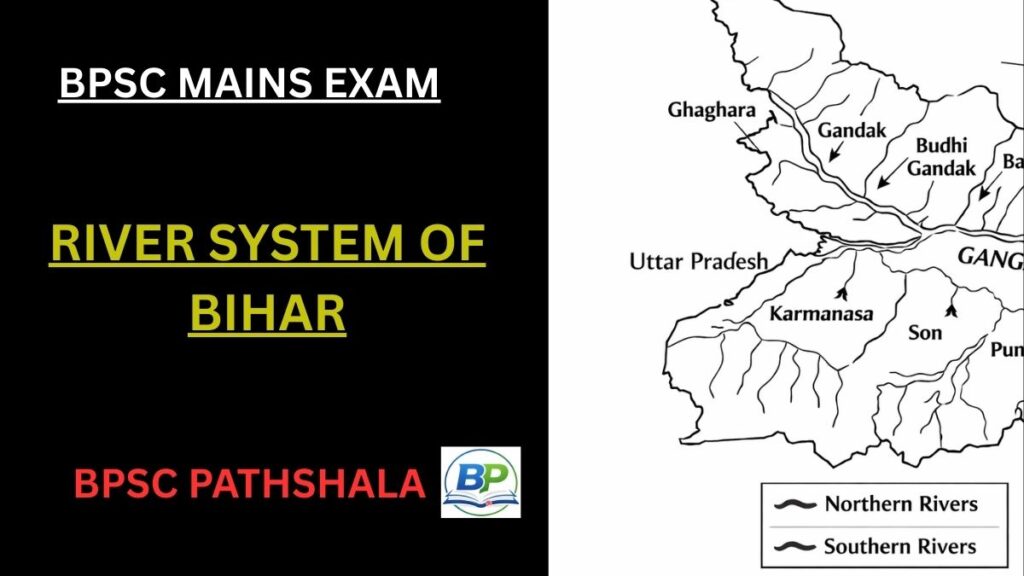
- South and South-West Bihar: Rain-shadow-like conditions, non-perennial rivers, drought-prone
While floods are sudden and destructive, droughts are slow-onset disasters that reduce soil moisture, groundwater levels, and agricultural productivity. Increasing climate variability has blurred this traditional division, with even flood-prone regions occasionally facing drought.
3. Causes of Drought in Bihar
Dependence on Monsoon Rainfall
Bihar receives about 108 cm average annual rainfall, of which nearly 85% occurs during the monsoon. However, monsoon rainfall—especially in South Bihar—is highly inconsistent. Deficient rainfall years frequently lead to drought conditions.
Lack of Proper Irrigation Facilities
Less than 50% of Bihar’s farmland is irrigated. Of this:
- 63% depends on tube wells
- 31% on canal-based irrigation
- Remaining from other sources
Overdependence on tube wells has caused groundwater depletion, worsening drought risk. Only a few districts like Kaimur, Banka, and Lakhisarai have adequate canal irrigation.
Decline of Ponds and Traditional Water Bodies
The number of ponds and tanks has declined sharply. These structures earlier ensured year-round water availability and groundwater recharge. Outdated irrigation practices also lead to massive water wastage.
Decline in Forest Cover
As per the India State of Forest Report (2019), Bihar has only 7.76% forest cover, far below the recommended 33%. Reduced forest cover affects local rainfall patterns and accelerates water loss.
4. Impact of Drought in Bihar
Agricultural Failure
Drought leads to crop failure, loss of income, food insecurity, and malnutrition among farming households.
Unemployment and Livelihood Crisis
Over 80% of Bihar’s population depends on agriculture and allied activities. Drought reduces on-farm and off-farm employment opportunities.
Migration
Drought-induced unemployment causes large-scale distress migration to metropolitan cities and agricultural regions of Punjab and Haryana.
Economic Decline
Agriculture contributes about 19.3% to Bihar’s GDP. Repeated droughts reduce agricultural output and create a ripple effect across other sectors.
Environmental Degradation
Groundwater depletion dries up vegetation, reduces already low forest cover, raises temperatures, and increases long-term environmental and health risks.
5. Ways to Mitigate Drought in Bihar
Building Dams and Canals
Most rivers in South Bihar are non-perennial. Excess monsoon water can be stored by constructing small and medium dams and canal networks. Dams can:
- Control floods
- Increase irrigation
- Generate electricity
- Recharge groundwater
Lift Irrigation Projects
Although South Bihar slopes upward from the Ganga, lift irrigation systems can transfer water from the Ganga basin. Projects like Kaleshwaram Lift Irrigation (Telangana) provide a workable model.
River Interlinking
Linking seasonal rivers can reduce monsoon water wastage, lower flood pressure on the Ganga, and increase groundwater recharge in drought-prone areas of South Bihar. Kosi–Mechi Link (Bihar): Proposed to divert surplus floodwater of the Kosi to the Mechi basin, helping reduce floods in North Bihar and drought in South Bihar.
Revival of Pond and Tank Culture
Promoting village-level ponds helps irrigation, groundwater recharge, and provides alternative livelihoods through fisheries.
6. Government Initiatives
The Bihar Government has recognised drought in Bihar as a recurring developmental challenge, especially in South and South-West Bihar, and has taken several policy and administrative measures to mitigate its impact. The Bihar State Disaster Management Authority (BSDMA) plays a central role in drought monitoring, declaration, and response. Districts such as Gaya, Nawada, Aurangabad, Rohtas, Bhojpur, and Munger are regularly assessed based on rainfall deficiency, crop condition, and groundwater status.
Relief-oriented measures include crop loss compensation, provision of food grains under the Public Distribution System, and employment support through rural wage employment programmes during drought years. Crop insurance schemes are used to provide partial income security to farmers facing crop failure due to deficient rainfall. According to official data, agriculture in Bihar contributes only about 19.3% to the State Gross Domestic Product, but supports more than 80% of the population, making drought relief politically and economically critical.
On the supply side, the government has expanded minor irrigation projects, promoted tube wells and lift irrigation schemes, and encouraged rainwater harvesting structures in rural areas. However, data from the Irrigation Department shows that less than 50% of Bihar’s agricultural land is irrigated, and more than 63% of irrigation depends on tube wells, leading to groundwater depletion. While canal-based irrigation exists, it is concentrated in a limited number of districts, leaving most drought-prone regions vulnerable.
The government has also begun promoting crop diversification, encouraging farmers to shift from water-intensive crops to pulses, oilseeds, maize, and potato, which require less water and are better suited to dry conditions. Skill development, livestock rearing, fisheries, and poultry farming are being promoted as alternative livelihoods to reduce exclusive dependence on rainfall-based agriculture.
Despite these efforts, most initiatives remain reactive and short-term, focusing on relief rather than long-term drought-proofing.
7. Way Forward
A sustainable solution to drought in Bihar requires a shift from crisis management to integrated water and land management. The most important priority is reducing excessive dependence on monsoon rainfall by expanding assured irrigation coverage. Large-scale investment in dams, reservoirs, and canal networks on non-perennial rivers of South Bihar can help store excess monsoon water and make it available during dry periods. Such infrastructure can simultaneously control minor floods and mitigate drought.
Lift irrigation projects offer a practical solution for South Bihar, which slopes upward from the Ganga towards the Chhotanagpur Plateau. Successful examples like the Kaleshwaram Lift Irrigation Project in Telangana demonstrate that large-scale water transfer using modern technology is feasible. Similar projects from the Ganga basin could significantly improve water availability in drought-prone districts of Bihar.
Another critical intervention is river interlinking, which can help transfer surplus monsoon water from flood-prone basins to drought-affected regions. Proposed links such as the Kosi–Mechi link aim to reduce flood intensity in North Bihar while enhancing groundwater recharge and irrigation in southern areas. If implemented carefully with environmental safeguards, river interlinking can address both flood and drought challenges together.
Revival of traditional water bodies—ponds, tanks, ahars, and pynes—must be prioritised. These indigenous systems historically supported irrigation and groundwater recharge in Bihar. Large-scale restoration can provide decentralised water security and additional livelihoods through fisheries.
Finally, long-term drought resilience depends on ecological restoration. Increasing Bihar’s forest cover from the current 7.76% is essential to improve rainfall regulation, reduce evapotranspiration losses, and stabilise local climate. Scientific land-use planning, soil mapping, promotion of rainwater harvesting, and climate-resilient agriculture must be integrated into development planning.
In essence, drought in Bihar cannot be eliminated, but its impacts can be drastically reduced through planned water storage, irrigation expansion, ecological restoration, and diversification of rural livelihoods.
BPSC Mains Practice Questions (Drought and Flood–Drought Paradox in Bihar)
- Drought in Bihar is a recurring problem, particularly in South and South-West Bihar. Examine the causes and impacts of drought in Bihar and suggest long-term measures for drought mitigation.
- Bihar presents a unique flood–drought paradox. Explain this paradox and discuss how integrated water resource management can help address both floods in North Bihar and drought in South Bihar simultaneously.
Also Read….