Effect of Religion on Mauryan and Pala Art
1. Introduction
Art in ancient India was never separate from religion. Religion shaped the ideas, symbols, themes, materials and purpose of art. The Mauryan period and the Pala period are two important phases where religion played a decisive role in artistic development. The effect of religion on Mauryan and Pala art can be clearly seen in their architecture, sculpture and artistic themes. Religion determined the purpose, symbolism and style of art during both the Mauryan and Pala periods in ancient India.
- Mauryan Art was deeply influenced by Buddhism, with elements of Jainism and Brahmanical traditions.
- Pala Art was mainly influenced by Buddhism (especially Vajrayana), along with Hinduism.
Understanding the effect of religion on Religion on Mauryan and Pala Art traditions helps in answering questions related to culture, architecture, sculpture and religious history.
Get Complete BPSC Mains History Notes PDF
Download organised history notes for bpsc mains designed for quick revision and better answer writing.
| Instant access | Downloadable PDFs | Structured BPSC mains preparation |
2. Religious Background of the Mauryan Period
To understand the effect of religion on Mauryan and Pala art, it is important to first examine the religious background of the Mauryan period. The Mauryan Empire (4th–2nd century BCE) emerged at a time when new religious ideas were challenging old Vedic traditions. Among these, Buddhism had the maximum impact on Mauryan art.
Major Religious Influences
- Buddhism – received strong royal patronage, especially under Ashoka
- Jainism – followed by Chandragupta Maurya
- Brahmanical traditions – continued at a social level
3. Effect of Buddhism on Mauryan Art
3.1 Shift from Ritual to Moral Art
Buddhism emphasised Non-violence, Compassion, Ethical living and Dhamma (moral law). As a result, Mauryan art became didactic (meant to teach moral values) and art was used as a medium of communication, not decoration. For Example: Ashokan pillars conveyed moral messages rather than showing gods.
3.2 Stupas as Religious Monuments
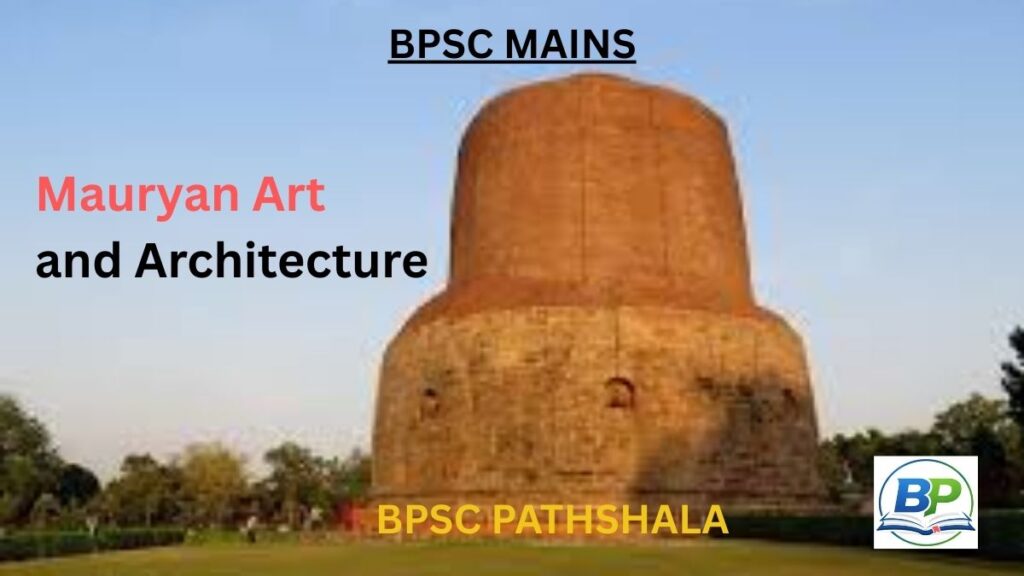
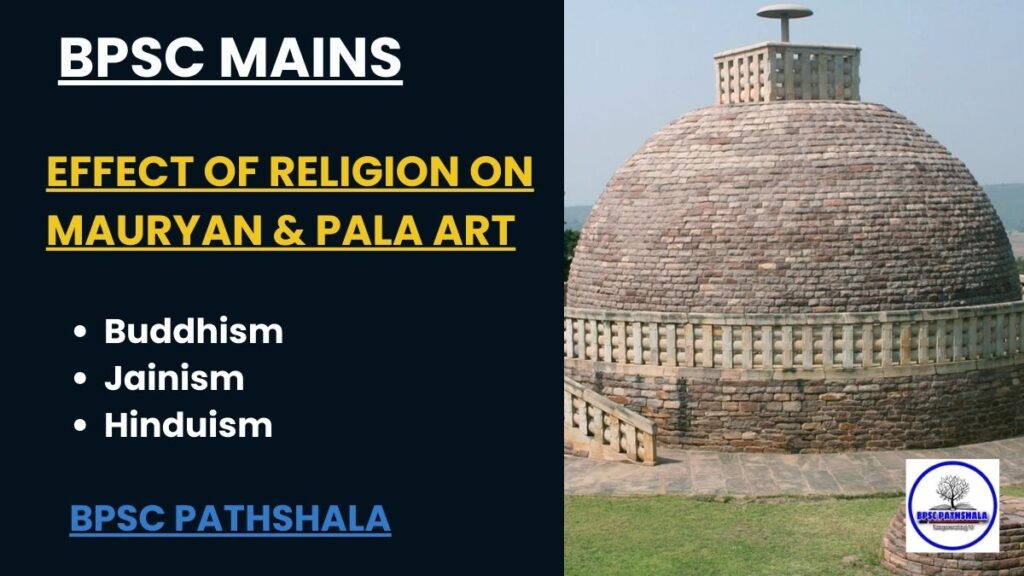
Buddhism introduced the stupa as a central religious structure. The feature of Stupa was also influenced by religion:
- Stupa symbolised the Buddha and his teachings
- No idol worship in early Buddhism
- Focus on symbols like: Wheel (Dharma Chakra), Lotus, Bodhi tree, Footprints of Buddha
- Mauryan contributed to enlargement and standardisation of stupas
3.3 Pillars and Edicts as Religious Tools
Ashokan pillars are one of the finest examples of Mauryan art influenced by religion. Religious influence visible in Pillar are as follows:
- Use of pillars to spread Dhamma
- Edicts carved for public moral guidance
- Animals on capitals symbolised Buddhist ideas: Lion – courage and authority of Dhamma, Wheel – law and motion
- The famous lion capital reflects: Strength of moral order, Universal message of Buddhism
3.4 Absence of Anthropomorphic Buddha Images
- Due to early Buddhist beliefs Buddha was not shown in human form and his symbolic representation was preferred
- This religious idea shaped Mauryan sculpture by limiting human religious imagery and encouraging symbolic art
3.5 Influence of Jainism
Jainism also influenced Mauryan art, though on a smaller scale. Jain values of austerity led to simple and restrained art. Cave architecture developed for Jain monks. Use of polished stone in caves reflects religious discipline.
3.6 Brahmanical Elements
Though less dominant, Yaksha and Yakshini figures reflect popular religious beliefs. Fertility symbols continued in society. These show coexistence of religions
4. Summary: Religion and Mauryan Art
Religion transformed Mauryan art into, Moralistic, Symbolic, State-supported and simple yet powerful. Art became a tool for spreading religious and ethical values across the empire. Thus, the effect of religion on Mauryan and Pala art begins with Mauryan art being moralistic, symbolic and state-supported in nature.
5. Religious Background of the Pala Period
In contrast to the Mauryan period, the effect of religion on Mauryan and Pala art during the Pala age reflects mature and ritual-based religious traditions. The Pala period (8th–12th century CE) was marked by religious pluralism. Unlike Mauryan period, Idol worship was fully developed and art became complex, decorative and symbolic.
Major Religious Influences
- Buddhism (Mahayana and Vajrayana) – dominant
- Hinduism – especially Shaivism and Vaishnavism
- Tantric practices – influenced both religions
6. Effect of Buddhism on Pala Art
6.1 Vajrayana Buddhism and Iconography
- Pala rulers patronised Vajrayana Buddhism, which emphasised, Rituals, Mantras, Meditation and Tantric practices.
- Impact on art: Introduction of complex Buddhist deities, Multiple arms and symbolic gestures, Use of mudras (hand gestures).
- Art became: Philosophical, Mystical, highly symbolic
6.2 Anthropomorphic Representation of Buddha
- Unlike Mauryan art: in Pala art, Buddha was shown in human form, Calm face, meditative posture and Idealised spiritual expression.
- This shows: Change in religious belief and acceptance of idol worship.
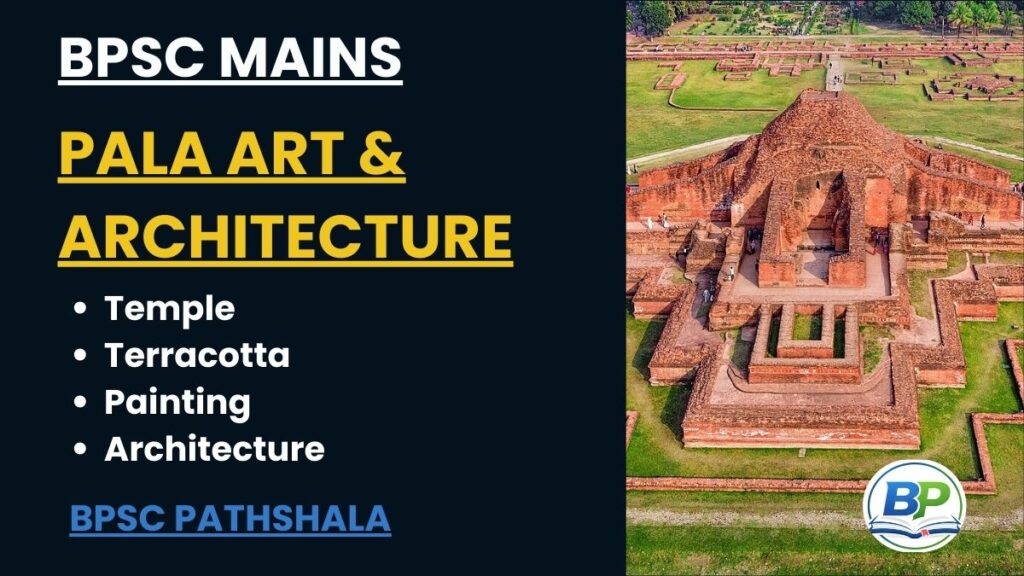
6.3 Development of Monasteries and Universities
Buddhist monasteries were centres of learning. These monasteries impacted art in the following way
- Sculptures for teaching religious ideas
- Use of art in meditation
- Art as a support to religious education
Stone and bronze sculptures were created for:
- Worship
- Teaching
- Rituals
6.4 Use of Materials and Technique
Religion demanded portable idols for rituals. As a result:
- Bronze casting flourished
- Stone sculptures became detailed
- Fine polishing and ornamentation developed
- These techniques reflect: Religious rituals, Need for durability and beauty
7. Effect of Hinduism on Pala Art
Another important dimension of the effect of religion on Mauryan and Pala art is the influence of Hinduism on Pala-period sculpture and temple art.
7.1 Growth of Hindu Deities
- Pala art includes images of: Shiva, Vishnu, Durga and Surya. These images show graceful posture, Rich ornaments and Calm yet powerful expressions.
- Religion demanded: Divine beauty, Symbolism and Emotional connection
7.2 Temple Sculpture and Religious Themes
- Hindu temples required: Sculptures for devotion, Decorative panels and Mythological stories.
- As a result: Art became narrative, Sculptures depicted stories from epics and Religion encouraged visual storytelling.
8. Tantric Influence on Pala Art
- Tantric practices further strengthened the effect of religion on Mauryan and Pala art by introducing complex symbolism and esoteric imagery.
- Both Buddhism and Hinduism were influenced by Tantrism. Erotic symbolism (symbol of cosmic energy), Fierce deities and Complex symbols were the effect of art due to influence of Tantric tradition.
- Religion shaped art into: Spiritual, Symbolic and Esoteric (hidden meaning)
9. Comparison: Religious Impact on Mauryan and Pala Art
A comparison clearly highlights the different ways in which the effect of religion on Mauryan and Pala art shaped their artistic styles and purposes.
Nature of Religion
- Mauryan: Ethical, simple Buddhism
- Pala: Ritualistic, tantric Buddhism and Hinduism
Style of Art
- Mauryan: Simple, symbolic, monumental
- Pala: Decorative, complex, refined
Religious Imagery
- Mauryan: Symbolic representation
- Pala: Anthropomorphic idols
Purpose of Art
- Mauryan: Moral instruction
- Pala: Worship, ritual and meditation
10. Conclusion
Religion played a central role in shaping both Mauryan and Pala art, but in different ways.
- Mauryan art reflects early Buddhism, focusing on moral values, symbolism and simplicity.
- Pala art reflects mature religious traditions, combining devotion, philosophy and artistic excellence.
Together, these two traditions show:
- Evolution of religious thought in India
- Changing role of art from moral teaching to spiritual expression
Overall, the effect of religion on Mauryan and Pala art demonstrates the evolution of Indian religious thought, from symbolic moral instruction in Mauryan art to ritualistic and devotional expression in Pala art.
Get Complete BPSC Mains History Notes PDF
Download organised history notes for bpsc mains designed for quick revision and better answer writing.
| Instant access | Downloadable PDFs | Structured BPSC mains preparation |