Food Processing Industry in Bihar: Growth, Challenges and Government Support
Introduction
The food processing industry in Bihar is gaining policy attention due to its ability to solve multiple structural problems of the state economy. Bihar has a strong agricultural base, yet farmers face low income, food wastage, and limited employment opportunities. Food processing connects agriculture with industry and services, making it a powerful driver of inclusive growth.
For Bihar, this sector is not just about industrial development. It directly affects farmers’ income, rural employment, migration, nutrition, and overall economic diversification. This makes the topic highly important for BPSC aspirants as well as policy discussions.
What Is Food Processing Industry?
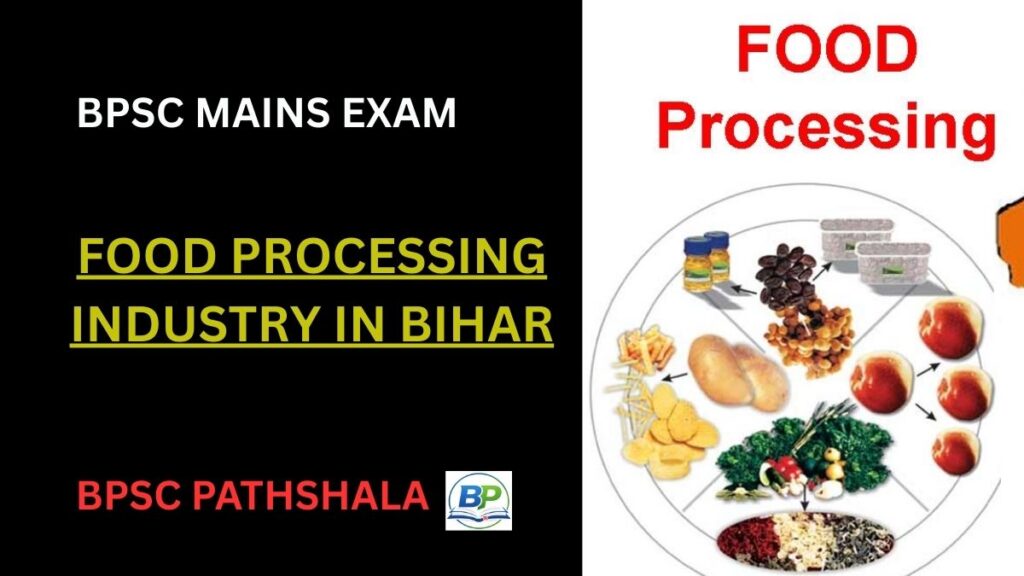
Food processing refers to the conversion of raw agricultural produce into consumable, storable, and marketable food products. The purpose is to improve quality, increase shelf life, and add economic value.
In simple terms, when crops, fruits, milk, fish, or grains are cleaned, preserved, packaged, or transformed into food items, it becomes food processing. This process benefits farmers, consumers, and the economy.
Types of Food Processing industry in Bihar
Food processing in Bihar mainly operates in two ways.
- Manufacturing of food products such as flour, oil, dairy items, fruit pulp, and packaged food
- Value addition through storage, grading, packaging, branding, and marketing
Both forms are essential for building a strong food processing ecosystem in Bihar.
Natural Advantages of Food Processing Industry in Bihar
1. Fertile Soil and Abundant Water Resources
Bihar lies in the fertile Gangetic plains. The soil is rich in nutrients and suitable for intensive farming. Major rivers like the Ganga and its tributaries provide year-round water availability. This supports multiple cropping and ensures regular supply of raw materials for food processing units. High cropping intensity makes Bihar suitable for continuous processing activities.
2. Strong Agricultural and Horticulture Base
Bihar is among India’s leading producers of agricultural and horticultural products. The state ranks first in litchi production and contributes more than 85 percent of India’s makhana output. It is also a major producer of fruits, vegetables, milk, fish, and mushrooms. According to recent estimates, Bihar’s horticulture production is around 230 lakh tonnes, dominated by fruits and vegetables. This creates a strong base for fruit, vegetable, dairy, and fish processing industries.
3. Agro-Climatic Diversity
Bihar has diverse agro-climatic zones that allow cultivation of a wide variety of crops across seasons. Different temperature and rainfall patterns support cereals, fruits, vegetables, and cash crops. This diversity reduces dependence on a single crop and ensures steady raw material availability for food processing units throughout the year.
4. Availability of Labour and Traditional Skills
Bihar has abundant rural labour with traditional knowledge of farming and food handling. This reduces labour cost and supports labour-intensive food processing industries. With skill training, this workforce can significantly boost the sector’s growth.
Present Status of Food Processing Industry in Bihar
Despite strong agricultural production, the food processing industry in Bihar remains underdeveloped. Only a small share of agricultural produce is processed within the state.
Most produce is sold immediately after harvest, leading to high post-harvest losses and low price realisation. The lack of storage, cold chain, and processing units limits value addition. This gap between high production and low processing highlights the massive growth potential of the food processing industry in Bihar.
Importance of Food Processing Industry for Bihar’s Economy
1. Employment Generation and Livelihood Security
The food processing industry plays a major role in generating employment in Bihar. It is a labour-intensive sector that creates jobs at multiple stages such as processing, storage, packaging, transportation, and marketing. Unlike agriculture, which is seasonal, food processing provides year-round employment. This is especially important for Bihar, where a large rural population depends on limited farm income.
2. Increase in Farmers’ Income
Food processing helps farmers earn better income by adding value to raw agricultural produce. When crops are processed instead of being sold immediately after harvest, farmers receive higher prices. Direct procurement by processing units also reduces the role of middlemen. This supports the goal of doubling farmers’ income in Bihar.
3. Reduction in Migration
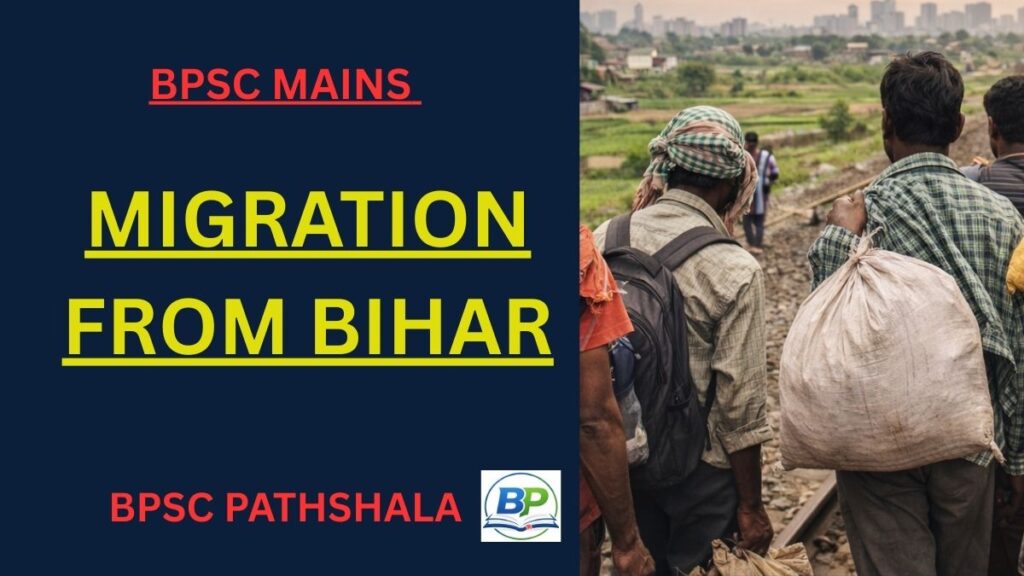
Migration from Bihar is mainly driven by lack of local employment opportunities. Food processing units located near production areas create local jobs for rural youth. This reduces distress migration to other states and supports balanced regional development.
4. Reduction of Food Wastage
Large quantities of fruits and vegetables are wasted due to poor storage. Food processing increases shelf life through preservation and packaging. This reduces post-harvest losses and stabilises prices.
5. Support to Economic Diversification
Food processing links agriculture with industry and services. It strengthens the secondary sector and helps Bihar move towards a more diversified and resilient economy.
Food Processing and Crop Diversification in Bihar
Food processing encourages farmers to move beyond cereal-centric farming.
- Higher demand for fruits and vegetables
- Expansion of dairy and fisheries
- Promotion of high-value crops like makhana
Crop diversification reduces income risk and strengthens sustainable agriculture in Bihar.
Challenges Before Food Processing Industry in Bihar
- The growth of the food processing industry in Bihar faces several challenges.
- Cold storage and cold chain facilities are inadequate, leading to spoilage of perishable goods.
- Storage infrastructure at the farm level is weak, forcing distress sale of produce.
- Transport and logistics remain costly and inefficient in many regions.
- Access to affordable credit is limited, especially for small and micro processing units.
- Quality standards, packaging, and branding remain weak, affecting competitiveness.
- Climate change increases production uncertainty due to floods, droughts, and erratic rainfall.
- There is also a shortage of skilled manpower in food processing activities.
Manufacturing Constraints in Food Processing Sector
Food processing units face high operational costs.
- Expensive raw materials and packaging
- Import duties on machinery
- Limited refrigerated transport facilities
Small processors often lack access to modern technology, reducing efficiency.
Central Government Schemes for Food Processing in Bihar
1. Pradhan Mantri Formalisation of Micro Food Processing Enterprises Scheme
The Pradhan Mantri Formalisation of Micro Food Processing Enterprises Scheme is the most important central scheme supporting food processing in Bihar. This scheme focuses on strengthening existing micro food processing units and helping new units to formalise. It provides financial assistance, credit-linked subsidy, skill training, branding, and marketing support. In Bihar, this scheme is especially useful for small processors engaged in litchi, makhana, dairy, fruits, vegetables, and traditional food products. The scheme also promotes cluster-based development and self-help group participation.
2. One District One Product Initiative
The One District One Product initiative aims to identify one unique product from each district and promote its processing and branding. Under this initiative, makhana has been identified as a flagship product for Bihar. This helps focus investment, technology, and marketing support on locally available produce. ODOP strengthens value addition, export potential, and employment generation at the district level.
3. Mega Food Parks Scheme
The Mega Food Parks Scheme aims to create modern food processing infrastructure with common facilities such as cold storage, warehouses, processing units, and testing labs. Although implementation has been slow, this scheme is crucial for Bihar as it reduces cost for small processors and attracts private investment by providing plug-and-play facilities.
The Mega Food Park in Bihar is proposed at Khagaria district under the central Mega Food Park Scheme. The location is strategically chosen due to proximity to agricultural produce. It aims to provide common processing, storage, and cold-chain facilities to boost food processing and farmer income.
4. Integrated Cold Chain and Value Addition Infrastructure Scheme
This scheme supports the creation of cold storage, refrigerated transport, and preservation facilities. It directly addresses post-harvest losses in fruits, vegetables, dairy, meat, and fisheries. For Bihar, where perishable produce wastage is high, this scheme is highly relevant.
5. Production Linked Incentive Scheme for Food Processing
The Production Linked Incentive Scheme for food processing industry in Bihar promotes large-scale investment, branding, and exports. It encourages companies to set up processing units for ready-to-eat food, marine products, fruits, vegetables, and millet-based products. This scheme can help Bihar integrate with national and global food supply chains.
6. Role of Ministry of Food Processing Industries
All these schemes are implemented through the Ministry of Food Processing Industries. The ministry provides policy support, financial assistance, and technical guidance. Together, these schemes create a strong institutional framework for expanding the food processing industry in Bihar and linking agriculture with industrial growth.
Bihar Government Schemes for Food Processing Industry
1. Bihar Agricultural Investment Promotion Policy
The Bihar Agricultural Investment Promotion Policy is a key state-level policy supporting the food processing industry in Bihar. The policy focuses on increasing processing capacity, reducing post-harvest losses, and promoting value addition. It encourages private investment in food processing units by offering incentives related to land, infrastructure, and capital support. The policy also aims to improve farmers’ income through better price realisation.
2. Abolition of APMC Act in Bihar
Bihar abolished the Agricultural Produce Market Committee (APMC) Act to allow free procurement of agricultural produce. This reform directly benefits food processing industries by enabling them to purchase raw materials directly from farmers. It reduces the role of middlemen, lowers procurement costs, and ensures better prices for farmers.
3. Bihar Single Window Clearance Act, 2006
The Bihar Single Window Clearance Act simplifies approvals for setting up food processing units. It provides time-bound clearances for land, electricity, water, and other permissions. This improves ease of doing business and encourages entrepreneurs to invest in food processing projects in the state.
4. Mukhyamantri Udyami Yojana
Mukhyamantri Udyami Yojana supports first-generation entrepreneurs, including those setting up food processing units. Under this scheme, eligible beneficiaries receive financial assistance, interest subsidy, and training support. The scheme plays an important role in promoting small and micro food processing industries in Bihar.
5. Bihar Laghu Udyami Yojana
This scheme targets very small entrepreneurs and informal businesses. It provides financial assistance to start micro enterprises, including food processing and food-related activities. The scheme helps bring informal food processing units into the formal economy.
5. Capacity Enhancement and Training Centres
The Bihar government has established capacity enhancement and training centres at Patna for food processing industry in Bihar. These centres provide skill training, technical guidance, and entrepreneurship development, especially for youth from Bihar and eastern states.
6. State Food Park Initiatives
The Bihar government has proposed setting up food parks in regions such as Muzaffarpur–Vaishali and Bhagalpur–Katihar. These food parks aim to provide common infrastructure like storage, processing, and logistics facilities to food processing units.
7. Support to Makhana Processing
Bihar provides special support to makhana processing due to its dominance in production. State initiatives focus on value addition, branding, and market linkage for makhana-based products, aligning with district-level development strategies.
Through policy reforms, entrepreneurship schemes, infrastructure support, and skill development initiatives, the Bihar government has created a supportive ecosystem for the food processing industry in Bihar. These schemes collectively aim to boost investment, employment, farmer income, and industrial growth in Bihar.
Bihar Economic Survey 2025-26: Food Processing Perspective
The Bihar Economic Survey 2025-26 shows rising economic diversification.
- The secondary sector is expanding, and food processing leads among operational industrial units. Horticulture, dairy, and fisheries are growing steadily.
- Improved infrastructure, rising investment proposals, and better credit flow indicate a favourable environment for food processing in Bihar.
Bihar Budget 2026–27: Food Processing Perspective
The Bihar Budget 2026–27 provides strong indirect support to the food processing sector in Bihar. Higher capital expenditure on roads, power, irrigation, and rural infrastructure improves logistics and reduces operational costs for food processing units. Increased allocation to agriculture and allied sectors strengthens raw material availability for processing industries.
The budget’s focus on enterprise promotion, employment generation, and skill development supports micro and small food processing units. Although there is no separate budget head for food processing, the infrastructure-led growth strategy creates a favourable ecosystem for the expansion of the food processing industry in Bihar.
Case Study: Makhana Processing Industry in Bihar
Bihar produces over 85 percent of India’s makhana but processes only a very small portion. Most makhana is sold in raw form.
Value addition through processing, packaging, branding, and export can significantly increase income and employment. Recent exports of makhana products highlight global demand. This case reflects the untapped potential of the food processing industry in Bihar.
Way Forward for Food Processing Industry in Bihar
Bihar needs to strengthen cold chain and storage infrastructure. Cluster-based food processing zones should be promoted.
Skill development programmes must train rural youth in food processing activities. Affordable credit and technology support should be ensured. Public-private partnerships, quality standards, branding, and export promotion are essential for long-term growth.
Conclusion
The food processing industry in Bihar has the potential to transform agriculture-led growth into sustainable economic development. It can raise farmers’ income, generate employment, reduce migration, and improve food security.
With strong agricultural resources, supportive policies, infrastructure investment, and rising enterprise activity, Bihar can emerge as a major food processing hub in eastern India.
BPSC Mains Practice Questions: Food Processing Industry in Bihar
- Discuss the role of the food processing industry in transforming Bihar’s agriculture-based economy. Highlight the major challenges and suggest suitable measures to strengthen the sector.
- “Food processing industry can act as a bridge between agriculture and industry in Bihar.” Examine this statement with reference to employment generation, farmers’ income, and migration.
- Analyse the impact of government initiatives and budgetary support on the growth of the food processing industry in Bihar. What more needs to be done to realise its full potential?
Also Read….
- Agriculture in Bihar
- Urbanization in Bihar
- Migration from Bihar: Causes, Economic Impact, and Policy Responses
- Tourism in Bihar
- Flood in Bihar: Causes, Impacts, and Sustainable Solutions
- Drought in Bihar: Causes, Impacts, and Sustainable Solutions
- River System of Bihar
- Inland Waterways in Bihar: Potential, Challenges, and the Way Forward
- Irrigation in Bihar: Need, Sources, Challenges, and Government Support