1. Meaning of Deepfake Technology
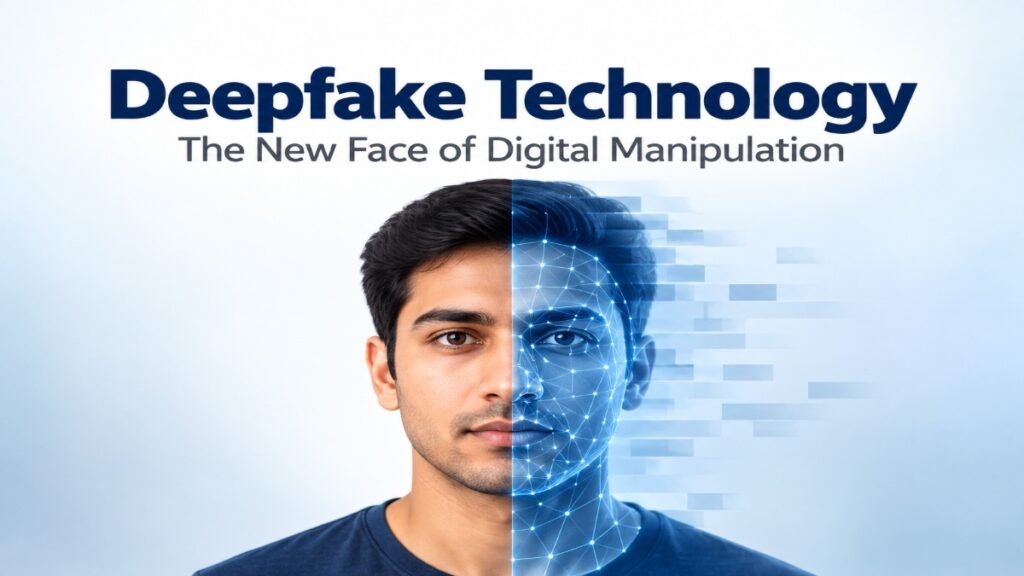
Deepfake Technology is an Artificial Intelligence (AI)-based technique that uses Deep Learning and Generative Adversarial Networks (GANs) to create or manipulate images, videos, audio or text so that they appear authentic, even though they are fabricated. The term “Deepfake” is derived from the combination of Deep Learning and Fake.
Deepfake AI can realistically imitate a person’s facial expressions, voice and body movements, making it difficult for ordinary users to distinguish between genuine and manipulated content. While the technology has several beneficial applications, its misuse poses serious challenges to privacy, democracy, cybersecurity and national security.
For UPSC and BPSC preparation, these Deepfake Technology Notes are important for understanding both the technological applications and the emerging concerns associated with AI-generated content. Deepfake Technology in India has become particularly relevant because of its implications for elections, social media, privacy and cybersecurity.
Master Science & Technology. Maximize Your BPSC Mains Score.
Enroll in the BPSC Science & Tech Course Today
Master Science & Technology for BPSC Mains GS Paper-2 with 75+ exam-oriented topics, 6 structured lessons, and downloadable PDF notes—all in one course.
✔ 75+ Exam-Oriented Topics • ✔ 6 Comprehensive Lessons • ✔ Downloadable PDF Notes • ✔ Updated for 72nd BPSC Mains
2. Applications of Deepfake Technology
Entertainment and Film Industry
- Used for visual effects, de-aging actors and dubbing films into multiple languages.
- Example: Deepfake technology has been used in Hollywood films to digitally recreate younger versions of actors.
Education and Training
- Creates interactive educational content and realistic simulations for medical, military and disaster management training.
- Example: AI-generated historical figures explaining historical events.
Healthcare
- Helps patients who have lost their voice by generating synthetic speech based on previous voice recordings.
- Supports AI-assisted communication for differently-abled persons.
Business and Customer Services
- Used to create AI-powered virtual assistants, multilingual customer support and personalized advertisements.
- Reduces cost and improves customer engagement.
Digital Content Creation
- Enables creators to produce realistic videos, voiceovers and visual content quickly for education, marketing and social media.
Deepfake AI therefore has applications beyond entertainment, including education, healthcare, business and digital content creation. These applications show that Deepfake Technology can be used for both innovation and practical social benefits.
Prepare Smarter. Study Better. Ace BPSC Mains.
BPSC Mains GS Paper 1 & 2 Complete Course
Access comprehensive BPSC Mains Notes for GS Paper 1 & 2, covering 378+ topics across 24 PDF lessons, with dedicated Bihar coverage, practice questions and downloadable study material.
✓ GS Paper 1 & 2 • ✓ 378+ Topics • ✓ 24 PDF Lessons • ✓ Bihar-Specific Coverage • ✓ Downloadable Notes
3. Challenges and Risks of Deepfake Technology
Spread of Fake News and Misinformation
Deepfake Technology can create convincing fake videos or audio clips that mislead the public and manipulate public opinion. Deepfake Technology Risks are particularly serious when fabricated content is circulated rapidly through social media. Example: Fake videos of political leaders have circulated on social media during elections across several countries.
Threat to Democracy and Elections
Manipulated speeches and videos can influence voters, damage political reputations and undermine electoral integrity. Deepfake Technology in India is particularly relevant in this context because AI-generated political content can create challenges for election-related information. Example: AI-generated political campaign videos have raised concerns during recent elections worldwide.
Cybercrime and Financial Fraud
Cybercriminals use AI-generated voices and videos for identity theft, phishing and financial scams. Deepfake AI can make impersonation more convincing, increasing the difficulty of identifying fraudulent communications. Example: Fraudsters have impersonated company executives using AI-generated voices to authorize fraudulent bank transfers.
Privacy Violations and Online Harassment
Deepfakes are increasingly used to create non-consensual explicit content and damage an individual’s reputation. Deepfake Technology Risks include serious violations of privacy and the misuse of an individual’s face or voice without consent. Example: Deepfake videos involving celebrities and women have highlighted serious concerns regarding online abuse.
Threat to National Security
Hostile actors may use deepfakes to spread propaganda, incite communal violence, create panic or damage diplomatic relations. Deepfake Technology in India therefore has implications for national security, particularly when fabricated content concerns military or government officials. Example: Fabricated videos of military or government officials can be used to spread misinformation during conflicts.
Erosion of Public Trust
The increasing availability of deepfakes makes it difficult to distinguish genuine content from manipulated content, reducing trust in digital media and journalism.
Understanding these Deepfake Technology Notes is important for recognising how the technology can simultaneously support innovation and create serious challenges for society, cybersecurity and governance.
4. Government Initiatives and Regulatory Measures
- Information Technology (IT) Act, 2000: Provides legal provisions against identity theft, impersonation and publication of harmful online content.
- Information Technology (Intermediary Guidelines and Digital Media Ethics Code) Rules, 2021: Require social media intermediaries to remove unlawful content and exercise due diligence. Platforms are expected to act promptly against harmful AI-generated content.
- Digital Personal Data Protection (DPDP) Act, 2023: Strengthens protection of personal data and privacy against misuse through AI-generated content.
- Government Advisory on AI and Deepfakes: MeitY has directed digital platforms to identify, label and remove harmful deepfake content and comply with legal obligations. The government has emphasized the development of AI tools for deepfake detection.
- Public Awareness and AI-based Detection: Government agencies, fact-checking organizations and technology companies are developing AI-based tools to detect manipulated media and educate citizens about deepfake threats.
These measures are important for addressing Deepfake Technology Risks and ensuring responsible use of Deepfake Technology in India.
5. Way Forward
- Develop robust AI-based deepfake detection tools.
- Strengthen legal provisions specifically addressing AI-generated content.
- Make social media platforms more accountable for identifying and removing harmful deepfakes.
- Improve digital literacy and fact-checking awareness among citizens.
- Promote international cooperation to combat cross-border AI-enabled misinformation and cybercrime.
- Encourage responsible and ethical development of Artificial Intelligence.
A comprehensive approach to Deepfake Technology should combine technological solutions, effective regulation, platform accountability and public awareness. This will help reduce Deepfake Technology Risks while ensuring that beneficial applications of Deepfake AI continue to develop responsibly.
6. Conclusion
Deepfake Technology is a double-edged sword that offers significant opportunities in entertainment, education, healthcare and digital innovation while also posing serious risks to privacy, democracy, cybersecurity and national security. Its growing sophistication makes distinguishing between real and fabricated content increasingly difficult.
A balanced approach combining advanced detection technologies, effective regulation, platform accountability, digital literacy and ethical AI governance is essential to harness the benefits of Deepfake Technology while minimizing its misuse. Strengthening public trust in digital information will be crucial for building a secure and resilient digital ecosystem in India.
The responsible development and use of Deepfake AI will be particularly important in India, where increasing digital adoption makes the issue relevant to governance, cybersecurity and society. Addressing Deepfake Technology Risks through appropriate safeguards can help ensure that technological innovation does not undermine public trust and individual rights.
BPSC Mains Practice Question
Q. What is Deepfake Technology? Discuss its major applications and examine the challenges it poses to privacy, democracy, cybersecurity and national security in India.
Learn More About Deepfake Technology
For official information on Artificial Intelligence, responsible AI development, and India’s approach to emerging AI technologies, visit the Ministry of Electronics and Information Technology (MeitY), Government of India: Ministry of Electronics and Information Technology – Artificial Intelligence. The Ministry provides official information on India’s AI initiatives, responsible AI development and measures related to emerging AI technologies.