1. Meaning and Technologies
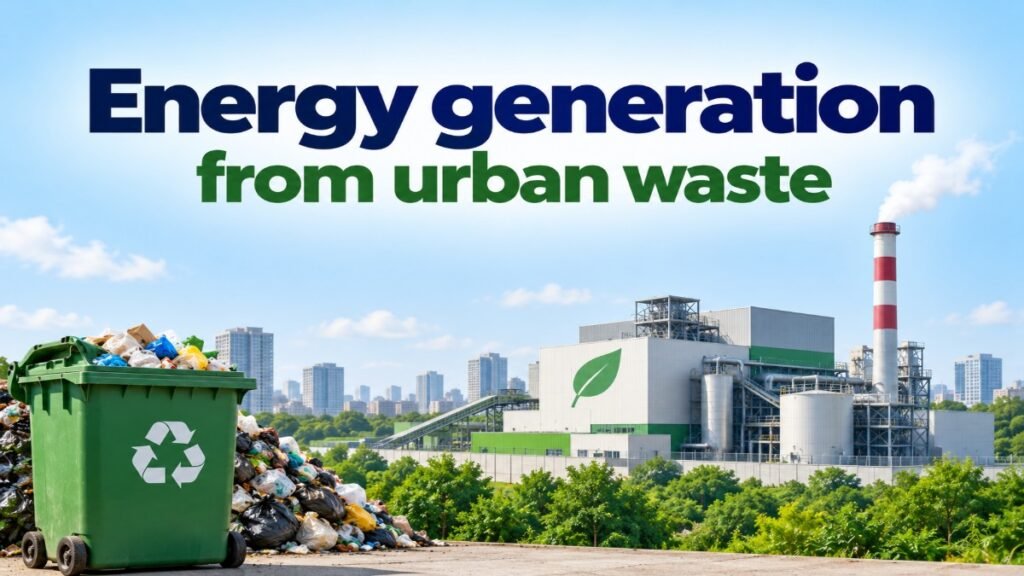
Waste to Energy in India, also known as Waste-to-Energy (WtE), refers to the process of converting municipal solid waste (MSW) and other urban organic waste into useful forms of energy such as electricity, heat, biogas, or bio-CNG. It helps address two major urban challenges simultaneously—scientific waste management and clean energy generation. Major Waste to Energy in India technologies include:
- Biomethanation: Organic waste such as kitchen waste, vegetable market waste, and sewage sludge is decomposed in the absence of oxygen to produce biogas, which can be used for electricity generation or converted into Bio-CNG. The residual slurry serves as organic manure.
- Incineration: Segregated municipal solid waste or Refuse Derived Fuel (RDF) is combusted at high temperatures to generate steam, which drives turbines to produce electricity. Modern plants are equipped with pollution control systems to minimise emissions.
- Gasification: Waste is heated at high temperatures with a limited supply of oxygen to produce syngas (carbon monoxide and hydrogen), which can be used for electricity generation and industrial heating.
- Pyrolysis: Waste is thermally decomposed in the absence of oxygen to produce bio-oil, combustible gases, and char. It offers better energy recovery with comparatively lower emissions.
Energy from urban waste can therefore be obtained through different thermal and biological technologies depending on the type, composition, moisture content and availability of urban waste. For UPSC and BPSC preparation, understanding these technologies is an important part of studying Waste to Energy in India and its role in sustainable urban development.
Master Science & Technology. Maximize Your BPSC Mains Score.
Enroll in the BPSC Science & Tech Course Today
Master Science & Technology for BPSC Mains GS Paper-2 with 75+ exam-oriented topics, 6 structured lessons, and downloadable PDF notes—all in one course.
✔ 75+ Exam-Oriented Topics • ✔ 6 Comprehensive Lessons • ✔ Downloadable PDF Notes • ✔ Updated for 72nd BPSC Mains
2. Significance of Waste-to-Energy for India
Waste to Energy in India plays an important role in promoting sustainable urban development and a circular economy. It reduces the quantity of waste sent to landfills, thereby lowering land requirements and preventing groundwater contamination and methane emissions.
It contributes to clean and renewable energy generation, reducing dependence on fossil fuels and supporting India’s Net Zero by 2070 commitment. Unlike solar and wind energy, WtE plants can provide continuous power while simultaneously solving waste disposal problems.
Waste to Energy in India also supports flagship initiatives such as Swachh Bharat Mission, Smart Cities Mission, and AMRUT by improving urban sanitation and scientific waste management. It creates employment opportunities in waste collection, segregation, recycling, plant operation, and biofuel production.
According to the Ministry of New and Renewable Energy (MNRE), India has an estimated energy generation potential of around 5,690 MW from urban and industrial organic waste, highlighting the sector’s significant untapped potential.
The concept of Energy Generation from Waste is therefore important for addressing both India’s growing urban waste burden and increasing energy demand. Energy from urban waste can contribute to resource recovery, cleaner cities and improved energy security when waste is properly segregated and scientifically processed.
Prepare Smarter. Study Better. Ace BPSC Mains.
BPSC Mains GS Paper 1 & 2 Complete Course
Access comprehensive BPSC Mains Notes for GS Paper 1 & 2, covering 378+ topics across 24 PDF lessons, with dedicated Bihar coverage, practice questions and downloadable study material.
✓ GS Paper 1 & 2 • ✓ 378+ Topics • ✓ 24 PDF Lessons • ✓ Bihar-Specific Coverage • ✓ Downloadable Notes
3. Challenges in Waste-to-Energy Development
Despite its potential, Waste to Energy in India has achieved limited success in India. Poor segregation of waste at source results in mixed waste with high moisture content and low calorific value, reducing plant efficiency.
Waste to Energy in India projects require high capital investment and sophisticated pollution control systems, making them financially challenging. Several projects have also faced operational difficulties due to inconsistent waste supply and poor maintenance.
Incineration-based plants often face public opposition because of concerns regarding air pollution, fly ash disposal, and health impacts. Compliance with environmental standards prescribed by the Central Pollution Control Board (CPCB) and the National Green Tribunal (NGT) remains a major challenge.
Weak institutional capacity of Urban Local Bodies (ULBs), inadequate public awareness, and poor implementation of waste management rules further hinder the expansion of the sector.
A major challenge for Energy Generation from Waste is therefore ensuring that waste reaches treatment facilities in a properly segregated and usable form. Without effective segregation, Energy from urban waste may remain below its potential despite the availability of suitable technologies.
4. Government Initiatives and Way Forward
The Government of India is promoting Waste to Energy in India through the National Bioenergy Programme, the MNRE Programme on Energy from Urban, Industrial and Agricultural Wastes, Swachh Bharat Mission (Urban) 2.0, the GOBARdhan Scheme, and the SATAT Initiative for Bio-CNG production. The GIS-Based Waste Mapping Tool developed by MNRE facilitates identification of waste resources and energy potential across the country.
Going forward, India should ensure 100% source segregation of waste, promote decentralised biomethanation for biodegradable waste, strengthen scientific waste collection systems, encourage public-private partnerships, enforce strict emission standards, and integrate Waste to Energy in India projects with circular economy principles. A balanced approach combining waste reduction, recycling, composting, and energy recovery can transform urban waste into a valuable resource while contributing to energy security and sustainable urban development.
The expansion of Energy from urban waste should therefore focus on appropriate technology selection, efficient waste segregation and maximum resource recovery. Energy Generation from Waste can become an important component of India’s sustainable urban development strategy when waste management and energy recovery are planned together.
5. Conclusion
Waste to Energy in India can transform urban waste into a valuable energy resource while reducing landfill pressure and pollution. With effective segregation, suitable technology, strong regulation and public participation, Energy from urban waste can support India’s energy security, circular economy and sustainable urban development.
BPSC Mains Practice Question
“Waste to Energy in India offers a dual solution to India’s growing urban waste burden and rising energy demand.” Discuss the significance of Waste-to-Energy technology in India, examine the major challenges in its implementation, and suggest measures to realise its full potential.
Learn More About Waste-to-Energy
For official information on Waste-to-Energy, bioenergy, energy generation from urban waste, and renewable energy programmes in India, visit the Ministry of New and Renewable Energy (MNRE), Government of India official website: Ministry of New and Renewable Energy – Waste-to-Energy Programme