1. Introduction
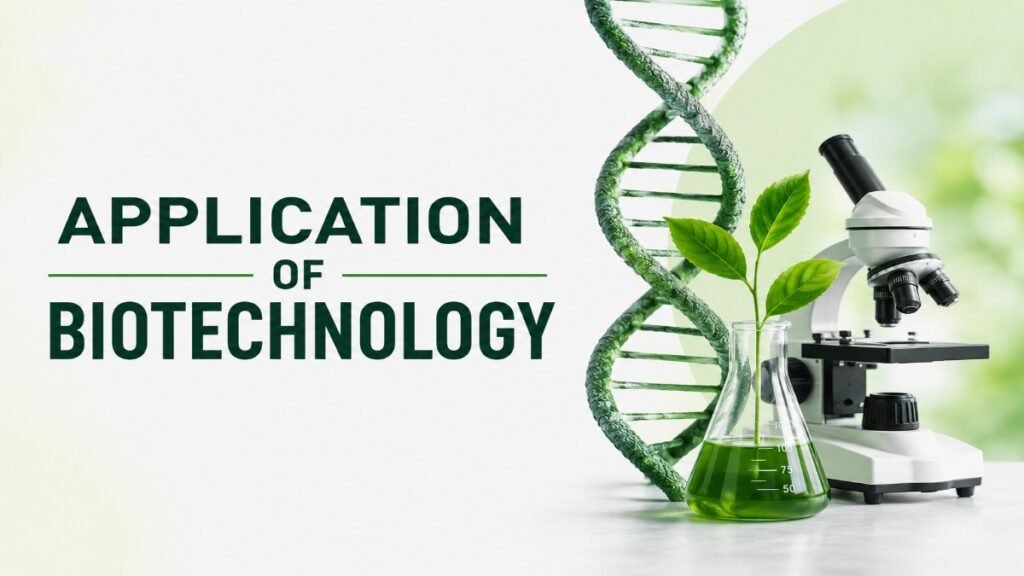
Biotechnology is the application of biological systems, living organisms or their components to develop useful products, processes and technologies for the benefit of humanity. It integrates biology with fields such as genetics, microbiology, biochemistry, engineering and information technology. Biotechnology has been used by humans for thousands of years in its traditional form through processes such as bread making, curd preparation, cheese production and fermentation of beverages using microorganisms like yeast and bacteria. Modern biotechnology emerged with the development of genetic engineering and recombinant DNA technology in the 1970s, enabling precise modification of the genetic material of organisms.
Today, the Application of Biotechnology has made it one of the fastest-growing sectors of science and technology. Its applications extend across agriculture, healthcare, pharmaceuticals, food processing, industry, environmental conservation, energy production, forensic science and biodiversity conservation, making it an essential tool for sustainable development. Biotechnology in India has emerged as one of the leading biotechnology ecosystems globally due to its strong scientific workforce, expanding startup ecosystem and supportive government initiatives. According to the India BioEconomy Report 2025, India’s bioeconomy has grown to over USD 165 billion, with the government aiming to make India a USD 300 billion bioeconomy by 2030 through innovation-driven growth in biotechnology.
The use of biotechnology plays a crucial role in addressing major developmental challenges such as food security, climate change, public health, environmental pollution, clean energy and sustainable industrial development. Consequently, biotechnology has become a key pillar of Atmanirbhar Bharat, the BioE3 Policy (2024) and India’s vision of becoming a Viksit Bharat by 2047. These Application of Biotechnology BPSC Notes provide a comprehensive understanding of the concept, scope and significance of biotechnology, making the topic highly relevant for BPSC Mains and other competitive examinations.
Master Science & Technology. Maximize Your BPSC Mains Score.
Enroll in the BPSC Science & Tech Course Today
Master Science & Technology for BPSC Mains GS Paper-2 with 75+ exam-oriented topics, 6 structured lessons, and downloadable PDF notes—all in one course.
✔ 75+ Exam-Oriented Topics • ✔ 6 Comprehensive Lessons • ✔ Downloadable PDF Notes • ✔ Updated for 72nd BPSC Mains
2. Applications of Biotechnology
Application of Biotechnology in Agriculture and Food Security
- Enhancing crop productivity and climate resilience: The Application of Biotechnology has enabled the development of Genetically Modified (GM) crops and improved crop varieties that can tolerate drought, salinity, floods, heat and other abiotic stresses. This helps farmers maintain stable yields despite climate change. For example, Bt Cotton, approved in India in 2002, has significantly reduced crop losses due to bollworm infestation and now accounts for over 90–95% of the cotton area in the country.
- Reducing dependence on chemical inputs: The use of biotechnology promotes the use of biofertilisers, biopesticides and pest-resistant crop varieties, thereby reducing the excessive use of chemical fertilisers and pesticides. The bacterium Bacillus thuringiensis (Bt) produces natural insecticidal proteins, which are incorporated into crops to control pests, lowering production costs and reducing environmental pollution.
- Improving nutritional security through biofortification: Biotechnology enhances the nutritional quality of food crops by increasing essential vitamins and minerals. For instance, Golden Rice has been enriched with Vitamin A to combat vitamin A deficiency, while biofortified varieties of zinc-rich wheat and iron-rich pearl millet are being promoted in India to address hidden hunger.
- Supporting quality planting material and post-harvest management: Techniques such as plant tissue culture (micropropagation) enable rapid multiplication of disease-free and high-yielding planting material for crops like banana, potato, sugarcane and orchids. Biotechnology also helps delay fruit ripening and reduce post-harvest losses, which are estimated at 5–16% for fruits and vegetables in India, thereby improving farmers’ income.
- Promoting sustainable agriculture and food security: The Application of Biotechnology contributes to achieving SDG-2 (Zero Hunger) by increasing agricultural productivity, conserving natural resources and ensuring long-term food security for India’s population of over 1.4 billion. Government initiatives such as the National Mission on Sustainable Agriculture (NMSA) and research by the Indian Council of Agricultural Research (ICAR) increasingly integrate biotechnology to develop climate-smart farming solutions.
Application of Biotechnology in Healthcare and Medicine
- Development of life-saving medicines and biopharmaceuticals: The Application of Biotechnology has revolutionised healthcare through the production of recombinant proteins, vaccines, hormones, monoclonal antibodies and therapeutic enzymes. Human insulin produced through recombinant DNA technology replaced animal-derived insulin, making diabetes treatment safer and more effective. Biotechnology in India has made the country one of the world’s largest vaccine producers, supplying nearly 60% of global vaccine demand and playing a crucial role during the COVID-19 pandemic.
- Early diagnosis and precision medicine: Modern biotechnology enables rapid and accurate disease diagnosis through techniques such as Polymerase Chain Reaction (PCR), ELISA and genome sequencing, allowing early detection of infectious diseases, cancers and genetic disorders. During the COVID-19 pandemic, RT-PCR became the global gold standard for diagnosis, while genomic surveillance helped identify emerging variants.
- Treatment of genetic and chronic diseases: Biotechnology has opened new avenues through gene therapy, stem cell therapy, regenerative medicine and genome editing technologies such as CRISPR-Cas9. These approaches are being explored for treating inherited disorders like sickle cell anaemia, thalassemia, haemophilia, cystic fibrosis and certain cancers, offering the possibility of long-term or permanent cures.
- Advancing vaccine development and public health: The use of biotechnology has significantly reduced the time required to develop vaccines through recombinant DNA and mRNA technologies. India developed Covaxin, the country’s first indigenous COVID-19 vaccine, while Covishield was manufactured at large scale by the Serum Institute of India. Biotechnology also supports surveillance of emerging diseases, antimicrobial resistance and future pandemic preparedness.
- Strengthening India’s healthcare ecosystem: Government initiatives such as the National Biopharma Mission, Genome India Project and the Department of Biotechnology (DBT) are promoting indigenous research, affordable healthcare technologies and innovation. These initiatives support the vision of Atmanirbhar Bharat by reducing dependence on imported medical technologies and expanding access to advanced healthcare across the country.
The Application of Biotechnology in agriculture and healthcare has transformed food production, nutritional security, disease diagnosis and medical treatment. These sectors demonstrate how the use of biotechnology can improve productivity, enhance public health and support sustainable development. Such developments are central to Biotechnology in India and form an important part of Application of Biotechnology BPSC Notes for BPSC Mains and other competitive examinations.
Prepare Smarter. Study Better. Ace BPSC Mains.
BPSC Mains GS Paper 1 & 2 Complete Course
Access comprehensive BPSC Mains Notes for GS Paper 1 & 2, covering 378+ topics across 24 PDF lessons, with dedicated Bihar coverage, practice questions and downloadable study material.
✓ GS Paper 1 & 2 • ✓ 378+ Topics • ✓ 24 PDF Lessons • ✓ Bihar-Specific Coverage • ✓ Downloadable Notes
Application of Biotechnology in Animal Husbandry and Fisheries
- Improving livestock productivity and breeding: The Application of Biotechnology has transformed animal husbandry through artificial insemination (AI), embryo transfer technology (ETT), in-vitro fertilisation (IVF) and genomic selection, enabling the development of high-yielding breeds with superior milk, meat and wool production. Biotechnology in India has played an important role in improving indigenous as well as crossbred cattle productivity, helping India become the world’s largest milk producer with over 239 million tonnes of milk in 2023–24.
- Disease prevention and animal healthcare: The use of biotechnology facilitates the development of vaccines, rapid diagnostic kits and disease-resistant livestock, helping control diseases such as Foot and Mouth Disease (FMD), Brucellosis and Avian Influenza. Molecular diagnostic tools enable early detection of infections, reducing livestock mortality and economic losses. Government programmes such as the National Animal Disease Control Programme (NADCP) utilise biotechnology for large-scale vaccination and disease surveillance.
- Production of superior biological products: Transgenic animals are genetically modified to produce valuable therapeutic proteins and medicines in their milk, blood or eggs. They also serve as experimental models for studying diseases such as cancer, Alzheimer’s disease, rheumatoid arthritis and cystic fibrosis, accelerating the development of new drugs and vaccines. For example, the transgenic cow ‘Rosie’ produced human protein-enriched milk with improved nutritional value.
- Enhancing fisheries and aquaculture: The Application of Biotechnology supports the development of fast-growing, disease-resistant and climate-resilient fish and shrimp varieties, improving productivity and reducing disease outbreaks. DNA-based breeding programmes and molecular diagnostics have strengthened India’s aquaculture sector, making the country the second-largest fish producer globally, with fish production exceeding 18 million tonnes (2023–24).
- Supporting nutritional security and rural livelihoods: By increasing the productivity of livestock and fisheries while reducing disease burden, the use of biotechnology enhances farmers’ incomes, improves the availability of affordable protein-rich food and contributes to SDG-2 (Zero Hunger) and SDG-3 (Good Health and Well-being). It also supports flagship initiatives such as the Rashtriya Gokul Mission, Blue Revolution and Pradhan Mantri Matsya Sampada Yojana (PMMSY).
Application of Biotechnology in Industrial Biotechnology (White Biotechnology)
- Sustainable industrial manufacturing: Industrial or White Biotechnology uses microorganisms, enzymes and biological processes to manufacture chemicals, pharmaceuticals, detergents, textiles, paper and other industrial products. Compared to conventional chemical processes, it requires less energy, produces fewer greenhouse gas emissions and generates minimal hazardous waste, making industries more environmentally sustainable.
- Food and beverage processing: The Application of Biotechnology plays a crucial role in the production of bread, cheese, curd, yoghurt, vinegar, fermented foods, fruit juices and alcoholic beverages through controlled fermentation. Industrial enzymes such as amylase, protease and cellulase improve product quality, reduce processing time and increase production efficiency.
- Production of bio-based chemicals and biodegradable materials: Biotechnology enables the manufacture of organic acids, amino acids, bioethanol, enzymes and biodegradable plastics (bioplastics) using renewable biological resources instead of petroleum-based raw materials. This use of biotechnology reduces dependence on fossil fuels and contributes to a circular economy, supporting India’s commitment to achieving Net Zero emissions by 2070.
- Application in textile, paper and leather industries: Enzyme-based biotechnology has replaced many harsh chemical treatments in industries. For example, cellulase enzymes are used for fabric finishing, xylanase is used in eco-friendly paper bleaching and protease enzymes help in leather processing. These techniques reduce water consumption, chemical pollution and production costs while improving product quality.
- Promoting green manufacturing and bioeconomy: Industrial biotechnology is emerging as a major pillar of the BioE3 Policy (2024), which aims to promote Economy, Environment and Employment through bio-based manufacturing. It supports the growth of biotech start-ups, green industries and sustainable manufacturing while strengthening Biotechnology in India, whose bioeconomy is valued at over USD 165 billion.
The Application of Biotechnology in animal husbandry, fisheries and industry has significantly enhanced productivity, sustainability and value addition across multiple sectors. The expanding use of biotechnology is strengthening rural livelihoods, promoting green manufacturing and accelerating the growth of Biotechnology in India. These topics are an important part of Application of Biotechnology BPSC Notes and are highly relevant for BPSC Mains and other competitive examinations.
Application of Biotechnology in Environmental Conservation
- Bioremediation of polluted ecosystems: The Application of Biotechnology employs microorganisms, fungi and plants to degrade or remove pollutants from contaminated soil, groundwater, rivers and industrial sites. This process, known as bioremediation, offers an eco-friendly and cost-effective alternative to chemical treatment. It has been successfully used for oil spill cleanup, pesticide degradation and the removal of heavy metals from contaminated sites.
- Wastewater and solid waste management: The use of biotechnology is extensively applied in sewage treatment plants (STPs) and industrial effluent treatment facilities to decompose organic waste before discharge into the environment. Biotechnology also converts municipal solid waste and agricultural residues into useful products such as compost, biofertilisers and biogas, supporting the objectives of the Swachh Bharat Mission and circular waste management.
- Plastic degradation and pollution control: Scientists are developing bacteria and enzymes capable of breaking down plastic waste, particularly PET plastics, offering a promising solution to one of the world’s most pressing environmental challenges. Biotechnology also assists in reducing industrial emissions and controlling water and soil pollution through biological treatment methods.
- Conservation of biodiversity and natural resources: The Application of Biotechnology supports the preservation of endangered plant and animal species through tissue culture, cryopreservation, DNA fingerprinting and gene banks. India has established the National Gene Bank under the Indian Council of Agricultural Research (ICAR), which conserves over 0.47 million germplasm accessions, safeguarding the country’s rich genetic diversity for future generations.
- Supporting climate action and sustainable development: Biotechnology contributes to climate change mitigation through carbon sequestration by algae and microbes, production of eco-friendly materials and restoration of degraded ecosystems. It directly supports SDGs 6 (Clean Water), 13 (Climate Action), 14 (Life Below Water) and 15 (Life on Land), making it an indispensable tool for sustainable environmental management.
Application of Biotechnology in Energy Sector
- Production of renewable biofuels: The Application of Biotechnology enables the production of bioethanol, biodiesel, biogas, bio-CNG and Sustainable Aviation Fuel (SAF) from agricultural residues, sugarcane, corn, algae, used cooking oil and organic waste. These renewable fuels reduce dependence on fossil fuels, enhance energy security and lower greenhouse gas emissions. Biotechnology in India has contributed significantly to achieving nearly 20% ethanol blending in petrol (2025) under the Ethanol Blended Petrol (EBP) Programme, reducing crude oil imports.
- Waste-to-energy and circular economy: Microorganisms convert municipal solid waste, sewage sludge, animal manure and crop residues into biogas and bio-CNG through anaerobic digestion. This use of biotechnology not only provides clean energy but also addresses waste disposal challenges. The SATAT (Sustainable Alternative Towards Affordable Transportation) initiative aims to establish 5,000 Compressed Biogas (CBG) plants across India, promoting a circular economy.
- Advancing next-generation biofuels: Biotechnology supports the development of second-generation (2G) ethanol from crop residues such as paddy straw and wheat straw, thereby preventing stubble burning and reducing air pollution. Research is also progressing on third-generation biofuels derived from algae, which offer higher fuel yields without competing for agricultural land or food crops.
- Supporting clean and low-carbon energy transition: The Application of Biotechnology contributes to climate-friendly energy through the development of microbial fuel cells, biological hydrogen production and algae-based carbon capture technologies. These innovations complement India’s National Green Hydrogen Mission and long-term strategy to achieve Net Zero emissions by 2070.
- Strengthening India’s energy security: By diversifying energy sources, reducing fossil fuel imports, generating rural employment and promoting sustainable industries, the use of biotechnology plays a vital role in Atmanirbhar Bharat and India’s transition towards a resilient, low-carbon economy.
The Application of Biotechnology in environmental conservation and the energy sector demonstrates its immense potential in achieving sustainable development. From pollution control and biodiversity conservation to renewable energy production and climate action, the use of biotechnology is driving green growth and strengthening Biotechnology in India. These topics are an integral part of Application of Biotechnology BPSC Notes and are highly relevant for BPSC Mains and other competitive examinations.
Application of Biotechnology in Forensic Science and Internal Security
- Criminal investigation through DNA fingerprinting: The Application of Biotechnology has transformed forensic science through DNA profiling, which accurately identifies individuals from biological samples such as blood, hair, saliva, bones and semen. DNA evidence has become one of the most reliable tools for solving cases involving murder, rape, kidnapping, terrorism and human trafficking, while significantly reducing the chances of wrongful conviction.
- Identification of disaster victims and missing persons: The use of biotechnology is widely employed to identify victims of natural disasters, air crashes, terrorist attacks and mass accidents, especially when bodies are severely damaged. It also assists in establishing biological relationships in cases of missing children, inheritance disputes and paternity testing.
- Wildlife conservation and prevention of illegal trade: Biotechnology supports wildlife protection through DNA barcoding and genetic analysis, enabling authorities to identify endangered species from animal parts, meat, ivory, skins or horns. These techniques strengthen the implementation of the Wildlife Protection Act, 1972 and help combat illegal wildlife trafficking.
- Enhancing national security and biosecurity: The Application of Biotechnology aids security agencies in detecting biological agents, toxins and pathogens that may be used in bioterrorism. Advanced molecular diagnostic techniques facilitate rapid identification of infectious agents, strengthening Biotechnology in India and improving preparedness against biological threats and emerging infectious diseases.
- Strengthening forensic infrastructure in India: The Criminal Procedure (Identification) Act, 2022 has expanded the collection of biometric and biological data for criminal investigations. Increasing adoption of DNA technology in Central and State Forensic Science Laboratories (FSLs) is improving the speed, accuracy and scientific credibility of criminal investigations and judicial proceedings.
Application of Biotechnology in Conservation of Biodiversity
- Conservation of endangered species: The Application of Biotechnology supports the conservation of threatened plants and animals through techniques such as tissue culture, micropropagation, cryopreservation and embryo transfer. These methods enable the preservation and multiplication of endangered species, helping restore declining populations. For example, tissue culture has been successfully used for the conservation of rare orchids, medicinal plants and bamboo species.
- Preservation of genetic resources: Biotechnology facilitates the establishment of gene banks, seed banks, pollen banks and DNA repositories to conserve valuable genetic material for future breeding and research. India’s National Gene Bank, managed by the Indian Council of Agricultural Research (ICAR), conserves over 4.7 lakh germplasm accessions, making it one of the largest repositories of plant genetic resources in the world.
- DNA barcoding for species identification: The use of biotechnology enables rapid and accurate identification of plant and animal species using short genetic sequences. It is widely used for discovering new species, identifying endangered organisms, preventing illegal wildlife trade and monitoring biodiversity. This technique is particularly useful where physical identification is difficult due to damaged or immature specimens.
- Supporting ecosystem restoration and climate resilience: Biotechnology assists in restoring degraded forests, wetlands, mangroves and grasslands by developing disease-resistant and climate-resilient plant varieties. It also contributes to conserving crop wild relatives and indigenous livestock breeds, which are vital for ensuring future food security under changing climatic conditions.
- Strengthening conservation policies and sustainable development: The Application of Biotechnology complements national initiatives such as the National Biodiversity Action Plan (NBAP), the Biological Diversity Act, 2002 and global commitments under the Convention on Biological Diversity (CBD) and the Kunming–Montreal Global Biodiversity Framework, promoting sustainable use and long-term conservation of biological resources.
The Application of Biotechnology has significantly strengthened forensic science, internal security and biodiversity conservation through advanced molecular techniques such as DNA profiling, DNA barcoding and genetic resource conservation. The expanding use of biotechnology in these sectors highlights its importance for national security, environmental sustainability and scientific advancement, making Biotechnology in India an important topic in Application of Biotechnology BPSC Notes for BPSC Mains and other competitive examinations.
Application of Biotechnology in Space Biotechnology
- Ensuring sustainable human survival in space: The Application of Biotechnology plays a vital role in developing closed-loop life support systems, where microorganisms recycle oxygen, water and organic waste for astronauts during long-duration missions. Such technologies are essential for future missions to the Moon, Mars and deep space, reducing dependence on supplies transported from Earth.
- Space agriculture and food production: The use of biotechnology enables the cultivation of crops in microgravity through genetically improved plants and hydroponic systems. Research focuses on developing high-yielding, nutrient-rich and stress-tolerant crops capable of growing in confined space habitats. These technologies are expected to support future lunar and Martian settlements while also benefiting controlled-environment agriculture on Earth.
- Understanding the effects of space on living organisms: Experiments on microorganisms, plants and human cells under microgravity and space radiation help scientists understand changes in immunity, bone density, muscle loss and cellular functions. These studies contribute to improved healthcare for astronauts and often lead to medical innovations applicable on Earth.
- Development of space medicine and pharmaceuticals: Biotechnology supports the development of advanced medicines, vaccines and regenerative therapies for astronauts exposed to extreme space conditions. Research on protein crystallisation in microgravity has improved the understanding of disease mechanisms and accelerated the development of certain pharmaceutical products.
- Advancing India’s space biotechnology capabilities: Biotechnology in India is expanding through ISRO, which has incorporated biotechnology experiments in missions such as Gaganyaan and collaborates with research institutions to study microbial behaviour, plant growth and human physiology in space. These efforts strengthen India’s long-term ambitions in human spaceflight and future planetary exploration.
Application of Biotechnology in Governance and Public Welfare
- Strengthening public health and disease surveillance: The Application of Biotechnology enables governments to monitor, detect and control infectious diseases through genomic surveillance, molecular diagnostics and digital epidemiology. During the COVID-19 pandemic, genome sequencing helped identify new variants, while initiatives such as the Indian SARS-CoV-2 Genomics Consortium (INSACOG) strengthened Biotechnology in India by improving disease surveillance and pandemic preparedness.
- Ensuring food safety and nutritional security: The use of biotechnology is widely applied for food quality testing, detection of adulteration, identification of Genetically Modified Organisms (GMOs) and monitoring food-borne pathogens. Biofortified crops rich in iron, zinc and Vitamin A are being promoted to combat malnutrition, supporting programmes such as POSHAN Abhiyaan and SDG-2 (Zero Hunger).
- Improving water quality and sanitation: Biosensors and microbial technologies help detect contaminants such as pathogens, pesticides and heavy metals in drinking water. Biotechnology is also extensively used in Sewage Treatment Plants (STPs) and water purification systems, supporting flagship initiatives like the Jal Jeevan Mission, Namami Gange Programme and Swachh Bharat Mission.
- Supporting evidence-based governance and policy making: The Application of Biotechnology generates reliable scientific data for environmental monitoring, biodiversity conservation, forensic investigations and public health planning. DNA-based identification, environmental biosensors and genomic databases assist governments in designing effective policies for disaster management, wildlife conservation, agriculture and disease control.
- Promoting innovation-driven economic development: Through initiatives such as the BioE3 Policy (2024), Startup India and biotechnology incubators, the government is encouraging biotechnology-based start-ups, employment generation and indigenous innovation. The biotechnology sector has become an important contributor to India’s bioeconomy, exports and knowledge-driven economic growth.
The Application of Biotechnology has expanded beyond laboratories to become a powerful tool for space exploration, governance and public welfare. The growing use of biotechnology in areas such as public health, food safety, environmental monitoring and human spaceflight reflects the rapid advancement of Biotechnology in India. These applications are an important part of Application of Biotechnology BPSC Notes and are highly relevant for BPSC Mains and other competitive examinations.
3. Biotechnology Initiatives in India
- Department of Biotechnology (DBT): Established in 1986 under the Ministry of Science and Technology, the Department of Biotechnology (DBT) is the apex agency responsible for promoting biotechnology research, infrastructure development, human resource development, industrial collaboration and biosafety regulations. It has played a pivotal role in expanding Biotechnology in India through research funding and technology commercialisation.
- BioE3 Policy (2024) and National Biopharma Mission: The Biotechnology for Economy, Environment and Employment (BioE3) Policy, approved in 2024, aims to establish India as a global hub for high-performance biomanufacturing across sectors such as healthcare, agriculture, energy and sustainable chemicals. Complementing this, the National Biopharma Mission supports industry–academia collaboration to accelerate the development of affordable vaccines, diagnostics, biosimilars and medical devices, further expanding the Application of Biotechnology.
- BIRAC and Biotechnology Start-ups: The Biotechnology Industry Research Assistance Council (BIRAC), established in 2012 as a Public Sector Enterprise under DBT, promotes innovation and entrepreneurship by providing funding, incubation, mentorship and industry partnerships. It has supported thousands of biotechnology start-ups, making Biotechnology in India one of the fastest-growing biotechnology startup ecosystems globally.
- Genome India Project and Agricultural Biotechnology Programmes: The Genome India Project, launched in 2020, aims to sequence 10,000 Indian genomes to improve precision medicine and genetic research. In agriculture, programmes such as the National Plant Gene Repository, Crop Biofortification Programme, Rice Functional Genomics and Wheat Genome Sequencing Programme are strengthening the use of biotechnology to enhance crop productivity, nutritional security and climate resilience.
- Biosafety and Regulatory Framework: India has established a robust regulatory mechanism to ensure the safe Application of Biotechnology. The Genetic Engineering Appraisal Committee (GEAC) under the Ministry of Environment, Forest and Climate Change (MoEFCC) regulates the environmental release of Genetically Modified Organisms (GMOs), while the Department of Biotechnology (DBT) formulates biosafety guidelines for biotechnology research and commercialisation.
These initiatives have significantly strengthened Biotechnology in India by promoting research, innovation, entrepreneurship and regulatory oversight. Through supportive policies, institutional mechanisms and startup promotion, the Government is accelerating the Application of Biotechnology across multiple sectors, making these developments an important part of Application of Biotechnology BPSC Notes for BPSC Mains and other competitive examinations.
4. Challenges in Wider Application of Biotechnology
- Ethical, Legal and Social Concerns: The Application of Biotechnology, particularly genetic engineering, gene editing, cloning and stem cell research, raises ethical questions regarding human intervention in nature, genetic privacy, animal welfare and misuse of technology. Public concerns over Genetically Modified (GM) crops and genetically edited organisms often delay policy decisions and commercialisation.
- Biosafety and Biosecurity Risks: The use of biotechnology involves the risk that accidental release or misuse of Genetically Modified Organisms (GMOs) may adversely affect biodiversity, ecosystem balance and human health. Moreover, advances in biotechnology could potentially be exploited for bioterrorism or the development of biological weapons, necessitating strict biosafety regulations and international cooperation.
- High Cost and Technological Barriers: The Application of Biotechnology requires sophisticated laboratories, advanced equipment, highly skilled manpower and substantial financial investment. Small enterprises, public research institutions and developing countries often face difficulties in adopting cutting-edge biotechnologies due to resource constraints.
- Regulatory Challenges and Low Public Acceptance: The commercialisation of biotechnology products often involves lengthy approval procedures because of biosafety assessments and environmental concerns. In Biotechnology in India, debates surrounding the commercial cultivation of GM Mustard and other genetically modified crops illustrate the need to balance scientific innovation with environmental protection and public confidence.
- Intellectual Property Rights (IPR) and Accessibility Issues: Patents on biotechnology products, genetically modified seeds, medicines and diagnostic technologies can increase costs and limit access for farmers and patients. Bridging the gap between laboratory research and affordable public benefit remains a major challenge, particularly in developing countries like India.
5. Way Forward
- Strengthen Research and Innovation Ecosystem: India should increase public and private investment in biotechnology research, establish world-class laboratories, promote interdisciplinary collaboration and strengthen partnerships between universities, research institutions, start-ups and industries. This will accelerate indigenous innovation and further expand the Application of Biotechnology.
- Develop a Robust Regulatory and Ethical Framework: Scientific innovation should be complemented by transparent, science-based and time-bound regulatory mechanisms that ensure biosafety without unnecessarily delaying technological progress. Ethical guidelines for gene editing, stem cell research and synthetic biology should be continuously updated in line with global best practices.
- Promote Biotechnology for Inclusive and Sustainable Development: Greater emphasis should be placed on developing affordable technologies for small farmers, rural healthcare, nutrition, clean energy, environmental conservation and climate-resilient agriculture. The wider use of biotechnology in public welfare will help achieve the Sustainable Development Goals (SDGs) and improve the quality of life.
- Encourage Entrepreneurship and Skilled Workforce: Initiatives such as the BioE3 Policy (2024), Startup India, BIRAC and biotechnology incubation centres should be further strengthened to promote biotech start-ups, attract private investment, generate high-skilled employment and build a globally competitive workforce, strengthening Biotechnology in India.
- Enhance International Cooperation and Public Awareness: India should expand collaborations with leading global biotechnology institutions for technology transfer, joint research and capacity building. Simultaneously, scientific awareness campaigns should educate the public about the benefits, risks and safe Application of Biotechnology, thereby improving public trust and facilitating responsible adoption.
6. Conclusion
- The Application of Biotechnology has emerged as one of the most transformative developments of the 21st century, with applications spanning agriculture, healthcare, industry, environment, energy, forensic science, biodiversity conservation, space exploration and public governance.
- For a developing country like India, the use of biotechnology offers practical solutions to critical challenges such as food security, public health, climate change, environmental degradation, clean energy and employment generation, while strengthening scientific self-reliance.
- With supportive initiatives such as the BioE3 Policy (2024), Genome India Project, National Biopharma Mission and a rapidly expanding biotechnology industry, Biotechnology in India is well-positioned to become a global biotechnology hub.
- However, realising the full potential of the Application of Biotechnology requires balancing innovation with ethical standards, biosafety, environmental sustainability and equitable access. Responsible use of biotechnology will play a decisive role in achieving the vision of Viksit Bharat 2047 and the Sustainable Development Goals (SDGs).
The Application of Biotechnology has become a cornerstone of sustainable development by transforming agriculture, healthcare, industry, energy, environmental conservation and governance. As Biotechnology in India continues to expand through scientific innovation and supportive government policies, the responsible use of biotechnology will be crucial for strengthening the economy, improving quality of life and ensuring long-term environmental sustainability. These Application of Biotechnology BPSC Notes provide a comprehensive understanding of the topic and are highly relevant for BPSC Mains and other competitive examinations.
Learn More from the Department of Biotechnology (DBT):
Readers interested in exploring the Application of Biotechnology, government initiatives, the BioE3 Policy, biotechnology research, biosafety regulations, innovation programmes and the growth of Biotechnology in India can visit the official website of the Department of Biotechnology (DBT), Ministry of Science & Technology, Government of India. The portal provides authentic information on biotechnology policies, research programmes, funding initiatives and national missions related to the use of biotechnology.
BPSC Mains Practice Questions
Q1. “Biotechnology has emerged as a key driver of sustainable development in the 21st century.” Discuss the Application of Biotechnology in agriculture, healthcare, industry and environmental conservation. Also examine its contribution to achieving the Sustainable Development Goals (SDGs).
Q2. Examine the major government initiatives promoting Biotechnology in India. Discuss how the BioE3 Policy (2024), Department of Biotechnology (DBT), BIRAC and the Genome India Project are strengthening innovation, bioeconomy and scientific self-reliance.
Q3. Discuss the major challenges associated with the wider Application of Biotechnology, including ethical, biosafety, regulatory and technological issues. Suggest suitable measures to ensure the safe, inclusive and sustainable use of biotechnology in India.