1. Introduction
Environmental pollution refers to the undesirable change in the physical, chemical, or biological characteristics of the environment due to the introduction of harmful substances or energy into air, water, or land. It disturbs the natural balance of ecosystems, adversely affects biodiversity, and hinders sustainable development.
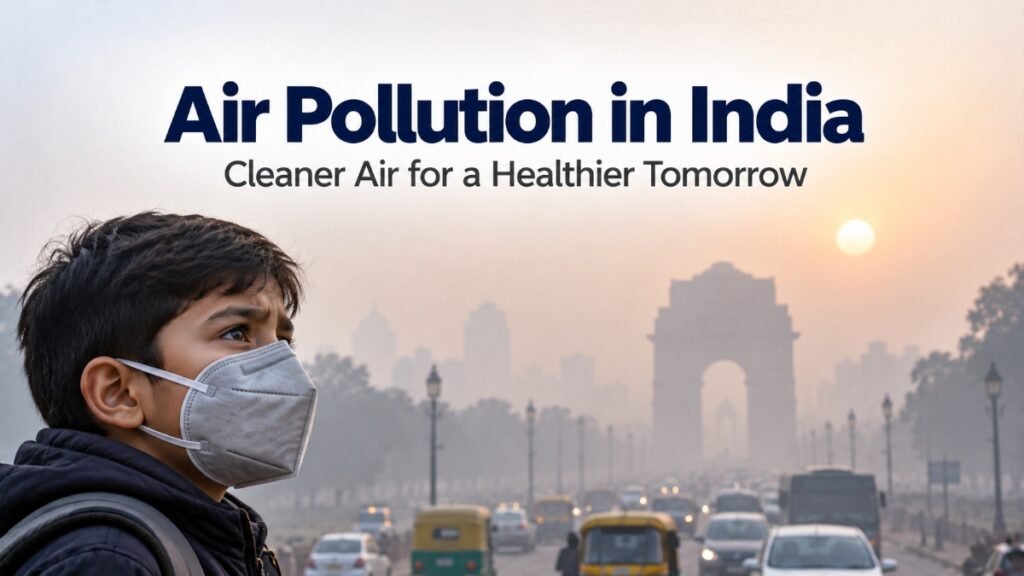
Pollution has emerged as one of the most serious environmental challenges of the 21st century due to rapid industrialization, urbanization, population growth, and unsustainable patterns of production and consumption. Air Pollution in India has become a particularly important environmental and public health concern, making it an important topic for UPSC and BPSC preparation. According to the World Health Organization (WHO), pollution is responsible for millions of premature deaths every year, making it a major public health concern.
Master Science & Technology. Maximize Your BPSC Mains Score.
Enroll in the BPSC Science & Tech Course Today
Master Science & Technology for BPSC Mains GS Paper-2 with 75+ exam-oriented topics, 6 structured lessons, and downloadable PDF notes—all in one course.
✔ 75+ Exam-Oriented Topics • ✔ 6 Comprehensive Lessons • ✔ Downloadable PDF Notes • ✔ Updated for 72nd BPSC Mains
2. Major Types of Environmental Pollution
- Air Pollution: Contamination of the atmosphere by harmful gases, particulate matter, and toxic substances. Air Pollution in India has become the most widespread environmental problem due to vehicular emissions, industries, thermal power plants, construction activities, and biomass burning.
- Water Pollution: Contamination of rivers, lakes, groundwater, and oceans by sewage, industrial effluents, agricultural chemicals, and plastic waste, making water unsafe for human use and aquatic life.
- Soil Pollution: Degradation of soil quality caused by excessive use of fertilizers and pesticides, industrial waste, mining activities, and improper disposal of solid waste, reducing agricultural productivity.
- Noise Pollution: Excessive and unwanted sound generated from traffic, industries, construction activities, loudspeakers, and urban settlements, adversely affecting physical and mental health.
- Radioactive Pollution: Release of radioactive substances from nuclear accidents, mining, medical applications, or improper disposal of radioactive waste, posing long-term risks to human health and the environment.
Among all forms of pollution, Air Pollution in India is considered the most serious environmental challenge because it affects every individual irrespective of location or socio-economic status. Polluted air can travel across cities, states, and even national boundaries, making it a transboundary problem. Fine particulate matter (PM₂.₅) and toxic gases not only cause respiratory and cardiovascular diseases but also reduce agricultural productivity, damage ecosystems, contribute to climate change, and impose a significant economic burden. Therefore, improving air quality is essential for achieving the goals of sustainable development, public health, and inclusive economic growth.
Prepare Smarter. Study Better. Ace BPSC Mains.
BPSC Mains GS Paper 1 & 2 Complete Course
Access comprehensive BPSC Mains Notes for GS Paper 1 & 2, covering 378+ topics across 24 PDF lessons, with dedicated Bihar coverage, practice questions and downloadable study material.
✓ GS Paper 1 & 2 • ✓ 378+ Topics • ✓ 24 PDF Lessons • ✓ Bihar-Specific Coverage • ✓ Downloadable Notes
3. Types of Air Pollution
Outdoor (Ambient) Air Pollution
Outdoor air pollution occurs in the open atmosphere due to emissions from vehicles, industries, thermal power plants, construction activities, road dust, crop residue burning, and natural events such as dust storms and forest fires. It is the primary cause of poor air quality in urban and industrial regions and affects millions of people simultaneously.
Indoor Air Pollution
Indoor air pollution occurs inside homes, offices, schools, and other enclosed spaces. In India, it is mainly caused by the use of biomass fuels (firewood, cow dung, crop residue), kerosene stoves, tobacco smoke, poor ventilation, and household chemicals. Although urban Air Pollution in India receives greater attention, indoor air pollution remains a major health challenge, particularly among rural households and women.
4. Major Air Pollutants
(i) Particulate Matter (PM₂.₅ and PM₁₀): Particulate Matter (PM) consists of tiny solid particles and liquid droplets suspended in the air.
- PM₂.₅ (diameter less than 2.5 micrometres) can penetrate deep into the lungs and even enter the bloodstream, making it the most dangerous air pollutant. PM₂.₅ is regarded as the most critical air pollutant because its microscopic size allows it to enter the bloodstream, increasing the risk of cardiovascular diseases, stroke, and premature deaths.
- PM₁₀ (diameter less than 10 micrometres) mainly affects the respiratory system.
Major sources: Vehicle emissions, industries, thermal power plants, road dust, construction activities, biomass burning, and stubble burning.
Effects: Asthma, chronic obstructive pulmonary disease (COPD), heart diseases, stroke, and reduced life expectancy.
(ii) Sulphur Dioxide (SO₂): Sulphur dioxide is mainly released from the burning of coal and petroleum products in thermal power plants and industries.
Effects: Irritates the eyes and respiratory tract. Causes acid rain, damaging forests, crops, buildings, and water bodies.
(iii) Nitrogen Oxides (NOₓ): Nitrogen oxides are produced primarily from motor vehicles, thermal power plants, and industrial combustion.
Effects: Contribute to the formation of smog and ground-level ozone. Aggravate asthma and other respiratory diseases. Cause acid rain and reduce visibility.
(iv) Carbon Monoxide (CO): Carbon monoxide is a colourless, odourless, and poisonous gas formed due to incomplete combustion of fossil fuels.
Major sources: Motor vehicles, diesel generators, and household cooking fuels.
Effects: Reduces the oxygen-carrying capacity of blood. Causes headaches, dizziness, unconsciousness, and, at high concentrations, can be fatal.
(v) Ground-level Ozone (O₃): Unlike the protective ozone layer in the stratosphere, ground-level ozone is a harmful secondary pollutant formed by the reaction of nitrogen oxides (NOₓ) and volatile organic compounds (VOCs) in the presence of sunlight.
Effects: Irritates the lungs. Reduces crop productivity. Damages vegetation and forests.
(vi) Volatile Organic Compounds (VOCs): VOCs are carbon-based chemicals released from fuels, paints, solvents, petrochemical industries, and vehicle emissions.
Effects: Participate in the formation of smog and ozone. Some VOCs, such as benzene, are carcinogenic (cancer-causing).
(vii) Lead (Pb): Lead pollution mainly arises from battery manufacturing, metal processing industries, and improper disposal of electronic waste.
Effects: Damages the nervous system. Impairs brain development in children. Affects kidney function and cardiovascular health.
5. Air Quality Index (AQI)
The Air Quality Index (AQI) is a tool developed by the Central Pollution Control Board (CPCB) to communicate the quality of ambient air in a simple and understandable manner. In the context of Air Pollution in India, AQI helps citizens and authorities understand the severity of air pollution and take appropriate preventive and control measures. It is calculated based on the concentration of major pollutants such as PM₂.₅, PM₁₀, SO₂, NO₂, CO, O₃, NH₃, and Pb.
| AQI Range | Category | Health Implication |
|---|---|---|
| 0–50 | Good | Minimal impact |
| 51–100 | Satisfactory | Minor discomfort to sensitive individuals |
| 101–200 | Moderate | Breathing discomfort for vulnerable groups |
| 201–300 | Poor | Discomfort during prolonged exposure |
| 301–400 | Very Poor | Respiratory illness on prolonged exposure |
| 401–500 | Severe | Serious health impacts even on healthy individuals |
The AQI is particularly important for understanding Air Pollution in India because pollution levels can vary significantly across cities and seasons. High AQI values indicate greater pollution and greater health risks, especially for vulnerable groups.
6. Status of Air Pollution in India
Air Pollution in India has emerged as one of India’s most serious environmental and public health challenges. According to the World Air Quality Report (IQAir), India continues to rank among the most polluted countries in the world, with several Indian cities consistently featuring among the global hotspots for PM₂.₅ pollution. The Indo-Gangetic Plain (IGP)—covering Delhi, Punjab, Haryana, Uttar Pradesh, Bihar, and West Bengal—remains the most severely affected region due to high population density, industrial activities, vehicular emissions, crop residue burning, and adverse winter meteorological conditions. However, deteriorating air quality is no longer confined to North India, as several coastal and southern cities have also witnessed increasing pollution levels due to rapid urbanization and industrialization.
Air quality monitoring by the Central Pollution Control Board (CPCB) indicates that PM₂.₅ and PM₁₀ are the dominant pollutants in most Indian cities. According to the State of Global Air Report 2024, air pollution contributed to over 2 million deaths in India in 2021, making it one of the leading environmental risk factors for mortality. The Energy Policy Institute at the University of Chicago (EPIC) estimates that if particulate pollution is reduced to the WHO guideline level (5 µg/m³ annual PM₂.₅), the average Indian’s life expectancy could increase by more than 5 years. Bihar is among the states facing persistently high particulate pollution, especially during the winter months.
The problem of Air Pollution in India is particularly severe in densely populated urban centres, where emissions from vehicles, industries, construction, road dust and other sources combine with unfavourable meteorological conditions. This makes Air Pollution in Indian Cities an important concern for public health, urban planning and sustainable development.
Despite initiatives such as the National Clean Air Programme (NCAP) and the adoption of BS-VI emission norms, many cities continue to record AQI levels in the ‘Poor’, ‘Very Poor’, or ‘Severe’ categories during winter. This highlights that while policy interventions have strengthened air quality management, effective implementation, inter-state coordination, and public participation remain critical for achieving sustained improvements.
7. Major Sources/Causes of Air Pollution in India
Vehicular Emissions
- Rapid growth in the number of private vehicles has made the transport sector one of the largest contributors to urban Air Pollution in India.
- Emissions from cars, buses, trucks, two-wheelers, and diesel vehicles release PM₂.₅, NOₓ, CO, and hydrocarbons into the atmosphere.
- Traffic congestion, idling vehicles, and poor traffic management further increase fuel consumption and emissions.
- Metropolitan cities such as Delhi, Mumbai, Bengaluru, and Patna experience high vehicular pollution, especially during peak hours.
- Example: Implementation of BS-VI fuel standards and promotion of electric vehicles (EVs) aim to reduce transport-related emissions.
Industrial and Thermal Power Plant Emissions
- Industries such as cement, steel, refineries, brick kilns, and chemical plants emit sulphur dioxide (SO₂), nitrogen oxides (NOₓ), particulate matter, and toxic gases.
- Coal-based thermal power plants remain one of the largest sources of SO₂ emissions in India.
- Small-scale industries often operate with inadequate pollution-control equipment.
- Industrial clusters around Singrauli, Korba, Angul, and Delhi-NCR have recorded poor air quality due to industrial emissions.
- Example: Installation of Flue Gas Desulphurization (FGD) systems is being promoted to reduce SO₂ emissions from thermal power plants.
Construction Activities and Road Dust
- Large-scale construction projects generate enormous quantities of dust (PM₁₀ and PM₂.₅).
- Uncovered construction materials, demolition activities, and excavation increase suspended particulate matter.
- Poorly maintained roads and movement of heavy vehicles resuspend dust into the atmosphere.
- Construction and road dust account for a significant share of particulate pollution in major cities.
- Example: The Graded Response Action Plan (GRAP) temporarily restricts construction activities during periods of severe Air Pollution in Delhi-NCR.
Agricultural Residue (Parali) Burning
- Farmers burn crop residue after harvesting to quickly prepare fields for the next crop.
- Paddy straw burning in Punjab, Haryana, and western Uttar Pradesh significantly worsens winter smog over North India.
- The smoke contains PM₂.₅, carbon monoxide, methane, and other harmful pollutants.
- Although seasonal, stubble burning intensifies pollution when combined with low wind speed and temperature inversion.
- Example: The government promotes Happy Seeder, PUSA Decomposer, and crop residue management schemes as sustainable alternatives.
Household Biomass Burning and Waste Burning
- Millions of rural households still use firewood, dung cakes, charcoal, and crop residues for cooking and heating.
- Open burning of municipal solid waste and plastic releases toxic gases such as dioxins and furans.
- Indoor air pollution particularly affects women, children, and elderly people.
- In urban areas, burning of leaves and garbage contributes to localized air pollution.
- Example: The Pradhan Mantri Ujjwala Yojana (PMUY) promotes the use of clean LPG fuel to reduce household air pollution.
Natural Sources
- Natural events also contribute to air pollution, although their impact is generally temporary.
- Dust storms from the Thar Desert increase particulate matter in northern India.
- Forest fires release smoke, carbon monoxide, and particulate matter into the atmosphere.
- Seasonal meteorological conditions such as temperature inversion and low wind speed trap pollutants near the ground, especially during winter.
- Example: Dust storms during the summer months often cause a sudden deterioration in air quality across North India.
8. Impacts of Air Pollution
Health Impacts
- Air Pollution in India is one of the leading environmental causes of premature deaths in India. According to the State of Global Air Report 2024, over 2 million deaths in India in 2021 were linked to air pollution.
- Fine particulate matter (PM₂.₅) penetrates deep into the lungs and bloodstream, increasing the risk of asthma, chronic obstructive pulmonary disease (COPD), lung cancer, stroke, and cardiovascular diseases.
- Children, pregnant women, the elderly, and people with pre-existing illnesses are the most vulnerable sections of society.
- According to the Energy Policy Institute at the University of Chicago (EPIC), current PM₂.₅ pollution levels reduce the average life expectancy of Indians by more than 5 years compared to the WHO air quality guideline.
- Rising cases of respiratory illnesses during winter in cities like Delhi, Patna, Lucknow, and Kanpur highlight the growing public health burden.
Economic Impacts
- Air Pollution causes substantial economic losses through increased healthcare expenditure, reduced labour productivity, absenteeism, and premature deaths.
- According to Dalberg Advisors, India could have gained nearly USD 95 billion (around 3% of GDP) in 2019 if safe air quality levels had been achieved.
- Pollution-related economic losses were estimated at USD 36.8 billion (about 1.36% of GDP) in 2019.
- States with higher pollution levels, including Uttar Pradesh and Bihar, suffer greater productivity losses due to disease burden and reduced workforce efficiency.
- Poor air quality also discourages tourism, affects investment, and increases the cost of urban healthcare infrastructure.
Environmental Impacts
- Air pollutants contribute to acid rain, which damages forests, agricultural fields, freshwater ecosystems, and historical monuments.
- Ground-level ozone reduces crop productivity by affecting plant growth and photosynthesis.
- Black carbon and other aerosols accelerate the melting of Himalayan glaciers, threatening long-term water security in northern India.
- Air pollution also reduces biodiversity by affecting birds, insects, and other wildlife.
- The Taj Mahal has experienced discoloration due to atmospheric pollutants, leading to the implementation of the Taj Trapezium Zone (TTZ) for pollution control.
Social Impacts
- Air Pollution in India disproportionately affects poor and marginalized communities, who often live near industrial areas, highways, landfills, and waste disposal sites.
- Low-income households continue to rely on biomass fuels for cooking, increasing exposure to harmful indoor air pollution.
- Poor air quality results in school closures, reduced outdoor activities, and lower quality of life in urban centres.
- Frequent episodes of severe smog disrupt transportation, aviation, and daily economic activities.
- The unequal exposure to pollution makes air quality not only an environmental issue but also a social justice and public health concern.
Impact on Agriculture and Climate
- Air pollutants such as ground-level ozone reduce agricultural yields of crops like wheat, rice, soybean, and cotton, affecting food security.
- Deposition of pollutants degrades soil quality and alters ecosystem functions over time.
- Short-lived climate pollutants such as black carbon and methane contribute to global warming while simultaneously worsening local air quality.
- Crop residue burning creates a vicious cycle by increasing both particulate pollution and greenhouse gas emissions.
- Thus, controlling air pollution simultaneously supports climate change mitigation, sustainable agriculture, and achievement of the Sustainable Development Goals (SDGs).
9. Government Initiatives to Control Air Pollution
National Clean Air Programme (NCAP), 2019
- Launched by the Ministry of Environment, Forest and Climate Change (MoEFCC) as India’s first comprehensive national strategy to improve air quality and address Air Pollution in India.
- Covers 130+ non-attainment cities (cities consistently failing to meet National Ambient Air Quality Standards).
- Targets up to 40% reduction in PM₁₀ and PM₂.₅ levels by 2025–26 (with 2017 as the base year).
- Focuses on city-specific action plans, expansion of air quality monitoring stations, source apportionment studies, and public participation.
- Significance: Has shifted India’s approach from reactive pollution control to long-term air quality management.
Commission for Air Quality Management (CAQM), 2021
- Established through an Act of Parliament to coordinate control of Air Pollution in India in Delhi-NCR and adjoining states (Punjab, Haryana, Rajasthan, and Uttar Pradesh).
- Has powers to issue binding directions to state governments, industries, and pollution control authorities.
- Coordinates action on stubble burning, industrial emissions, construction dust, and vehicular pollution.
- Promotes inter-state coordination, which was previously a major challenge in pollution control.
- Significance: Provides a single institutional mechanism to address regional air pollution rather than city-wise interventions.
Graded Response Action Plan (GRAP) – Revised Framework
- GRAP prescribes stage-wise emergency measures based on the Air Quality Index (AQI), from Stage I (Poor) to Stage IV (Severe+).
- Includes restrictions on construction activities, diesel generators, polluting industries, truck entry, and school operations during severe pollution episodes.
- The framework has been revised to ensure earlier intervention before pollution reaches emergency levels.
- Implemented by CAQM across Delhi-NCR.
- Significance: Enables timely action to reduce pollution peaks during winter.
Promotion of Cleaner Transport and BS-VI Emission Standards
- India implemented Bharat Stage-VI (BS-VI) emission norms nationwide in 2020, significantly reducing emissions from new vehicles.
- The government is promoting electric mobility through schemes such as PM E-Drive Scheme (2024), replacing the earlier FAME programme, to accelerate EV adoption and charging infrastructure.
- Expansion of metro rail, electric buses, ethanol-blended fuels, and CNG networks further supports cleaner transport.
- Significance: Addresses one of the largest contributors to urban Air Pollution in India—vehicular emissions.
Crop Residue Management and Biomass Utilisation
- The government promotes alternatives to stubble burning through the Crop Residue Management (CRM) Scheme.
- Financial assistance is provided for machinery such as the Happy Seeder, Super Straw Management System (SMS), and baling equipment.
- Technologies like the PUSA Decomposer help convert crop residue into manure instead of burning it.
- Biomass is increasingly being used for Compressed Biogas (CBG) production under the SATAT Initiative, creating economic value from agricultural waste.
- Significance: Simultaneously reduces air pollution, improves soil health, and supports the circular economy.
Strengthening Air Quality Monitoring and Public Awareness
- The Central Pollution Control Board (CPCB) has expanded the network of Continuous Ambient Air Quality Monitoring Stations (CAAQMS) across the country.
- The National Air Quality Index (AQI) provides real-time information on air quality, enabling citizens to take preventive measures.
- Cities are increasingly using remote sensing, satellite data, drones, and real-time emission monitoring systems for pollution surveillance.
- Public campaigns such as Swachh Bharat Mission, Mission LiFE (Lifestyle for Environment), and awareness drives encourage behavioural changes to reduce pollution.
- Significance: Better monitoring and informed public participation improve the effectiveness of pollution-control measures.
10. Challenges in Controlling Air Pollution
- Weak Enforcement of Environmental Laws: Although India has comprehensive laws and standards, inadequate monitoring, shortage of manpower, and poor compliance by industries and local authorities limit their effectiveness in controlling Air Pollution in India.
- Rapid Urbanization and Motorization: Unplanned urban growth, increasing private vehicle ownership, and rising energy demand continue to outpace pollution-control measures, especially in metropolitan and Tier-II cities.
- Inter-State and Multi-sectoral Nature of Pollution: Air pollutants travel across state boundaries, making coordination among states difficult. For example, stubble burning in Punjab and Haryana significantly affects air quality in Delhi-NCR.
- Dependence on Fossil Fuels and Biomass: Coal-based power generation, industrial fuel consumption, and biomass-based cooking in rural areas remain major sources of emissions despite the promotion of cleaner alternatives.
- Limited Public Awareness and Behavioural Change: Practices such as open waste burning, excessive use of private vehicles, and poor waste management continue due to inadequate public participation and awareness.
- Climate and Meteorological Factors: Temperature inversion, low wind speed, and dust storms, particularly during winter in the Indo-Gangetic Plain, trap pollutants near the surface, worsening Air Pollution in India even when emissions remain constant.
11. Conclusion
Air Pollution in India has emerged as one of the most pressing environmental and public health challenges in India, affecting human health, economic productivity, biodiversity, and climate resilience. While initiatives such as the National Clean Air Programme (NCAP), CAQM, GRAP, and BS-VI emission norms have strengthened the country’s response, sustained improvements require effective implementation, scientific urban planning, clean energy transition, and active public participation.
Achieving the vision of ‘Viksit Bharat 2047’ and the Sustainable Development Goals (SDGs) will require balancing economic growth with environmental sustainability. As the Supreme Court of India has observed, “The right to live in a pollution-free environment is a part of the fundamental right to life under Article 21 of the Constitution.” Therefore, addressing Air Pollution in India is not merely an environmental obligation but a constitutional and developmental imperative for securing a healthier and more sustainable future.
BPSC Mains Practice Questions
- “Air Pollution in India is no longer merely an environmental issue but has emerged as a major public health, economic and social challenge.” Discuss the major causes and impacts of air pollution in India, with special reference to the Indo-Gangetic Plain.
- Despite several government initiatives, controlling Air Pollution in India remains a major challenge. Critically examine the effectiveness of measures such as NCAP, CAQM, GRAP and BS-VI norms, and suggest a comprehensive strategy for achieving cleaner air in Indian cities.
Learn More About Air Pollution in India
For official information on Air Pollution in India, air quality monitoring, pollution-control measures, AQI, and environmental regulations, visit the Central Pollution Control Board (CPCB) official website: CPCB Official Website