1. BRICS Summit 2026: Overview
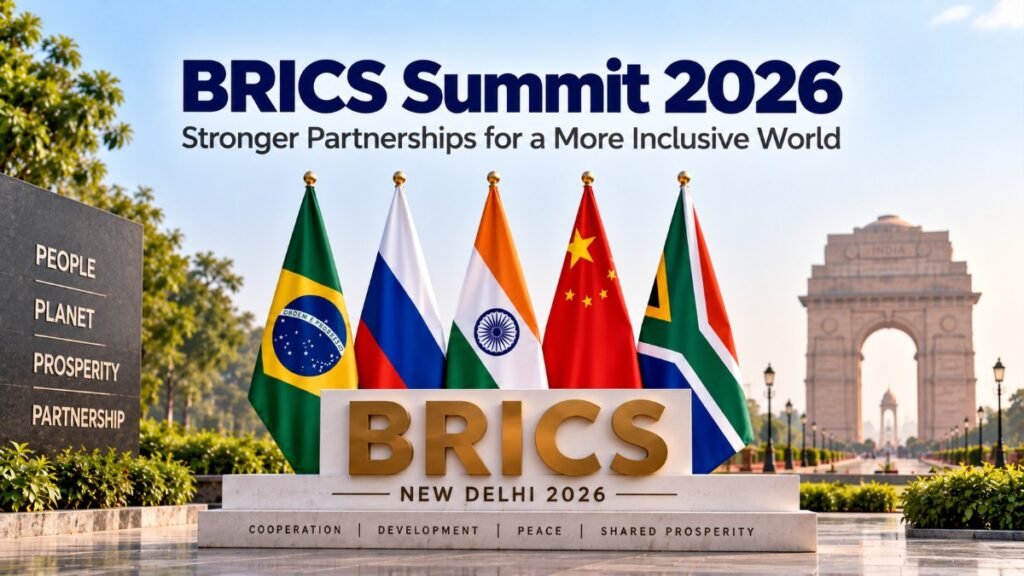
The BRICS Summit 2026 was held in New Delhi, India, on 12–13 September 2026, under India’s chairship of the grouping. The summit brought together the leaders of the expanded BRICS membership to discuss major issues concerning the global economy, international governance, peace and security, trade, technology, climate change and sustainable development.
The BRICS Summit 2026 in New Delhi was organised around India’s theme of “Building for Resilience, Innovation, Cooperation and Sustainability.” The theme reflects India’s emphasis on making BRICS more focused on practical cooperation in areas such as economic resilience, technological innovation, sustainable development and stronger cooperation among developing countries.
A major outcome of the summit was the adoption of the BRICS New Delhi Declaration 2026, a comprehensive leaders’ declaration covering issues ranging from reform of global governance institutions and international trade to terrorism, artificial intelligence, digital public infrastructure, health, agriculture, energy and climate change.
India’s 2026 chairship also placed considerable emphasis on Global South cooperation. During its chairship, India conducted more than 400 meetings and engagements across 30 Indian cities, involving governments, businesses, experts, youth and other stakeholders.
Why is BRICS Summit 2026 Important?
The summit is important because BRICS 2026 took place during a period of significant changes in the international system. Issues such as trade restrictions, geopolitical conflicts, reform of global financial institutions, emerging technologies, energy security and climate change have increased the importance of cooperation among developing and emerging economies. For India, the summit provided an opportunity to advance its priorities on:
- Reform of global governance institutions
- Greater representation of developing countries in international institutions
- Counter-terrorism cooperation
- Reform of the multilateral trading system
- Cross-border payment cooperation and greater use of local currencies
- Artificial intelligence and digital technologies
- Food and energy security
- Climate action and sustainable development
- Cooperation among countries of the Global South
The summit therefore provides important material for BRICS Summit 2026 Notes, particularly for UPSC and BPSC preparation under International Relations, Global Governance, Indian Foreign Policy and Current Affairs.
Master Current Affairs. Ace BPSC Mains.
BPSC Mains Current Affairs & International Relations Course
Master GS Paper-I (Section-II) with 116 exam-oriented topics, 5 structured lessons and downloadable PDF notes—all in one comprehensive course.
✔ 116 Exam-Oriented Topics • ✔ 5 Comprehensive Lessons • ✔ Downloadable PDF Notes • ✔ Updated for 72nd BPSC Mains
2. BRICS Summit 2026: Key Facts at a Glance
The BRICS Summit 2026 marked the 18th summit of the grouping and was hosted by India in New Delhi on 12–13 September 2026. It was held under India’s fourth BRICS chairship and focused on resilience, innovation, cooperation and sustainability.
| Particular | Details |
|---|---|
| Summit | 18th BRICS Summit |
| Date | 12–13 September 2026 |
| Venue | New Delhi, India |
| Host Country | India |
| BRICS Chair | India |
| Theme | Building for Resilience, Innovation, Cooperation and Sustainability |
| Major Declaration | BRICS New Delhi Declaration 2026 |
| BRICS Members | 11 |
| India’s BRICS Chairship | Fourth |
| Previous Indian Chairships | 2012, 2016 and 2021 |
| Global Population Share | 49.5% |
| Global GDP Share | 40% |
| Global Trade Share | 26% |
| Next BRICS Chair | China, 2027 |
| Next Summit | 19th BRICS Summit, China |
| Meetings during India’s Chairship | 400+ across 30 Indian cities |
The expanded BRICS 2026 comprises Brazil, China, Egypt, Ethiopia, India, Indonesia, Iran, Russia, Saudi Arabia, South Africa and the United Arab Emirates (UAE). Together, these 11 countries account for approximately 49.5% of the world’s population, 40% of global GDP and 26% of global trade, according to the Government of India’s BRICS backgrounder.
Key Documents and Outcomes
The central outcome was the BRICS New Delhi Declaration 2026, adopted by the leaders during the summit. The declaration reaffirmed cooperation across three broad pillars:
- Political and security cooperation
- Economic and financial cooperation
- Cultural and people-to-people cooperation
Prepare Smarter. Study Better. Ace BPSC Mains.
BPSC Mains GS Paper 1 & 2 Complete Course
Access comprehensive BPSC Mains Notes for GS Paper 1 & 2, covering 378+ topics across 24 PDF lessons, with dedicated Bihar coverage, practice questions and downloadable study material.
✓ GS Paper 1 & 2 • ✓ 378+ Topics • ✓ 24 PDF Lessons • ✓ Bihar-Specific Coverage • ✓ Downloadable Notes
3. BRICS 2026: Theme, Agenda and Priorities
The BRICS Summit 2026 was held under India’s chairship with the theme “Building for Resilience, Innovation, Cooperation and Sustainability.” The theme reflected India’s effort to give BRICS a practical, development-oriented and people-centred agenda while strengthening cooperation among emerging markets and developing countries.
The year 2026 was also significant because BRICS marked two decades of cooperation. The New Delhi Declaration reaffirmed the grouping’s commitment to strengthening cooperation under its three established pillars: political and security cooperation; economic and financial cooperation; and cultural and people-to-people cooperation.
Four Core Priorities of India’s BRICS Chairship
India’s theme can be understood through four interconnected priorities:
1. Resilience: BRICS cooperation focused on building resilience against common economic, social, technological, environmental and geopolitical challenges. This included resilient supply chains, food and energy security, financial stability and climate adaptation.
2. Innovation: Innovation was given particular importance in areas such as artificial intelligence, digital technology, science and research, startups, deep-tech and space cooperation. India’s chairship also showcased its deep-tech ecosystem through the BRICS Bharat Innovates Exposition, which featured 37 Indian deep-tech startups and ventures.
3. Cooperation: India sought to deepen practical cooperation among BRICS members in areas including trade and investment, cross-border payments, health, agriculture, education, skills, science and technology, counter-terrorism, and urban development. The New Delhi Declaration noted that more than 400 meetings and engagements were organised across 30 Indian cities during India’s BRICS chairship.
4. Sustainability: Sustainable development was another major priority of the BRICS Summit 2026, with cooperation focusing on climate change, climate adaptation, renewable energy, energy efficiency, biodiversity, sustainable agriculture, sustainable urbanisation, and resilient infrastructure. These areas reflected the emphasis on balancing economic development with environmental protection and building greater resilience against climate and other sustainability-related challenges.
Major Agenda of BRICS Summit 2026
The BRICS Summit 2026 in New Delhi addressed a broad range of international and development issues. Its agenda can be grouped into the following areas:
| Area | Major Focus |
|---|---|
| Global Governance | Reform of multilateral institutions and greater representation of developing countries |
| Peace and Security | Terrorism, conflicts and international peace |
| Trade | WTO reform, trade facilitation and resilient supply chains |
| Finance | Local currencies, cross-border payments and financial cooperation |
| Technology | AI, digital transformation, cybersecurity and emerging technologies |
| Science & Space | Research cooperation and satellite-based applications |
| Agriculture | Food security, digital agriculture and the proposed BRICS Grain Exchange |
| Energy | Energy security, renewable energy, storage and critical minerals |
| Climate | Climate finance, adaptation, carbon markets and biodiversity |
| Health | Pandemic preparedness, mental health and traditional medicine |
| People-to-People Cooperation | Youth, education, skills, culture, tourism and sports |
The BRICS New Delhi Declaration 2026 therefore went beyond traditional diplomatic issues and placed considerable emphasis on practical cooperation in development and emerging technologies.
Focus on the Global South
A central feature of BRICS 2026 was the emphasis on the concerns of Emerging Markets and Developing Countries (EMDCs). The New Delhi Declaration called for stronger partnerships with developing countries and greater participation of partner countries in BRICS cooperation. India also hosted the BRICS Plus/Outreach Dialogue as part of the summit.
Thus, the agenda of the BRICS Summit 2026 combined global governance reform with economic cooperation, technological innovation and sustainable development, reflecting India’s attempt to make BRICS a more practical platform for cooperation among emerging and developing economies.
4. BRICS New Delhi Declaration 2026
The BRICS New Delhi Declaration 2026 is the principal outcome document of the 18th BRICS Summit, held in New Delhi on 12–13 September 2026. The declaration was adopted by the leaders of the BRICS countries under India’s chairship and sets out the group’s shared positions and areas of cooperation for the coming period.
The declaration is particularly significant because BRICS marked 20 years of cooperation in 2026. It reaffirmed the group’s commitment to strengthening cooperation among its expanded membership through three broad pillars:
- Political and Security Cooperation
- Economic and Financial Cooperation
- Cultural and People-to-People Cooperation
It also emphasised a more representative and inclusive international order, sustainable development and inclusive economic growth.
Major Themes of the New Delhi Declaration
The BRICS New Delhi Declaration 2026 covers a wide range of global and developmental issues. Its major areas include:
- Reform of global governance institutions
- United Nations Security Council reform
- Reform of the IMF and international financial architecture
- Strengthening the multilateral trading system and WTO
- Counter-terrorism cooperation
- International peace and security
- Trade and investment
- Cross-border payments and local-currency settlements
- Artificial intelligence and emerging technologies
- Science, research and innovation
- Agriculture and food security
- Energy security and critical minerals
- Climate change and biodiversity
- Health and pandemic preparedness
- Urbanisation and sustainable infrastructure
- Youth, education, skills, culture and people-to-people exchanges
Global Governance and the Global South
A major emphasis of the declaration is the demand for a more representative and inclusive global governance system. BRICS reaffirmed support for comprehensive reform of the United Nations, including the UN Security Council, with greater representation for developing countries from Africa, Asia and Latin America.
Importantly for India, China and Russia reiterated their support for the aspirations of Brazil and India to play a greater role in the United Nations, including the Security Council. The declaration also placed considerable emphasis on cooperation with Emerging Markets and Developing Countries (EMDCs) and welcomed India’s hosting of the Outreach/BRICS Plus Dialogue.
Economic and Financial Cooperation
The declaration supported greater economic cooperation through:
- The BRICS Economic Partnership 2030
- More resilient global value chains
- Cross-border payment mechanisms
- Interoperability of payment and messaging systems
- Greater use of BRICS members’ local currencies for trade and investment
- Cooperation through the New Development Bank
- Strengthening the international financial system
The declaration specifically noted the work of the BRICS Payment Task Force on cross-border payment interoperability and local-currency settlements. It is important to note that this represents continued technical and policy cooperation; it does not establish a common BRICS currency.
Trade and WTO Reform
BRICS expressed concern over unilateral tariff and non-tariff measures that it considers inconsistent with WTO rules. The declaration called for a stronger and more responsive multilateral trading system and greater attention to the needs of emerging markets and developing economies.
The declaration also supported efforts to make Global Value Chains more resilient, efficient, secure, transparent and inclusive. The BRICS GVC Action Plan 2026–2030 received particular attention in this context.
Science, Technology and Innovation
Technology occupies an important place in the declaration. BRICS recognised Science, Technology and Innovation (STI) as an important driver of economic and social development. The declaration welcomed:
- BRICS Science and Research Repository
- Cooperation in quantum technologies
- Joint scientific research
- Innovation programmes
- Research cooperation
- Technology-based sustainable development
It also highlighted the importance of innovation in creating resilient and inclusive economic growth.
Sustainable Development and Climate Action
The declaration reaffirmed BRICS’ commitment to the UN Sustainable Development Goals, UNFCCC and Paris Agreement. It emphasised:
- Climate mitigation
- Climate adaptation
- Loss and damage
- Climate finance for developing countries
- Sustainable development
- Biodiversity protection
- Greater fiscal space for developing countries facing climate and debt pressures
The declaration also welcomed the continued expansion of the New Development Bank and the launch of the BRICS-NDB Knowledge Portal under India’s chairship.
Why the Declaration Matters for India
For India, the BRICS New Delhi Declaration 2026 is important because several Indian foreign-policy priorities find expression in it, particularly:
- Reform of global governance
- Greater representation of developing countries
- India’s aspirations for a greater role in the UN
- Counter-terrorism cooperation
- Reform of the WTO
- Digital and technological cooperation
- Global South cooperation
- Sustainable development
- Local-currency payment mechanisms
Thus, the declaration provides an important framework for understanding the BRICS Summit 2026 Highlights and its wider significance for India’s foreign policy and the Global South.
5. Major Outcomes of BRICS Summit 2026
The BRICS Summit 2026 produced a wide range of outcomes covering global governance, international security, trade, finance, technology, agriculture, energy, climate change and health. The central outcome was the New Delhi Declaration, which brought together the common positions and commitments of BRICS members across these areas. The outcomes can be grouped into the following major areas:
Reform of Global Governance
BRICS reaffirmed the need for a more representative and inclusive international system, particularly greater representation of emerging markets and developing countries in global institutions.
The declaration supported reform of the United Nations Security Council and other multilateral institutions. China and Russia reiterated support for the aspirations of India and Brazil to play a greater role in the United Nations, including the Security Council.
Strengthening the Multilateral Trading System
BRICS members reaffirmed the central role of the World Trade Organization (WTO) and called for reform of the multilateral trading system, including the restoration of a fully functioning WTO dispute-settlement mechanism, appointment of new Appellate Body members, opposition to unilateral tariff and non-tariff measures inconsistent with WTO rules, greater attention to the concerns of emerging markets and developing economies, and stronger coordination among BRICS members on WTO reform. The summit also supported further development of the BRICS Global Value Chains Action Plan 2026–2030.
Counter-Terrorism and International Security
Counter-terrorism remained an important part of the BRICS Summit 2026 Highlights. The New Delhi Declaration reaffirmed BRICS’ opposition to terrorism in all its forms and manifestations, terrorist financing, terrorist safe havens and cross-border terrorism, while also supporting cooperation against organised crime and related illicit activities. The declaration addressed international conflicts and broader issues of peace and security, with emphasis on dialogue, diplomacy and respect for international law.
Economic and Financial Cooperation
The summit sought to deepen economic and financial cooperation through the BRICS Economic Partnership 2030, local-currency trade and settlements, cross-border payment cooperation, payment-system interoperability, New Development Bank cooperation, financial safety mechanisms and stronger global supply-chain resilience. The BRICS Payment Task Force will continue technical work on cross-border payments. Importantly, the summit did not establish a common BRICS currency; instead, cooperation remained focused on improving payment connectivity and facilitating greater use of local currencies.
Customs and Trade Facilitation
The summit recorded convergence on the BRICS Agreement on Cooperation and Mutual Administrative Assistance in Customs Matters, but its status should be described accurately because members proceeding with the signing must complete their respective national processes, while efforts continue to secure participation of all BRICS countries. BRICS also supported the voluntary implementation of the BRICS AEO Action Plan 2026, along with information exchange among customs authorities, capacity building, mutual recognition and annual joint customs-enforcement operations.
Artificial Intelligence and Digital Cooperation
Artificial Intelligence (AI) emerged as an important area of cooperation at the BRICS Summit 2026, with the declaration supporting collaboration in AI research and innovation, the responsible and inclusive use of AI, digital transformation, technology access, and the application of AI for sustainable development. The summit also discussed broader cooperation in digital technologies and digital public infrastructure, with emphasis on sharing experiences, promoting digital inclusion and ensuring that technological progress contributes to inclusive and sustainable development.
Science, Technology and Space
The summit strengthened cooperation in Science, Technology and Innovation (STI). The declaration welcomed the BRICS Science and Research Repository, which is envisaged as a platform for voluntary knowledge storage and sharing among BRICS countries.
Cooperation was also encouraged in emerging areas such as quantum technologies. India’s chairship had already produced the Chennai Declaration on science, technology and innovation, which placed emphasis on collaborative research, young innovators and the Global South.
Agriculture and Food Security
Agriculture and food security received significant attention during the BRICS Summit 2026, particularly because BRICS countries are major producers, consumers and exporters of agricultural commodities. Cooperation focused on food security, agricultural technology, digital agriculture, agricultural inputs, resilient food systems, cooperation on agricultural commodities, and the proposed BRICS Grain Exchange, which aims to strengthen cooperation in agricultural trade and contribute to more resilient food-supply chains.
Energy Security and Critical Minerals
BRICS emphasised the importance of energy security and resilient energy supply chains, with cooperation covering renewable energy, energy efficiency, energy storage, smart grids, hydrogen, nuclear energy, bioenergy and critical minerals. Critical minerals are particularly important for clean-energy technologies, electric vehicles, batteries, electronics and advanced manufacturing, making their reliable supply increasingly important for economic growth, technological development and the global energy transition.
Climate Change and Sustainable Development
The BRICS Summit 2026 reaffirmed cooperation on climate change mitigation, climate adaptation, climate finance, biodiversity, sustainable development, carbon markets, and climate-resilient infrastructure. The declaration also stressed the need for adequate financial and technological resources for developing countries, enabling them to address their climate and development priorities while pursuing sustainable and resilient economic growth.
Health Cooperation
The BRICS Summit 2026 expanded cooperation in health-related areas, including pandemic preparedness, early warning systems for infectious diseases, digital health, mental health, traditional medicine, medical research, and health-system capacity building. These initiatives reflect the growing importance of health security and resilient healthcare systems as essential components of broader national and international resilience, particularly in preparing countries to respond effectively to future health emergencies.
Urban Development and Sustainable Infrastructure
The BRICS Summit 2026 welcomed the BRICS Urbanisation Forum held in New Delhi and the establishment of the BRICS Urban Research and Knowledge Network, aimed at strengthening cooperation among member countries on sustainable urban development. The network is intended to facilitate applied research, knowledge sharing, capacity building, affordable housing, water and sanitation, sustainable mobility, waste management, and resilient urban development, helping BRICS countries address the growing challenges associated with rapid urbanisation.
Overall Significance
The major feature of the BRICS Summit 2026 Key Takeaways is that the grouping continued to move beyond traditional political coordination towards practical cooperation in finance, trade, technology, health, agriculture, energy and sustainable development.
At the same time, several outcomes remain at the stage of proposals, technical cooperation, voluntary frameworks or processes requiring national approval. Therefore, in analysing the summit, it is important to distinguish between an adopted declaration, signed agreement, framework, action plan and proposal. For BRICS Summit 2026 UPSC preparation, this distinction is particularly important because the summit’s outcomes span both International Relations and economic, technological, environmental and social issues.
6. Economic and Financial Cooperation
Economic and financial cooperation remained one of the central pillars of the BRICS Summit 2026. The New Delhi Declaration emphasised the need to deepen economic integration among BRICS members while strengthening the voice of emerging markets and developing economies in the global financial system.
The major areas of cooperation included the BRICS Economic Partnership 2030, cross-border payments, local-currency settlements, the New Development Bank and the Contingent Reserve Arrangement.
BRICS Economic Partnership 2030
The Strategy for BRICS Economic Partnership provides an overarching framework for economic cooperation among member countries. At the BRICS Summit 2026, leaders commended India’s efforts towards advancing the BRICS Economic Partnership 2030, which is intended to guide cooperation through sector-specific strategies, programmes and roadmaps led by member countries. Its broader areas include trade and investment, financial cooperation, digital economy, innovation and technology, infrastructure, sustainable development, resilient supply chains and industrial cooperation, reflecting an emphasis on practical economic cooperation alongside political coordination.
Cross-Border Payments and Local Currencies
One of the closely watched aspects of the BRICS Summit 2026 India was cooperation on cross-border payments. The BRICS Payment Task Force (BPTF) continued technical work on the interoperability of payment systems and payment-messaging channels, faster and more efficient cross-border transactions, greater use of local currencies for trade settlements, lower transaction costs and financial-sector cyber resilience. The declaration recognised that there is “no one-size-fits-all approach” and that payment cooperation would respect the national priorities and circumstances of member countries.
BRICS Common Currency: What Happened?
A common misconception is that the BRICS Summit 2026 created a common BRICS currency. It did not. The 2026 declaration focused on local-currency settlements and interoperability of payment systems, rather than establishing a single currency for all BRICS members. This distinction is important for BRICS Summit 2026 Notes and UPSC/BPSC preparation. In simple terms, common currency is different from BRICS payment cooperation. The current approach is aimed at making cross-border transactions easier through national currencies and compatible payment infrastructure.
BRICS Cyber Exercises and Financial Security
As digital payments expand, cybersecurity has become an important component of financial cooperation. BRICS welcomed the continuation of annual cyber exercises and drills to strengthen resilience and cooperation in the financial sector and also welcomed the BRICS Central Bank Hub for Capacity Building. These initiatives are relevant because greater digital connectivity can increase exposure to cyberattacks, financial fraud, money laundering, cross-border payment fraud and the misuse of emerging payment technologies.
New Development Bank
The New Development Bank (NDB) remains one of the most important financial institutions associated with BRICS. The 2026 declaration encouraged the NDB to expand resource mobilisation, increase local-currency financing, diversify funding sources, support infrastructure and sustainable-development projects, promote economic integration, reduce inequality and expand membership. Leaders also welcomed the BRICS-NDB Knowledge Portal, launched under India’s chairship, which is intended to facilitate the sharing of development experiences, policy innovations, best practices and lessons from BRICS countries and NDB-financed projects.
Contingent Reserve Arrangement
The BRICS Contingent Reserve Arrangement (CRA) serves as a financial safety mechanism for BRICS members facing external financial pressures. At the BRICS Summit 2026, members welcomed efforts to strengthen the CRA’s operational resilience, flexibility and responsiveness during financial crises, thereby improving the capacity of the arrangement to support member countries during periods of external economic stress.
The declaration also referred to amendments to the CRA Treaty, the ninth CRA test run and discussions on the possible voluntary onboarding of newer BRICS members. The CRA is therefore different from the NDB:
| Institution | Main Purpose |
|---|---|
| New Development Bank | Development and infrastructure financing |
| Contingent Reserve Arrangement | Financial safety net and crisis liquidity support |
Reform of the Global Financial System
BRICS also continued to call for reform of the Bretton Woods Institutions, particularly the International Monetary Fund (IMF) and World Bank. The New Delhi Declaration argued that the governance structures of these institutions should better reflect the changing weight of emerging markets and developing economies. BRICS called for:
- Greater representation of EMDEs
- Increased voting shares for developing economies
- More transparent governance
- Greater regional diversity
- Reform of IMF quota arrangements
- More representative leadership of the IMF and World Bank
The declaration reaffirmed the BRICS Rio de Janeiro Vision for IMF Quota and Governance Reform and called for meaningful quota realignment under the IMF’s 17th General Review of Quotas.
BRICS Task Force on Growth and Development
During India’s chairship, the BRICS Task Force on Growth and Development was established as a platform to discuss common development challenges faced by BRICS countries and other emerging markets and developing economies. Its work focused on resilience, innovation, cooperation, sustainability, development-finance architecture, digital transformation, Artificial Intelligence, structural reforms and climate finance, with the broader objective of promoting inclusive, resilient and sustainable economic development.
7. Trade, Investment and Supply-Chain Cooperation
Trade and investment cooperation was another important component of the BRICS Summit 2026. BRICS members emphasised the need for an open, predictable and rules-based international trading system while also working towards more resilient supply chains and greater economic opportunities for businesses in developing economies. The discussion covered WTO reform, global value chains, customs cooperation, standardisation, investment and support for MSMEs and startups.
WTO Reform and Multilateral Trade
The BRICS New Delhi Declaration 2026 reaffirmed the importance of the World Trade Organization (WTO) as the centre of the multilateral trading system. BRICS called for a stronger and more effective trading system, restoration of a fully functioning WTO dispute-settlement system, appointment of members to the WTO Appellate Body, greater attention to the interests of developing and least-developed countries, preservation of Special and Differential Treatment for developing countries, and greater coordination among BRICS members on WTO-related issues. BRICS also expressed concern over unilateral tariff and non-tariff measures that members consider inconsistent with WTO rules. For India, these issues are important because the WTO remains central to agricultural subsidies, food security, public stockholding, market access and development policy space.
BRICS Global Value Chains Action Plan 2026–2030
A major economic initiative under India’s chairship was the BRICS Global Value Chains (GVCs) Action Plan 2026–2030. A global value chain refers to a production process in which different stages, such as design, manufacturing, assembly and distribution, take place across different countries. The action plan seeks to make these chains more resilient, inclusive, efficient, transparent and secure, while increasing the participation of developing economies in higher-value segments of global production. This is particularly relevant because geopolitical tensions, conflicts, pandemics and trade restrictions can disrupt the movement of raw materials, components and finished goods.
BRICS Customs Cooperation
The summit made progress towards the BRICS Agreement on Cooperation and Mutual Administrative Assistance in Customs Matters, which aims to strengthen cooperation between customs authorities and facilitate legitimate international trade. The proposed framework covers customs information exchange, trade facilitation, capacity building, combating illicit trade, stronger border controls and improved cooperation between customs administrations. For BRICS Summit 2026 Important Facts, it is important to note that this should not simply be described as a fully operational treaty, as signing and participation remain subject to the respective national processes of members.
BRICS Authorised Economic Operator Action Plan
BRICS also endorsed the BRICS Authorised Economic Operator (AEO) Action Plan 2026. An AEO is generally a business that meets specified customs-compliance and security standards and may receive simplified customs procedures. The action plan seeks to promote faster customs clearance, greater trust between customs authorities and businesses, trade facilitation, information exchange, mutual recognition and secure international supply chains. BRICS also supported the organisation of annual joint customs-enforcement operations.
Standardisation Cooperation
Another concrete outcome of India’s BRICS chairship was the signing of an MoU on Cooperation in the Field of Standardization by the heads of BRICS national standards bodies. The MoU provides a framework for cooperation in information exchange, technical cooperation, capacity building, sharing of best practices, development and implementation of standards, and strengthening quality infrastructure. Standardisation is important for international trade because differences in technical standards can make it difficult for products manufactured in one country to enter another country’s market. Greater cooperation in this area can therefore help reduce technical barriers to trade.
MSME Cooperation
Micro, Small and Medium Enterprises (MSMEs) received considerable attention during India’s chairship. The BRICS MSME Cooperation Portal is intended to improve connections among MSMEs, technology centres, business associations, financial institutions, industrial clusters and training institutions. The summit also welcomed work on BRICS Guiding Principles for Credit Assessment, aimed at improving access to finance for export-oriented MSMEs. Another proposal discussed during India’s chairship was an Invoice Discounting Mechanism for BRICS countries, following the Jaipur Consensus. Invoice discounting enables businesses to obtain funds against unpaid invoices, helping MSMEs manage their working capital.
Startup and Investment Cooperation
BRICS also expanded cooperation in entrepreneurship and innovation through initiatives such as the BRICS Startup Innovation Fund, BRICS Incubator Network, BRICS Startup Knowledge Hub and BRICS Startup Forum. These initiatives seek to strengthen cooperation among startup ecosystems and facilitate innovation, entrepreneurship, technology development, knowledge sharing, investment opportunities and cross-border collaboration. The BRICS Startup Innovation Fund is particularly relevant to emerging technology ecosystems because it seeks to support innovative startups across participating BRICS economies.
Investment Cooperation
BRICS continued discussions on developing stronger channels for investment among member countries. The BRICS New Investment Platform remained under technical consideration, with a consensus-based and phased approach. A dedicated Finance Track Study Group was proposed for further technical discussions on the platform. The broader objective is to mobilise investment for infrastructure, sustainable development, industry, technology, connectivity and emerging businesses.
Why Trade and Supply Chains Matter for India
For India, these initiatives are relevant to the objective of becoming a more important participant in global production networks. Greater BRICS cooperation can support export-market diversification, integration of Indian companies into global value chains, easier customs procedures, MSME exports, startup internationalisation, investment flows and more resilient supply chains. However, the effectiveness of these initiatives will depend on implementation, regulatory compatibility, infrastructure, logistics, market access and the ability of BRICS members to manage differences in their economic policies.
8. Global Governance, Peace and Security
The BRICS Summit 2026 placed strong emphasis on reforming global governance and strengthening international peace and security. The BRICS New Delhi Declaration 2026 argued that global institutions should better reflect the contemporary distribution of economic and political influence, particularly the growing role of emerging markets and developing countries.
Reform of Global Governance
BRICS reaffirmed its commitment to a more representative, inclusive, transparent and accountable multilateral system, with greater participation of Emerging Markets and Developing Countries (EMDCs) in global decision-making and international organisations. The declaration emphasised strengthening the role of the United Nations, respect for the UN Charter and international law, multilateralism and multipolarity, and greater representation of developing countries in senior positions in international institutions. The declaration also recognised the Global South as an important driver of positive change in the international system. During the BRICS discussions, India highlighted the need for developing countries to move from being rule-takers to rule-shapers in international affairs.
United Nations Security Council Reform
UN Security Council reform was an important issue for India at the BRICS Summit 2026 in New Delhi. BRICS reaffirmed support for comprehensive reform of the United Nations, including the Security Council, with the objective of making it more democratic, representative, effective and efficient. The declaration called for greater representation of developing countries from Africa, Asia and Latin America and the Caribbean, reflecting BRICS’ broader demand for a more representative global governance system.
Support for India’s UNSC Aspirations
An important point for BRICS Summit 2026 India was the statement by China and Russia, both permanent members of the UN Security Council, reiterating support for the aspirations of India and Brazil to play a greater role in the United Nations, including the Security Council. This is relevant to India’s long-standing efforts to secure greater representation for developing countries in global governance institutions.
Reform of IMF and World Bank
BRICS continued to advocate reform of the Bretton Woods Institutions, particularly the International Monetary Fund (IMF) and the World Bank. The New Delhi Declaration called for greater voice and representation for developing countries, reform of IMF quota arrangements, greater voting shares for emerging-market and developing economies, more representative governance structures, greater regional diversity and a more transparent and inclusive process for institutional leadership. BRICS also reaffirmed the BRICS Rio de Janeiro Vision for IMF Quota and Governance Reform and called for meaningful quota realignment under the IMF’s 17th General Review of Quotas, while supporting greater representation of developing countries in World Bank shareholding.
Strengthening Multilateral Trade Governance
Global governance reform was also linked to international trade. BRICS reaffirmed support for the WTO-based multilateral trading system, including Most-Favoured-Nation treatment, Special and Differential Treatment for developing countries, non-discrimination, transparency, predictability and rules-based trade. BRICS also expressed concern about unilateral tariff and non-tariff measures that members consider inconsistent with WTO rules.
International Peace and Security
The New Delhi Declaration expressed concern over increasing polarisation, distrust and fragmentation in the international system and called for greater use of dialogue, diplomacy, consultation, mediation, preventive diplomacy and peaceful settlement of disputes. It also encouraged greater involvement of regional organisations in conflict prevention and resolution. This reflects the BRICS emphasis on diplomatic and political approaches to international disputes.
Terrorism and Counter-Terrorism Cooperation
Counter-terrorism was an important component of the BRICS Summit 2026 Highlights. BRICS reaffirmed its opposition to terrorism in all its forms and manifestations, terrorist financing, terrorist safe havens, cross-border movement of terrorists and organised crime linked to terrorism. The declaration maintained that terrorism should not be associated with any particular religion, nationality, civilisation or ethnic group and emphasised international cooperation against terrorist financing and stronger coordination among relevant authorities. For India, counter-terrorism cooperation remains an important component of its foreign-policy and national-security priorities.
Pahalgam Terrorist Attack
The Pahalgam terrorist attack of 22 April 2025 is relevant to the broader BRICS counter-terrorism context. The attack had already been condemned through BRICS parliamentary cooperation in 2025, when participating BRICS parliaments called for cooperation and a policy of zero tolerance towards terrorism. The 2026 declaration continued the broader BRICS emphasis on combating terrorism, terrorist financing and safe havens.
Opposition to Unilateral Sanctions
The New Delhi Declaration also addressed unilateral coercive measures, including unilateral economic and secondary sanctions. BRICS stated that such measures can affect development, health, food security, economic activity and vulnerable populations and reaffirmed opposition to unilateral coercive measures that members consider contrary to international law and the UN Charter. This issue is significant because several BRICS members have faced various forms of international economic restrictions.
Nuclear Disarmament and Non-Proliferation
BRICS expressed concern about the risks associated with nuclear conflict and reaffirmed the importance of disarmament, arms control and nuclear non-proliferation. The declaration also stressed the importance of maintaining the integrity and effectiveness of the international disarmament and non-proliferation architecture in support of global peace and stability.
Why This Matters for India
The global governance and security agenda of the BRICS Summit 2026 is particularly relevant to India because it intersects with several long-standing foreign-policy priorities, including UN Security Council reform, greater representation of developing countries, the voice of the Global South, counter-terrorism, reform of global financial institutions, rules-based international trade, peaceful settlement of disputes and strategic autonomy. India’s BRICS chairship therefore provided a platform to place both development concerns and reform of global governance institutions at the centre of international discussions.
9. Artificial Intelligence, Digital Technology, Science and Space
The BRICS Summit 2026 gave significant importance to emerging technologies, digital transformation, scientific research and space cooperation. Under India’s chairship, these areas were linked with the broader objectives of resilience, innovation, inclusive growth and sustainable development. The BRICS New Delhi Declaration 2026 recognised digital technologies and Artificial Intelligence (AI) as important drivers of economic and social development while emphasising safe, secure, inclusive and responsible technological development.
Artificial Intelligence Cooperation
Artificial Intelligence (AI) emerged as a major technology-related theme of BRICS 2026. BRICS recognised the potential of AI to promote economic growth, improve public services, support scientific research, increase productivity, advance sustainable development and address development challenges in the Global South. At the same time, members emphasised the need for AI to be safe, secure, inclusive, reliable, trustworthy and energy-efficient, while supporting greater international cooperation in AI science, innovation and access to AI resources for developing countries. India’s AI Impact Summit, held in February 2026, was also acknowledged in the declaration for its contribution to international cooperation on AI.
BRICS AI Open Source Zone
A notable proposal associated with the BRICS Summit 2026 was the BRICS AI Open Source Zone, proposed by China. The initiative seeks to encourage cooperation in open-source AI technologies and strengthen collaboration among BRICS countries in the AI ecosystem. For BRICS Summit 2026 Notes, it is important to note that the AI Open Source Zone is a proposed initiative, rather than a fully operational BRICS institution.
Digital Public Infrastructure
Digital Public Infrastructure (DPI) was another important area of cooperation, particularly given India’s experience in developing large-scale digital systems. The New Delhi Declaration recognised the potential of resilient, safe, secure, inclusive and interoperable DPI to support public-service delivery, financial and social inclusion, digital transformation and economic opportunities. BRICS also noted the proposal for a Digital Public Infrastructure Repository and the exploration of pilot projects involving DPI solutions. India’s experience with platforms such as Aadhaar, UPI and DigiLocker provides an important reference point for understanding its growing role in international technology cooperation.
Digital Ecosystem Cooperation
The declaration also noted proposals for broader digital ecosystem cooperation among BRICS countries. Such cooperation can facilitate the exchange of digital-policy experiences, digital connectivity, digital skills, research, capacity building and the development of interoperable digital systems. BRICS also welcomed the Digital BRICS Forum 2026, which brought together governments, industry, academia, startups and research institutions to discuss opportunities and challenges associated with digital transformation.
Cybersecurity and Responsible Use of Technology
Greater digital connectivity also creates new security risks, making cybersecurity and responsible use of Information and Communication Technologies (ICTs) important areas of BRICS cooperation. The declaration highlighted challenges such as cybercrime, malicious software, data-security risks, misinformation, disinformation, deepfakes and the misuse of digital technologies. BRICS supported cooperation through the BRICS Working Group on Security in the Use of ICTs, including policy exchanges, sharing of best practices among Computer Emergency Response Teams (CERTs), law-enforcement cooperation and joint research.
Science, Technology and Innovation
Science, technology and innovation formed another important pillar of India’s BRICS chairship. The Chennai Consensus Joint Declaration, adopted by BRICS Science Ministers before the summit, emphasised collaborative research, young innovators, research infrastructure, knowledge sharing, Global South cooperation, innovation and future-ready scientific capacity. The summit also welcomed the BRICS Science and Research Repository, envisaged as a platform for voluntary knowledge storage and sharing among BRICS countries while respecting national laws, data security and intellectual property rights.
Quantum Technology
The New Delhi Declaration also noted cooperation in emerging areas such as quantum technologies, which have potential applications in computing, communications, cryptography, sensing and advanced scientific research. For BRICS Summit 2026 UPSC preparation, quantum technology is an important emerging-technology topic because it connects scientific innovation with economic competitiveness, cybersecurity and strategic capabilities.
Space Cooperation
Space cooperation received particular attention during India’s BRICS chairship. The New Delhi Declaration welcomed progress towards amending the BRICS Remote Sensing Satellite Constellation (RSSC) Agreement to enable the inclusion of new BRICS space agencies. The summit also noted progress in preparing the Terms of Reference for a BRICS Space Council. Broader areas of cooperation include remote sensing, Earth observation, space science, sharing of space-related data, peaceful use of outer space and space sustainability.
Space Security
BRICS reaffirmed the importance of preventing an arms race in outer space (PAROS) and promoting the long-term sustainability and peaceful use of outer space. The declaration also addressed concerns relating to the weaponisation of outer space and emphasised the importance of international rules and confidence-building measures.
Significance for India
The technology agenda of BRICS Summit 2026 India is significant because it connects India’s domestic technological capabilities with its international cooperation priorities. BRICS provides India with platforms to promote cooperation in Digital Public Infrastructure, AI, quantum technology, cybersecurity, space technology, digital skills, startups, research and innovation. It also gives India an opportunity to share its experience in large-scale digital service delivery and technology-led development with other emerging economies.
Key Takeaway for UPSC/BPSC
The technology-related BRICS Summit 2026 Key Takeaways can be remembered through the sequence AI → Digital Public Infrastructure → Cybersecurity → Quantum Technology → Science and Research → Space Cooperation. It is also important to distinguish between established areas of cooperation and initiatives that remain at the proposal or development stage, such as the DPI Repository, digital ecosystem network and BRICS Space Council.10. Agriculture, Food Security and Energy Cooperation
Agriculture and energy were two important pillars of the BRICS Summit 2026, as both sectors are closely linked with economic resilience, livelihoods, national security and sustainable development. During India’s BRICS chairship, these areas received attention through dedicated ministerial meetings and working groups, with several initiatives reflected in the BRICS New Delhi Declaration 2026.
10. Agriculture, Food Security and Energy Cooperation
Agriculture and energy were two important pillars of the BRICS Summit 2026, as both sectors are closely linked with economic resilience, livelihoods, national security and sustainable development. During India’s BRICS chairship, these areas received attention through dedicated ministerial meetings and working groups, with several initiatives reflected in the BRICS New Delhi Declaration 2026.
Agriculture and Food Security
BRICS countries play a major role in global agriculture and food production. The New Delhi Declaration therefore emphasised strengthening food security, nutrition, agricultural productivity and resilient food systems, while addressing concerns such as food-price volatility, fertiliser shortages, supply-chain disruptions, climate-related agricultural risks, food availability and the livelihoods of small and family farmers. BRICS also recognised the importance of national food reserves and drought-resilient and climate-adaptive seed systems in strengthening food-system resilience.
BRICS Grain Exchange
One of the important agricultural initiatives is the proposed BRICS Grain Exchange. The New Delhi Declaration welcomed continued work towards establishing a grain trading platform within BRICS and called for further discussions on its functioning and possible expansion to other agricultural products and commodities. The proposed platform could facilitate greater cooperation in agricultural trade and contribute to more resilient food-supply chains. However, it is important for BRICS Summit 2026 Important Facts that the Grain Exchange is still under development and should not be presented as an already operational common grain market.
BRICS AGRIN
The summit welcomed the establishment of BRICS AGRIN — Agro-Inputs, Genetic Resources and Information Network, designed as a collaborative, non-binding and farmer-centric network drawing upon relevant national, regional and international practices. Its broad areas of cooperation include agricultural inputs, genetic resources, agricultural information, knowledge sharing, farmer-oriented cooperation and sustainable agricultural practices. The initiative aims to strengthen agricultural resilience and facilitate the exchange of knowledge among BRICS countries.
BRICS Network on Digital Agriculture
The BRICS Network on Digital Agriculture was another important area of cooperation, covering digital agriculture, agroforestry, fisheries, aquaculture, data-driven farming and agricultural innovation. Digital technologies can assist farmers through improved weather information, crop monitoring, pest management, irrigation management, market information and more efficient use of resources. Thus, BRICS 2026 connected conventional agricultural cooperation with emerging digital technologies.
Agroecology and Regenerative Agriculture
BRICS also strengthened cooperation through a Network of Centres of Excellence on Agroecology and Regenerative Agriculture for Climate Resilience and Productivity. The initiative focuses on farming systems that can improve soil health, conserve water, enhance climate resilience, reduce environmental degradation and support agricultural productivity. It complements India’s broader emphasis on sustainable and climate-resilient agricultural practices.
Indore Declaration
Agriculture was an important part of India’s BRICS chairship even before the New Delhi summit. The 16th BRICS Agriculture Ministers’ Meeting was held in Indore, Madhya Pradesh, on 12–13 June 2026, and concluded with the adoption of the Indore Declaration. Its major priorities included food security and livelihoods, agricultural trade, regenerative and climate-resilient agriculture, and innovation and investment in agriculture. This demonstrated that India’s BRICS chairship treated agriculture as a strategic area of cooperation.
Energy Security
Energy security was another major focus of the BRICS Summit 2026 India. The New Delhi Declaration recognised energy security as important for economic development, social welfare, national security and industrial development. BRICS called for stable energy markets and uninterrupted energy flows from diverse sources, while emphasising resilient energy supply chains and the protection of critical energy infrastructure.
Energy Transition
BRICS recognised the need for just, orderly, equitable and inclusive energy transitions, while acknowledging that member countries have different energy resources, development levels and national circumstances. The declaration therefore supported a diversified energy mix involving renewable energy, hydropower, nuclear energy, bioenergy, hydrogen, fossil fuels, energy storage and other low-carbon technologies. This approach reflects the varied energy realities of BRICS countries.
Smart Grids and Energy Storage
A significant outcome under India’s chairship was the BRICS Guiding Principles on Smart Grids and Energy Storage. The summit also noted India’s initiative to establish the BRICS Digital Centre of Excellence for Smart Grids and Energy Storage, aimed at promoting cooperation in smart-grid technologies, energy storage, digitalisation of energy systems, grid management, renewable-energy integration and cyber-resilient energy infrastructure. The centre is intended to function as a voluntary dialogue and cooperation mechanism under the BRICS Energy Research Cooperation Platform.
Hydrogen Cooperation
BRICS also encouraged cooperation on hydrogen value chains, with emphasis on interoperable standards, certification frameworks, low-emission hydrogen, hydrogen supply chains and technology cooperation. Hydrogen has potential applications in decarbonising sectors where direct electrification is difficult, including certain industrial and transport activities.
Critical Minerals
Critical minerals were another important component of the BRICS energy agenda. These minerals are essential for electric vehicles, batteries, renewable-energy technologies, advanced electronics, defence technologies and other low-carbon technologies. The declaration called for supply chains that are reliable, responsible, diversified, resilient and sustainable, while respecting the sovereign rights of resource-rich countries over their mineral resources. For India, cooperation on critical minerals is strategically relevant because access to these resources is increasingly connected with energy security, manufacturing, technology and national security.
Key Takeaway
The agriculture and energy agenda of BRICS Summit 2026 can be understood through two interconnected objectives: Agriculture → food security + climate resilience + digital agriculture + sustainable farming, and Energy → energy security + diversified energy mix + clean technology + critical minerals. For BRICS Summit 2026 UPSC preparation, the important initiatives to remember include the BRICS Grain Exchange, BRICS AGRIN, BRICS Network on Digital Agriculture, Network of Centres of Excellence on Agroecology and Regenerative Agriculture, BRICS Guiding Principles on Smart Grids and Energy Storage, BRICS Digital Centre of Excellence for Smart Grids and Energy Storage, and cooperation on critical-mineral supply chains.
11. Climate Change, Environment and Sustainable Development
Climate change and environmental sustainability were important components of the BRICS Summit 2026. The New Delhi Declaration recognised that developing countries face the challenge of pursuing economic development and poverty reduction while also addressing climate change, biodiversity loss and environmental degradation. The BRICS approach therefore focused on climate action, climate finance, adaptation, carbon markets, biodiversity and sustainable development, while emphasising equity and different national circumstances.
Climate Change and the Paris Agreement
The BRICS New Delhi Declaration 2026 reaffirmed the importance of the United Nations Framework Convention on Climate Change (UNFCCC) and the Paris Agreement as central frameworks for international climate cooperation. BRICS emphasised climate mitigation, climate adaptation, climate finance, technology transfer, capacity building, loss and damage, and climate-resilient development, while recognising that climate policies should take into account the different national circumstances and development priorities of countries.
Climate Finance for Developing Countries
Access to adequate climate finance was a major concern for BRICS countries. The declaration highlighted the financial constraints faced by developing countries, which often have to manage climate-related disasters, rising adaptation costs, development requirements and limited fiscal space simultaneously. BRICS called for greater mobilisation of climate finance and stressed the importance of making such finance more available, accessible and predictable for developing countries, particularly those in the Global South.
Adaptation and Loss and Damage
BRICS placed emphasis not only on reducing greenhouse-gas emissions but also on helping vulnerable countries adapt to the impacts of climate change. Cooperation includes climate-resilient infrastructure, disaster-risk reduction, climate-resilient agriculture, water security, early-warning systems and capacity building. The declaration also recognised the importance of addressing loss and damage associated with climate change. For India, adaptation is particularly important because of risks from extreme heat, floods, droughts, cyclones, changing rainfall patterns, agricultural losses and sea-level rise.
BRICS Carbon Markets Partnership
An important development under India’s chairship was cooperation on carbon markets through the BRICS Carbon Markets Partnership. The partnership aims to promote cooperation in carbon-market development, knowledge sharing, policy coordination, capacity building, climate mitigation and mobilisation of climate-related investment. Carbon markets allow eligible carbon credits or emission allowances to be traded and can create economic incentives for reducing greenhouse-gas emissions. For India, this cooperation is relevant to the development of the Indian Carbon Market and the country’s wider climate-policy framework.
Biodiversity Conservation
The environmental agenda of BRICS 2026 extended beyond climate change to biodiversity conservation. The New Delhi Declaration reaffirmed the importance of implementing the Kunming-Montreal Global Biodiversity Framework and highlighted cooperation on biodiversity conservation, sustainable use of biological resources, ecosystem protection, biodiversity financing, technology transfer, capacity building and sustainable management of natural resources.
International Big Cats Alliance
India’s International Big Cats Alliance (IBCA) also received recognition during the BRICS process. The initiative promotes international cooperation for the conservation of major big-cat species, including the tiger, lion, leopard, snow leopard, cheetah, jaguar and puma. India’s experience with wildlife-conservation programmes provides an important basis for sharing conservation practices and strengthening international cooperation on biodiversity and wildlife protection.
Sustainable Agriculture
Climate change and agriculture were treated as interconnected issues under the BRICS sustainability agenda. Cooperation focused on climate-resilient agriculture, regenerative agriculture, agroecology, sustainable land management, water conservation, drought-resistant crops and sustainable agricultural practices. These priorities are also connected with the proposed BRICS Centres of Excellence on Agroecology and Regenerative Agriculture.
Sustainable Energy Transition
The environmental agenda was closely linked with energy cooperation. BRICS supported cooperation in renewable energy, energy efficiency, energy storage, hydrogen, smart grids and low-carbon technologies, while recognising that member countries have different energy mixes, levels of development and national circumstances. The approach therefore emphasises a just, orderly, equitable and inclusive energy transition, balancing the need for greater energy access with efforts to reduce emissions.
Sustainable Cities and Infrastructure
Rapid urbanisation has created additional environmental challenges for developing countries. BRICS therefore promoted cooperation in sustainable urban transport, waste management, water and sanitation, affordable housing, climate-resilient infrastructure, energy-efficient buildings and sustainable urban planning. The BRICS Urban Research and Knowledge Network and BRICS Urban Mobility Hub provide platforms for sharing knowledge and best practices in these areas.
Why Climate and Environment Matter for India
For India, the environmental outcomes of the BRICS Summit 2026 India are relevant to national priorities such as Net Zero emissions by 2070, renewable-energy expansion, green hydrogen, climate-resilient agriculture, critical minerals, carbon markets, biodiversity conservation, disaster resilience and sustainable urbanisation. BRICS also provides India with a platform to highlight the concerns of developing countries regarding climate finance, technology transfer and equitable development.
Key Takeaway for UPSC/BPSC
The environmental BRICS Summit 2026 Key Takeaways can be remembered through the sequence Climate Change → Climate Finance → Adaptation → Carbon Markets → Biodiversity → Big-Cat Conservation → Sustainable Agriculture → Energy Transition. The most important areas for BRICS Summit 2026 UPSC preparation include the BRICS Carbon Markets Partnership, Kunming-Montreal Global Biodiversity Framework, International Big Cats Alliance, agroecology and regenerative agriculture, smart grids and energy storage, and climate finance and adaptation. The broader significance is that BRICS 2026 connected climate action with development, finance, energy security and the concerns of the Global South, rather than treating environmental protection as a standalone issue.
12. Health, Education, Youth and People-to-People Cooperation
The BRICS Summit 2026 expanded cooperation beyond traditional areas such as trade, finance and international security. Health, education, skill development, youth participation, culture, tourism and people-to-people contacts were included as important components of the BRICS agenda. This approach reflects the idea that stronger cooperation among BRICS countries requires not only government-to-government relations but also greater interaction among students, researchers, young professionals, healthcare institutions, entrepreneurs and cultural communities.
Health Cooperation
Health security was an important part of the BRICS Summit 2026 Highlights. The BRICS New Delhi Declaration 2026 supported greater cooperation in pandemic preparedness, infectious-disease surveillance, digital health, health research, vaccine development, medical products, mental health, traditional medicine and health-system capacity building. BRICS also stressed the importance of strengthening national and international health systems so that countries can respond more effectively to future health emergencies.
BRICS Integrated Early Warning System
One significant health initiative was the development of an Integrated Early Warning System for Mass Infectious Diseases. A dedicated sub-working group was established to advance cooperation in this area, with the objective of strengthening early detection, information sharing, disease surveillance, preparedness and coordinated response. The experience of COVID-19 demonstrated how rapidly infectious diseases can cross national borders, making early-warning and information-sharing mechanisms important for geographically diverse BRICS members.
BRICS Mission for Healthy Lifestyle
India also promoted preventive healthcare through the BRICS Mission for Healthy Lifestyle. The summit endorsed the BRICS Roadmap for Joint Initiative on Healthy Lifestyle Promotion 2026–2029, which focuses on healthier lifestyles and the prevention of non-communicable diseases through physical activity, healthy diets, prevention of obesity, public awareness and knowledge sharing. The initiative complements India’s broader emphasis on preventive healthcare and healthy living.
Mental Health Cooperation
Mental health received increased attention during India’s BRICS chairship through the development of the BRICS Network of Centres of Excellence on Mental Health and the BRICS Training Hub Network. These initiatives aim to promote mental-health research, professional training, capacity building, knowledge exchange and evidence-based approaches. NIMHANS, Bengaluru, was designated as the coordinating Centre of Excellence for BRICS mental-health cooperation, providing an important institutional role for India.
Traditional Medicine
Traditional medicine was another area of cooperation, with BRICS supporting an Expert Working Group on Traditional, Complementary and Integrative Medicine. Cooperation covers research, evidence generation, traditional knowledge, medicinal plants, quality standards, regulatory cooperation and academic exchange. For India, this provides an international platform for cooperation relating to Ayurveda and other traditional systems of medicine, while also highlighting the importance of scientific validation, quality standards and evidence-based approaches.
Education Cooperation
Education remains an important element of BRICS people-to-people cooperation. The framework encourages academic exchanges, cooperation among universities, research collaboration, student mobility, knowledge sharing, joint educational programmes and skills development. Greater academic interaction can create long-term institutional links among BRICS countries, while education cooperation also contributes to innovation, employment and human-capital development.
BRICS CONNECT for Skilling
A notable initiative under India’s chairship was BRICS CONNECT, designed as a voluntary and non-binding cooperation mechanism focusing on skills development, employability, future-oriented skills, social security, women’s participation in the workforce, Digital Public Infrastructure and emerging technologies. The initiative is particularly relevant as technological change creates demand for new skills. For countries with large working-age populations, effective skilling can contribute to employment, productivity, economic growth and social inclusion.
BRICS Youth Cooperation Framework 2026
The summit adopted the BRICS Youth Cooperation Framework 2026, which seeks to strengthen youth participation in BRICS cooperation. Its areas include education, skills, entrepreneurship, science and technology, health, sports, environment, poverty reduction and cultural exchange. The framework recognises young people as an important component of the future economic and social development of BRICS countries.
Sports Technology Cooperation
Sports cooperation was expanded through the establishment of a Working Group on Sports Technology, providing a platform for exchanging technical knowledge, research, best practices, sports technology and institutional experience. This reflects the broader expansion of BRICS cooperation into newer areas of people-to-people interaction.
Tourism Cooperation
Tourism was another area highlighted during BRICS 2026, with cooperation covering sustainable tourism, smart tourism, digital tourism, cultural tourism, nature-based tourism, health tourism, gastronomy tourism and community-led tourism. The summit welcomed the BRICS Tourism Ministers’ Communiqué. For India, tourism cooperation can help promote its cultural heritage, Buddhist circuits, yoga and wellness traditions, natural landscapes, historical sites and medical and wellness tourism.
Culture and People-to-People Exchanges
Cultural cooperation helps create links that extend beyond formal diplomatic relations. BRICS cooperation includes cultural exchanges, museums and heritage, creative industries, film and media, youth exchanges, academic interaction, sports and tourism. Such exchanges can strengthen mutual understanding among societies belonging to different geographical and cultural regions.
Significance for India
The social and people-centred agenda of the BRICS Summit 2026 India is relevant to India’s broader development and diplomatic priorities. Important Indian contributions include NIMHANS in mental-health cooperation, higher-education and research institutions in academic cooperation, Digital Public Infrastructure in skills and digital inclusion, traditional medicine in international cooperation, and India’s tourism and cultural heritage in people-to-people engagement. These initiatives also support India’s broader engagement with the Global South.
13. Major Agreements, MoUs, Frameworks and Initiatives of BRICS Summit 2026
The BRICS Summit 2026 produced several agreements, memoranda of understanding (MoUs), frameworks, action plans and new initiatives. However, it is important to distinguish between a legally or formally signed agreement and an initiative that was merely welcomed, proposed, endorsed or placed under further discussion. For BRICS Summit 2026 Notes and UPSC/BPSC preparation, this distinction is particularly important.
Major Agreements and MoUs
| Agreement / MoU | Main Purpose | Status |
|---|---|---|
| MoU on Cooperation in the Field of Standardization | Cooperation among national standards bodies, technical cooperation and capacity building | Signed |
| BRICS Agreement on Cooperation and Mutual Administrative Assistance in Customs Matters | Customs cooperation, information sharing and trade facilitation | Signing subject to national processes |
| MoU on BRICS Carbon Markets Partnership | Cooperation on carbon markets and climate action | Under implementation/cooperation |
| BRICS GVC Action Plan 2026–2030 | Strengthening resilient and inclusive global value chains | Adopted/endorsed framework |
| BRICS Youth Cooperation Framework 2026 | Cooperation on youth, education, skills and entrepreneurship | Adopted |
| BRICS Guiding Principles on Smart Grids and Energy Storage | Cooperation on smart grids and energy storage | Adopted |
| BRICS AEO Action Plan 2026 | Trade facilitation and customs cooperation | Endorsed |
| Healthy Lifestyle Roadmap 2026–2029 | Promotion of healthy lifestyles and prevention of non-communicable diseases | Endorsed |
The Government of India specifically identified the Standardization MoU as one of the concrete agreements signed during India’s BRICS chairship.
MoU on Cooperation in the Field of Standardization
The MoU on Cooperation in the Field of Standardization was signed by the heads of the national standards bodies of BRICS countries. Its objectives include the exchange of information, technical cooperation, capacity building, sharing of best practices, cooperation in developing and implementing standards, strengthening quality infrastructure and reducing technical barriers to trade. The MoU is directly connected with the broader BRICS objective of facilitating trade and improving economic integration among member countries.
BRICS Customs Cooperation Agreement
The BRICS Agreement on Cooperation and Mutual Administrative Assistance in Customs Matters aims to strengthen cooperation between customs administrations through information exchange, trade facilitation, customs enforcement, prevention of illicit trade, capacity building and border-security cooperation. However, it should not be described as a fully operational treaty signed by all BRICS countries. The New Delhi Declaration records convergence towards the agreement, while its signing remains subject to national processes and efforts to secure the participation of all BRICS members. This distinction is important for BRICS Summit 2026 Important Facts, particularly when differentiating between an agreement reached in principle and an agreement that has entered into full implementation.
BRICS Authorised Economic Operator Action Plan 2026
The BRICS Authorised Economic Operator (AEO) Action Plan 2026 seeks to facilitate legitimate trade by promoting simplified customs procedures for businesses that meet specified customs-compliance and security standards. The action plan focuses on faster customs clearance, mutual recognition, information exchange, supply-chain security and customs-business cooperation. BRICS also supported the organisation of annual joint customs-enforcement operations.
BRICS Carbon Markets Partnership
The BRICS Carbon Markets Partnership promotes cooperation in carbon markets, climate policy, emission reduction, knowledge sharing, capacity building, and climate finance and investment. Carbon markets can provide economic incentives for reducing greenhouse-gas emissions by allowing eligible carbon credits or emission allowances to be traded. The partnership therefore connects climate action with economic cooperation and investment.
BRICS Guiding Principles on Smart Grids and Energy Storage
The BRICS Guiding Principles on Smart Grids and Energy Storage promote cooperation in smart-grid technologies, energy storage, grid modernisation, renewable-energy integration, energy-system digitalisation and energy resilience. These principles are particularly relevant to the integration of renewable energy into electricity systems and the development of more resilient and efficient energy infrastructure.
BRICS Youth Cooperation Framework 2026
The BRICS Youth Cooperation Framework 2026 focuses on education, skills, entrepreneurship, science and technology, health, sports, environment, poverty reduction and cultural exchange. The framework reflects the growing emphasis on youth participation in BRICS cooperation and recognises young people as an important component of the grouping’s future economic and social development.
BRICS Roadmap for Joint Initiative on Healthy Lifestyle Promotion 2026–2029
The BRICS Roadmap for Joint Initiative on Healthy Lifestyle Promotion 2026–2029 promotes physical activity, healthy diets, disease prevention, healthy lifestyles, public awareness and the exchange of best practices. The initiative is linked with broader BRICS cooperation on the prevention of non-communicable diseases (NCDs) and preventive healthcare.
BRICS Startup Innovation Fund
The BRICS Startup Innovation Fund is intended to support innovation and entrepreneurship across participating BRICS economies. Related initiatives include the BRICS Incubator Network, BRICS Startup Knowledge Hub and BRICS Startup Forum, which seek to strengthen cooperation among startup ecosystems and facilitate access to knowledge, investment, technology and innovation networks.
BRICS Grain Exchange
The proposed BRICS Grain Exchange received continued attention during BRICS 2026 and is intended to facilitate cooperation in agricultural commodity trade and strengthen food-security-related supply chains. However, the Grain Exchange remains under development and should not be presented as a fully operational common agricultural exchange. This distinction is important for examination-oriented BRICS Summit 2026 Notes.
BRICS Digital Public Infrastructure Repository
The proposed BRICS Digital Public Infrastructure Repository is intended to facilitate the sharing of experiences and digital solutions among BRICS members. Potential areas of cooperation include digital identity, digital payments, digital public services, digital governance, financial inclusion and capacity building. The initiative also reflects India’s effort to use its experience with large-scale digital platforms as part of international development and technology cooperation.
BRICS Network of Centres of Excellence on Mental Health
The BRICS Network of Centres of Excellence on Mental Health, together with the BRICS Training Hub Network, aims to promote research, professional training, capacity building, knowledge exchange and evidence-based mental-health practices. NIMHANS, Bengaluru, has been designated as the coordinating Centre of Excellence, giving India an important institutional role in BRICS mental-health cooperation.
Initiatives Still Under Development
Several initiatives discussed during the BRICS Summit 2026 remain at different stages of development and should therefore be distinguished from completed agreements or operational institutions. These include the BRICS Grain Exchange, New BRICS Investment Platform, BRICS AI Open Source Zone, BRICS Digital Public Infrastructure Repository, BRICS Space Council, expanded BRICS Remote Sensing Satellite Constellation, further development of cross-border payment interoperability, and greater cooperation involving local currencies and central bank digital currencies (CBDCs). For BRICS Summit 2026 UPSC preparation, remembering the status of these initiatives is as important as remembering their objectives.
Signed Agreement vs Framework vs Proposal
For easy revision, the outcomes can be classified as follows:
| Category | Examples |
|---|---|
| Signed MoU | Standardization Cooperation MoU |
| Agreement moving towards signing | Customs Cooperation Agreement |
| Adopted Framework | Youth Cooperation Framework 2026 |
| Action Plan | GVC Action Plan 2026–2030; AEO Action Plan 2026 |
| Guiding Principles | Smart Grids and Energy Storage |
| Partnership | BRICS Carbon Markets Partnership |
| Established/Strengthened Network | Mental Health, Digital Agriculture, Startup cooperation |
| Proposal / Under Development | Grain Exchange, Investment Platform, AI Open Source Zone, Space Council, DPI Repository |
14. Significance of BRICS Summit 2026 for India
The BRICS Summit 2026 was significant for India because it provided an opportunity to shape the agenda of a major emerging-economy grouping while advancing Indian priorities in areas such as multilateral reform, digital public infrastructure, counter-terrorism, climate action, trade, energy and development cooperation.
India’s Leadership Role
India chaired BRICS in 2026 and hosted the summit in New Delhi. This gave India an important platform to place its priorities before the expanded BRICS membership. India’s 2026 BRICS chairship was its fourth chairship, following earlier chairships in 2012, 2016 and 2021. The theme—“Building for Resilience, Innovation, Cooperation and Sustainability”—also reflected India’s emphasis on practical cooperation and sustainable development.
Strengthening India’s Global South Engagement
BRICS provides India with a platform to engage with major economies of the Global South and discuss issues affecting developing countries. India used the 2026 chairship to emphasise:
- Reform of global governance institutions
- Greater representation of developing countries
- Development financing
- Food and energy security
- Climate finance
- Technology cooperation
- Digital inclusion
The New Delhi Declaration called for reform of institutions including the United Nations, IMF, World Bank and WTO to make global governance more representative and responsive.
Support for Multilateral Reforms
India has consistently advocated reforms of international institutions, particularly the UN Security Council. The 2026 declaration reiterated support for reform of the UN and other international financial and economic institutions. BRICS members also recognised the aspirations of India and Brazil for a greater role in the United Nations, including the Security Council. This provides India with an additional multilateral platform for pursuing its long-standing reform agenda.
Digital Public Infrastructure as an Area of Cooperation
One distinctive area of India’s contribution was Digital Public Infrastructure (DPI). India has developed large-scale digital systems for identity, payments and public-service delivery. Under BRICS cooperation, India promoted greater sharing of experiences and digital solutions among member countries. The proposed BRICS Digital Public Infrastructure Repository can provide a platform for sharing knowledge and best practices. For India, this creates an opportunity to present its digital-development experience as a model for cooperation among developing economies.
Strengthening Counter-Terrorism Cooperation
Counter-terrorism remained an important component of the BRICS Summit 2026 Highlights. The New Delhi Declaration reaffirmed the BRICS position against terrorism in all its forms and manifestations, including terrorism financing and the use of territory for terrorist activities. The declaration also emphasised international cooperation against terrorism while referring to the principles of the UN Charter and international law. This is relevant to India’s security concerns and its broader efforts to strengthen international cooperation against terrorism.
Economic Opportunities for India
BRICS represents a substantial economic grouping. According to the Government of India, the expanded grouping accounts for approximately:
- 49.5% of global population
- 40% of global GDP
- 26% of global trade
These figures illustrate the potential scale of the BRICS market for Indian businesses. Areas of opportunity include:
- Trade in goods and services
- Infrastructure
- Manufacturing
- Startups
- MSMEs
- Agriculture
- Energy
- Technology
- Financial services
Local-Currency and Payment Cooperation
BRICS continued work on improving cross-border payment interoperability and facilitating greater use of local currencies in trade. For India, such cooperation could contribute to:
- Easier cross-border transactions
- Reduced transaction costs
- Greater payment-system interoperability
- More efficient trade settlement
However, BRICS Summit 2026 did not establish a common BRICS currency. Cooperation is instead focused on payment systems, interoperability and local-currency transactions.
New Development and Investment Opportunities
The New Development Bank (NDB) remains an important institution for BRICS cooperation. Greater use of local currencies and expansion of development financing can potentially support infrastructure and sustainable-development projects in member countries. India can benefit through cooperation in areas such as:
- Transport infrastructure
- Renewable energy
- Urban development
- Digital infrastructure
- Sustainable development
Science, Technology and Space Cooperation
India also has significant interests in BRICS cooperation on emerging technologies. The 2026 agenda included cooperation in:
- Artificial intelligence
- Quantum technology
- Space
- Remote sensing
- Scientific research
- Digital technologies
The BRICS Remote Sensing Satellite Constellation provides a mechanism for participating countries to cooperate in satellite-based Earth observation. For India, this complements its broader space diplomacy and scientific cooperation with developing countries.
Energy Security and Critical Minerals
Energy security is another important area for India. BRICS cooperation covers:
- Renewable energy
- Hydrogen
- Nuclear energy
- Bioenergy
- Smart grids
- Energy storage
- Critical minerals
For a rapidly developing economy such as India, diversified energy supplies and reliable access to critical minerals are important for manufacturing, clean-energy technologies and strategic industries.
Climate and Sustainable Development
India’s development priorities require balancing economic growth with environmental sustainability. BRICS cooperation on:
- Climate finance
- Adaptation
- Carbon markets
- Biodiversity
- Renewable energy
- Sustainable development
provides another platform for India to advocate the interests of developing countries. The BRICS Carbon Markets Partnership is particularly relevant because carbon-market mechanisms are becoming increasingly important in international climate policy.
Agriculture and Food Security
India has a large agricultural sector and significant food-security requirements. BRICS initiatives involving:
- Digital agriculture
- Agricultural inputs
- Genetic resources
- Food security
- Grain trade
- Agroecology
can support cooperation in agricultural technology and resilient food systems.
Significance for India’s Foreign Policy
The BRICS Summit 2026 India experience demonstrates India’s attempt to maintain multiple diplomatic partnerships simultaneously. BRICS allows India to engage with countries such as China and Russia, while also strengthening cooperation with emerging economies across Asia, Africa, the Middle East and Latin America.
At the same time, India’s participation in other forums such as the G20, Quad, SCO and UN reflects its broader multi-alignment approach. Thus, BRICS is one component of India’s wider strategy of multi-platform international engagement.
Overall Significance for India
For examination purposes, the significance of the BRICS Summit 2026 for India can be remembered through the following framework: BRICS 2026 → Leadership → Global South → Multilateral Reform → Economy → Digital Public Infrastructure → Counter-Terrorism → Energy → Climate → Technology
These dimensions make the summit particularly relevant for BRICS Summit 2026 UPSC and BPSC answers on India’s foreign policy, Global South, multilateralism and emerging-world economic cooperation.
15. BRICS Summit 2026: Challenges
The BRICS Summit 2026 demonstrated the expanding scope of cooperation among its members, but the enlarged grouping also faces important challenges. The New Delhi Declaration itself acknowledges the need for stronger coordination, continuity and long-term institutional development.
Differences in National Interests
BRICS members have different political systems, economic structures and foreign-policy priorities. They do not necessarily have identical positions on international conflicts, trade or security issues. The New Delhi Declaration therefore emphasises dialogue, consultation, consensus and respect for national circumstances.
India-China Strategic Differences
India and China are both major BRICS members, but their bilateral relationship continues to involve security, economic and geopolitical differences. Reuters reported that despite diplomatic engagement around the summit, deeper economic cooperation remains affected by regulatory barriers and mutual strategic concerns. This creates a practical challenge for BRICS because effective economic integration requires sustained cooperation between its two largest Asian members.
Expansion and Coordination
The expanded BRICS now brings together countries with diverse geographical locations, economic structures and strategic priorities.
The New Delhi Declaration notes that institutional development is a continuous and dynamic process and stresses the need for outcome-oriented coordination and long-term institutional support.
Economic and Trade Differences
BRICS members have different levels of development and different trade structures. Issues such as:
- Tariffs
- Non-tariff barriers
- Market access
- Supply-chain resilience
- Currency settlement
- Investment regulations
can make deeper economic integration difficult. The summit nevertheless continued work on resilient global value chains and greater intra-BRICS trade.
Payment-System Interoperability
BRICS has continued discussions on cross-border payments and local-currency transactions. However, developing a seamless payment ecosystem among countries with different financial regulations, currencies and technological systems remains technically and institutionally complex. Reuters reported that differences over payment infrastructure illustrate some of the difficulties involved in developing deeper financial integration.
Geopolitical Conflicts
BRICS members are located in regions affected by major geopolitical tensions. The New Delhi Declaration therefore places considerable emphasis on:
- Dialogue
- Diplomacy
- Conflict prevention
- Peaceful settlement of disputes
- Respect for the UN Charter
The summit’s discussion of the Middle East also demonstrated the challenge of reaching common positions among countries with different regional relationships.
16. BRICS Summit 2026: Key Takeaways
For BRICS Summit 2026 Important Facts, the following points are particularly useful:
- 18th BRICS Summit was held in New Delhi on 12–13 September 2026.
- India held the BRICS Chairship in 2026.
- The theme was “Building for Resilience, Innovation, Cooperation and Sustainability.”
- The summit adopted the New Delhi Declaration.
- BRICS continued its focus on Global South representation and multilateral reform.
- The grouping supported greater representation of developing countries in global institutions.
- India and Brazil’s aspirations for a greater role in the UN, including the Security Council, received support from China and Russia.
- BRICS cooperation expanded across trade, finance, technology, health, agriculture, energy, climate and education.
- Cooperation on cross-border payments and local currencies continued.
- No common BRICS currency was created at the summit.
- Global value-chain resilience remained an important economic priority.
- Artificial intelligence and digital technologies received significant attention.
- Space cooperation included work around the BRICS Remote Sensing Satellite Constellation.
- Climate cooperation included carbon markets and sustainable development.
- The summit reaffirmed cooperation against terrorism and terrorist financing.
- China will hold the BRICS Chairship in 2027, with the next summit scheduled in China.
17. Conclusion
The BRICS Summit 2026 strengthened the grouping’s role as a platform for cooperation among emerging and developing economies. At the same time, differences among members, geopolitical tensions, economic disparities and the complexity of institutional coordination remain significant challenges.
For India, the summit provided a platform to advance priorities relating to Global South representation, multilateral reform, economic cooperation, digital technology, climate action, energy security and sustainable development. The long-term significance of BRICS will depend not only on summit declarations but also on how effectively members translate these commitments into practical cooperation.
BRICS Summit 2026: BPSC/UPSC Mains Practice Questions
- “The BRICS Summit 2026 reflects the growing importance of the Global South in shaping the emerging world order.” Discuss the significance of BRICS for India in the context of global governance reforms.
- Examine the major economic, financial and technological initiatives emerging from the BRICS Summit 2026. How can these initiatives contribute to India’s development objectives?
- BRICS has expanded its membership and areas of cooperation, but differences among member countries remain a major challenge. Discuss the opportunities and challenges before BRICS in the emerging multipolar world order.
Official Source: BRICS New Delhi Declaration 2026
For detailed information on the BRICS Summit 2026, including the summit’s major outcomes, global governance, economic cooperation, climate action, technology, health and other areas of cooperation, readers can refer to the official BRICS New Delhi Declaration 2026 issued by the Government of India. The declaration provides the official record of the decisions and commitments adopted by BRICS leaders at the New Delhi Summit. BRICS New Delhi Declaration 2026 – Prime Minister of India