1. Introduction
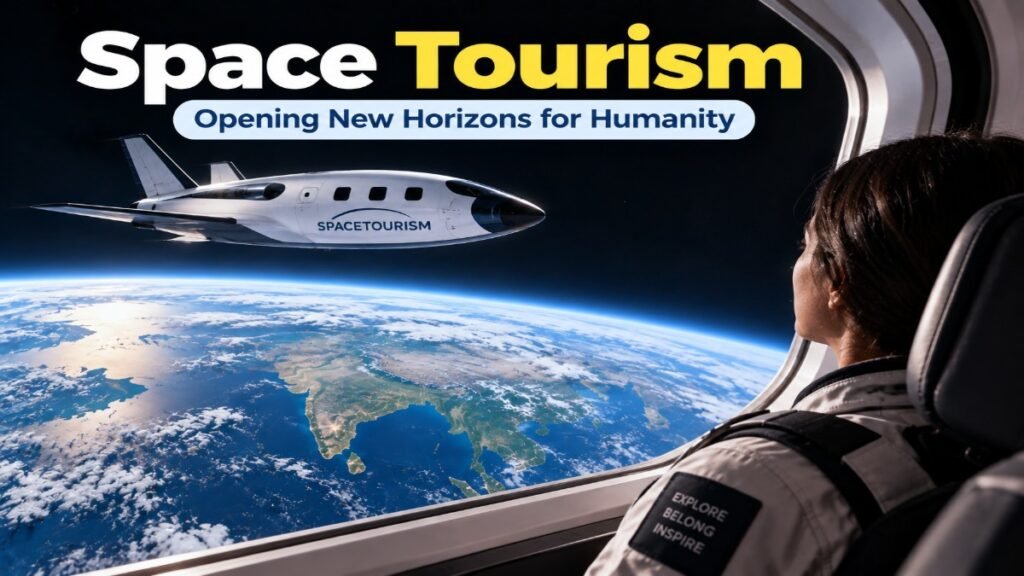
Space Tourism refers to the commercial travel of private individuals into outer space for recreational, adventure, or educational purposes. Unlike traditional space missions conducted by government space agencies, it is primarily driven by private companies that offer paid spaceflight experiences. Tourism in Space can be classified based on the duration and destination of travel into:
- Suborbital Tourism: Passengers experience a few minutes of weightlessness before returning to Earth (e.g., Blue Origin, Virgin Galactic).
- Orbital Tourism: Tourists travel into Earth’s orbit and spend several days in space (e.g., SpaceX missions).
- Future Deep-Space Tourism: Proposed commercial missions to the Moon and beyond are under development.
The emergence of reusable launch vehicles, technological advancements, and increasing private sector participation has transformed Space Tourism from a concept into a rapidly growing segment of the global space economy. The development of Commercial Space Tourism is also creating new opportunities in spacecraft, launch services, space habitats and related technologies.
Key Facts
- First Space Tourist: Dennis Tito (USA), who visited the International Space Station (ISS) in 2001 aboard a Russian Soyuz spacecraft.
- Leading Companies: SpaceX, Blue Origin, and Virgin Galactic.
- Nature of Industry: A part of the rapidly expanding commercial space sector driven by private investment and innovation.
Master Science & Technology. Maximize Your BPSC Mains Score.
Enroll in the BPSC Science & Tech Course Today
Master Science & Technology for BPSC Mains GS Paper-2 with 75+ exam-oriented topics, 6 structured lessons, and downloadable PDF notes—all in one course.
✔ 75+ Exam-Oriented Topics • ✔ 6 Comprehensive Lessons • ✔ Downloadable PDF Notes • ✔ Updated for 72nd BPSC Mains
2. Evolution and Current Status
- Beginning of Tourism in space (2001): Dennis Tito became the world’s first space tourist in April 2001 after travelling to the International Space Station (ISS) aboard a Russian Soyuz spacecraft, marking the beginning of Commercial Space Tourism.
- Rise of Private Space Companies: Over the last decade, companies such as SpaceX, Blue Origin, and Virgin Galactic have transformed Space Tourism by developing reusable spacecraft and offering commercial spaceflight services. These developments have also strengthened the broader Human Spaceflight ecosystem.
- Commercial Space Tourism Begins: Blue Origin and Virgin Galactic have successfully conducted multiple suborbital tourist flights, providing passengers with a few minutes of weightlessness and a view of the Earth from space. SpaceX has successfully carried out orbital private missions, including multi-day missions around the Earth. This marks a major transition towards Tourism in Space as a commercial activity.
- Current Status: Space Tourism is gradually evolving from an experimental activity into a commercial industry. Although ticket prices remain very high, continued technological advancements and reusable launch systems are expected to make space travel more accessible in the future. These developments are important for understanding the Future of Tourism in space.
Prepare Smarter. Study Better. Ace BPSC Mains.
BPSC Mains GS Paper 1 & 2 Complete Course
Access comprehensive BPSC Mains Notes for GS Paper 1 & 2, covering 378+ topics across 24 PDF lessons, with dedicated Bihar coverage, practice questions and downloadable study material.
✓ GS Paper 1 & 2 • ✓ 378+ Topics • ✓ 24 PDF Lessons • ✓ Bihar-Specific Coverage • ✓ Downloadable Notes
3. Significance of Space Tourism
- Promotes the Commercial Space Economy: Tourism in space has emerged as a new segment of the global space industry, attracting private investment and creating new business opportunities in launch services, spacecraft manufacturing, and space infrastructure. The Commercial Space Tourism sector can therefore contribute to the expansion of the wider space economy.
- Drives Technological Innovation: The demand for safer, reusable, and cost-effective spacecraft has accelerated advancements in reusable launch vehicles, life-support systems, space habitats, and related technologies. Such innovations can also strengthen capabilities for Human Spaceflight.
- Generates Employment and Investment: The growth of the sector encourages entrepreneurship, supports space startups, and creates high-skilled jobs in aerospace engineering, manufacturing, research, and tourism. The Tourism in space Notes perspective is important for understanding its wider economic significance.
- Supports Scientific Research: Commercial human spaceflights provide additional opportunities to conduct microgravity experiments, biomedical research, and technology demonstrations in space.
- Inspires Public Interest in Space Exploration: Space Tourism increases public awareness of science and technology, encourages STEM education, and promotes greater interest in future human exploration of the Moon and Mars. It can also influence the Future of Space Tourism by generating wider public interest and demand.
4. Challenges of Tourism in space
- High Cost: Tourism in space remains extremely expensive, making it accessible only to a small number of wealthy individuals.
- Safety Risks: Space travel involves risks such as launch failures, radiation exposure, microgravity effects, and emergency evacuation challenges, requiring stringent safety standards. These risks make Human Spaceflight a highly demanding area requiring advanced technology and careful regulation.
- Environmental Concerns: Frequent rocket launches contribute to atmospheric pollution and carbon emissions, while discarded rocket components may add to the problem of space debris.
- Regulatory and Legal Issues: The absence of a comprehensive international framework governing commercial human spaceflight, passenger safety, liability, and insurance poses significant regulatory challenges. Clear rules will be essential for the expansion of Commercial Space Tourism.
- Ethical and Sustainability Concerns: Critics argue that space tourism may widen inequality by serving only affluent customers, while raising questions about the sustainable use of outer space resources. These concerns must be addressed while planning the Future of Space Tourism.
5. India’s Prospects in Space Tourism
- Favourable Policy Environment: The Indian Space Policy, 2023 and the growing role of IN-SPACe have opened new opportunities for private companies to participate in commercial space activities, including future Space Tourism.
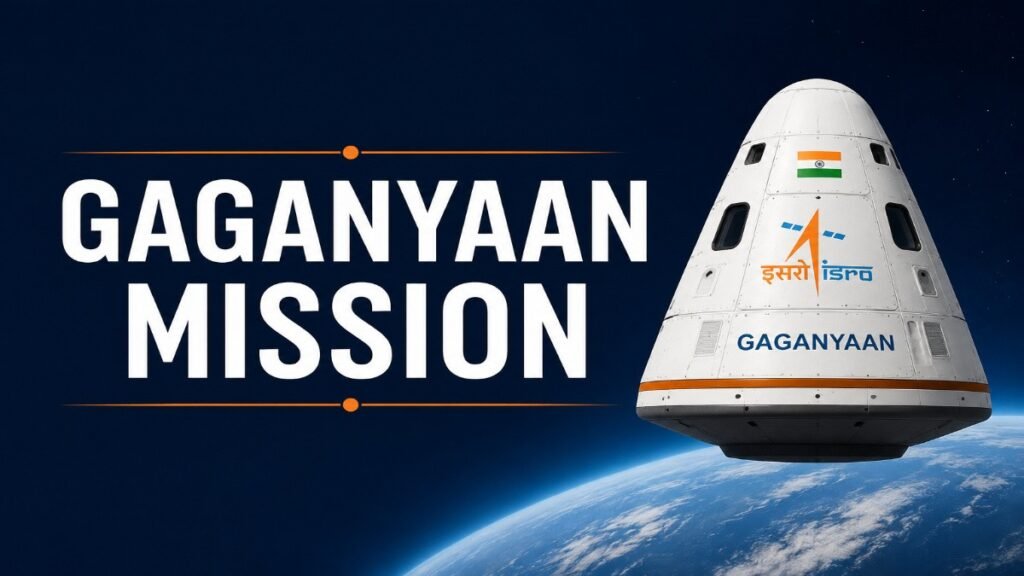
- Human Spaceflight Capability: Programmes such as Gaganyaan are helping India develop indigenous expertise in Human Spaceflight, which could serve as a foundation for future Commercial Space Tourism.
- Growing Private Space Ecosystem: The rapid emergence of Indian space startups and private aerospace companies offers opportunities to develop technologies related to reusable launch vehicles, crew modules, and space services. This could gradually create an ecosystem for Tourism in Space in India.
- Economic Opportunities: In the long term, Space Tourism can contribute to India’s space economy by attracting investment, promoting high-technology manufacturing, creating skilled employment, and strengthening India’s position in the global commercial space sector. The Space Tourism Notes are particularly relevant for understanding these emerging economic opportunities.
6. Way Forward
- Develop a Robust Regulatory Framework: India should formulate comprehensive regulations covering commercial human spaceflight, passenger safety, licensing, liability, insurance, and environmental protection. A clear regulatory framework will provide a strong foundation for the growth of Space Tourism.
- Encourage Private Sector Participation: Greater support through IN-SPACe, technology transfer, public-private partnerships (PPP), and access to ISRO’s infrastructure can accelerate the growth of India’s commercial space tourism industry.
- Invest in Indigenous Technologies: Continued investment in reusable launch vehicles, crew escape systems, life-support technologies, and advanced space infrastructure will reduce costs and improve safety. These technologies can also strengthen India’s capabilities in Human Spaceflight.
- Promote Sustainable Space Tourism: Space Tourism should adopt environmentally responsible practices, minimize space debris, and comply with international norms for the long-term sustainability of outer space. Sustainable practices should remain an important component of the Future of Space Tourism.
- Strengthen International Collaboration: Collaboration with global space agencies and commercial space companies will help India adopt best practices, improve technological capabilities, and emerge as a competitive player in the future space tourism market. These efforts will also enrich the Space Tourism Notes perspective on India’s emerging role in the global space economy.
7. Conclusion
Space Tourism represents a new frontier in the global space economy, driven by private investment, technological innovation and growing Human Spaceflight capabilities. While high costs, safety concerns, environmental impacts and regulatory challenges remain, India has significant potential to emerge as a competitive player. With supportive policies, indigenous technology, private participation and international cooperation, Tourism in Space can become a sustainable and economically valuable activity in the future.
BPSC Mains Practice Question
Q. “Space Tourism is transforming space exploration from a predominantly government-led activity into an emerging commercial industry.” Discuss its significance, major challenges and India’s potential in developing a sustainable space tourism ecosystem.
Learn More About Space Tourism
For official information on India’s space sector, Indian Space Policy 2023, private-sector participation and the development of commercial space activities, visit IN-SPACe (Indian National Space Promotion and Authorisation Centre) official website: https://www.inspace.gov.in/